Dr. Rob Dillon, Coordinator


Friday, September 19, 2008

Invaders Great and Small

Editor’s Note – This essay was subsequently published as: Dillon, R.T., Jr. (2019d)  Invaders great and small.  Pp 29 - 32 in The Freshwater Gastropods of North America Volume 4, essays on Ecology and Biogeography.  FWGNA Press, Charleston.

Although we strive to maintain a broadly American perspective, some regionalism is bound to creep into any project involving such profoundly local creatures as freshwater mollusks. Looking back over my posts in the last several years, I fear I may have focused on invasions by spectacular viviparid and ampullariid gastropods in the southeast (1), while neglecting equally important offensives launched in the north and west by a smaller-bodied but far more numerous army, that of Potamopyrus antipodarium.

The "New Zealand Mudsnail," (or simply "NZMS") was first reported in North America in the mid-1980s, from the Snake River of Idaho. Our colleagues Dave Richardson, Dan Gustafson, Billie Kerans, and others have developed a marvelous web-based resource to track the spread of this critter in the West, as well as to catalog the burgeoning literature regarding all aspects of its biology [link turned off]. There is also a NZMS Conference, which had its fifth meeting in 2007.

Although the natural habitat of the NZMS is generally considered to be the muddy margins of lakes and rivers, in the media it is almost always associated with pocket change. The photo above is from the Washington Department of Fish and Wildlife.

The biggest news for 2008 has been the spread of P. antipodarium into Lake Michigan. NZMS populations were first reported in Lake Ontario in 1991, and in Lake Erie in early 2005 (2), so the arrival of the snail in the other Great Lakes would seem a foregone conclusion. But the Lake Michigan discovery (3) was picked up by the Associated Press, and in mid-August I found myself reading a quote from our good friend Kevin Cummings (of the Illinois Natural History Survey) in the Charleston (SC) Post and Courier.

The other big news from the NZMS front seems to be the spread of the snail into northern California and southern Oregon. In late 2007 Potamopyrgus was reported in Lake Shasta, and in early 2008 populations were discovered in the Umpqua and Rogue Rivers, prompting the usual hand-wringing in the newspapers locally.

Is it possible to predict (4) biological invasions of this sort? The 3 mm Potamopyrgus reproduces parthenogenetically and grazes on algal cells and fine organics in the cold, clear trout streams of the Yellowstone region. What ecological characteristics might this "mud snail" share with a 70 mm "apple snail," laying eggs on emergent vegetation, consuming whole macrophytes in stagnant ponds near Myrtle Beach? All the important variables, it seems to me, can be collapsed into two - one of the organism and one of the environment.

Successful invaders must have "weedy" life history adaptations. Although there are many correlates of weediness, I suggested in my book (5) that the key variable might be relative reproductive allocation. Populations allocating energetic resources to reproduction greater than one order of magnitude beyond expectation for their body size I called "R-adapted," for "Ruderal" (6). Although I'm not aware of any direct data, I suspect that both Potamopyrgus and Pomacea are R-adapted.

The other factor is easy to state but much more difficult to measure than reproductive allocation. Successful invaders must find resources available for exploitation. Thus invasive species tend to be ecologically different in some significant respect from (initially far more numerous) native populations with which they might otherwise compete. In the golden days of community ecology this was called the "empty niche hypothesis", although ultimately the definition of the word "niche" became confused. In any case, it is clear that Pomacea could not have invaded the ponds in Myrtle Beach if all the macrophytes had already been eaten by Manatees.

So it seems to me that the two characteristics successful invaders tend to share are that they are weedy and different. All the exotic freshwater mollusks we have seen spread across the United States in the last century - Potamopyrgus, Pomacea, Bellamya, Melanoides, Bithynia, and yes, certainly Corbicula and Dreissena - seem to have high reproductive capabilities (relative to their body sizes) and are strikingly different from the native North American freshwater molluscan fauna that they have joined.

So am I going to step forward with a prediction of North America's next foreign invader? Nope. To do that, I'd want to be familiar with the freshwater molluscan faunas of five other continents. And I don't even know our own yet!

Notes

(1) I have written at least three posts on the Pomacea invasion, most recently August '08. My most recent update on the Bellamya invasion was in October '05.

(2) Levri, E.P, A. A. Kelly and E. Love (2007) The invasive New Zealand mud snail (Potamopyrgus antipodarium) in Lake Erie. J. Great Lakes Res. 33: 1-6.

(3) The benthic samples were taken in 9/07 by workers at the INHS Lake Michigan Biological Station, but apparently not processed until earlier this summer.

(4) We've got a paper currently in review that covers this subject very broadly: Cowie, R. H., D. G. Robinson, R. T. Dillon, Jr., and J. W. Smith. Alien non-marine snails and slugs of priority quarantine importance in the United States.  Published in 2009: [pdf]

(5) See Chapter 4 in: Dillon, R. T., Jr. (2000) The Ecology of Freshwater Molluscs. Cambridge University Press.

(6) This is not to be confused with the little-r of "r and K selection."

Thursday, August 14, 2008

Two Dispatches from the Pomacea Front

Editor’s Note – This essay was subsequently published as: Dillon, R.T., Jr. (2019d)  Seven dispatches from the Pomacea front.  Pp 19 - 28 in The Freshwater Gastropods of North America Volume 4, essays on Ecology and Biogeography.  FWGNA Press, Charleston.

In May we reported the discovery of a population of South American apple snails (Pomacea insularum) in a residential subdivision near Myrtle Beach, South Carolina, extending the range of that invasive pest about 500 km north. This month we update our report with both good news and bad. We also report another surprise addition to the fauna of South Carolina, the native Florida apple snail (Pomacea paludosa), not typically considered to be an invasive species.

"I Was Scared for The Kids"

The bad news is that our Pomacea insularum introduction in the Myrtle Beach area has turned out to be much more extensive and longstanding than we originally reported, with several additional populations discovered in residential areas during the months of June and July, as well as on a golf course. As of 8/1/08, biologists from the SC Department of Natural Resources had found evidence of infestation in 35 ponds and water bodies (PDF map). The good news is that the DNR has moved promptly and efficiently to eradicate the snails, and we are fairly confident of success.

Media attention seems to have played an important role in mobilizing public sentiment. In late June, an invasion by "harmful snails" or "worrisome snails" was the subject of several television news stories and reports in the Myrtle Beach Sun News (1), and at least one article in The State (2) newspaper in Columbia. Reports specifically mentioned a threat of meningitis, and included quotes like, "There's thousands. They're all over," and "I was scared for the kids." Notice the heavy rubber glove on the hand holding the snails in The Sun News photograph at left. This seems to have prompted the general citizenry of the Myrtle Beach area to inspect all the local ponds and ditches, and to contact the DNR with requests for eradication. Our colleagues at the South Carolina Aquatic Nuisance Species Program have responded with an aggressive program of copper sulfate application, and we do hope that the problem is coming under control.


Pomacea paludosa in South Carolina?

Yes, it's true! Earlier this week our DNR colleague David Knott and I visited Spring Island, a private golf and country club community south of Beaufort, SC, at the invitation of Dr. Chris Marsh of the Spring Island Trust. Thanks also to Tony Mills for serving as tour guide. We confirmed small but apparently well-established populations of the native Florida apple snail, P. paludosa, in two golf course ponds. That's David bravely bare-handing a sample at left. Note that the egg masses of P. paludosa are much whiter (and the individual eggs much larger) than those produced by the South American species introduced near Myrtle Beach (See the PDF flier from the SCDNR for several nice illustrations.)

Pomacea paludosa is primarily an inhabitant of the Florida Everglades, ranging as far north as springs by the Flint and Ocmulgee Rivers in south Georgia (3). It has never been considered "invasive." In fact, populations of P. paludosa seem to have been declining for years, as water flows have been disturbed, wetlands drained for development, and genuinely invasive species (such as P. insularum) spread through Florida. But Chris thinks it most likely that the Spring Island population of P. paludosa was introduced on aquatic vegetation when the golf course was constructed in the early 1990s. This does call into question the meaning of the word, "invasive," doesn't it?


Notes

(1) "Worrisome Snail Spreading to Two More Horry Subdivisions" Myrtle Beach Sun News, 3July08.If the direct link to the newspaper site above doesn't work, a copy of the article is available from the FWGNA.

(2) "Harmful Snails Invade South Carolina" The State (Columbia) 22June08.If the direct link to the newspaper site above doesn't work, a copy of the article is available from the FWGNA.

(3) Thompson, F. G. (1999) An Identification Manual for The Freshwater Snails of Florida. Walkerana 10(23): 1 - 96. Online version 2004.

Tuesday, July 15, 2008

Gene Trees and Species Trees

Editor's Note. This essay was subsequently published as Dillon, R.T., Jr. (2019b) Gene trees and species trees.  pp 23-28 in The Freshwater Gastropods of North America Volume 2, Essays on the Pulmonates.  FWGNA Press, Charleston.

I’ve just returned from the 2008 meeting of the American Malacological Society in Carbondale, where sometimes our science moved forward, and sometimes it seemed as though we were fighting to hold it back. Confusion over molecular phylogenetic techniques - what they can and cannot tell us about evolution - seems to be pervasive in our discipline, and may be growing. During the discussion that concluded the final symposium of the meeting, “Describing Mollusk Species in the 21st Century,” one of our colleagues went so far as to venture, “We all agree that gene trees are the same as species trees, right?” And mine may have been the only voice, of perhaps 100 present, raised in protest.

Our collective confusion seems to stem, at least partly, from a misunderstanding of the process known as “coalescence.” Though the entire week in Carbondale, as would be typical for any meeting of systematic biologists, speakers presented evolution as a branching process, unfolding from the past to the present as a series of random bifurcations to an often mind-numbingly large number of tip sequences sampled today. In 1982, however, J. F. C. Kingman (1) opened a fertile field of theoretical inquiry when he became the first to model evolution from the present to the past, as a random process of binary joining. Kingman called the particular mathematical process involved the "n-coalescent."

Kingman’s initial coalescent model was simple genetic drift viewed backward in time. Assuming a constant population size, random mating, and no selection, he showed that it is possible to describe the probability distributions of the genealogical trees of all the alleles in a population, and the time it would take them to coalesce into a most recent common ancestor. In the last 25 years, theoreticians have developed Kingman's model and explored all three of its primary assumptions in great detail.

The effects of population subdivision on the coalescent process, for example, are vividly demonstrated by the results of W. B. Jennings & S. V. Edwards, published in the September 2005 issue of Evolution (2). This work initially escaped my attention, and perhaps the attention of many of our colleagues, because (Shame on me!) the research deals with birds, the opposite of mollusks.

Overcoming their poor choice of study organism, however, Jennings & Edwards reviewed a variety of observations from historic biogeography, morphology, and behavior to suggest that two Australian species of grass finch, Poephila acuticauda and P. hecki, are sister species, diverged more recently from each other than from Poephila cincta. The authors then sequenced single copies of genes from 30 anonymous nuclear loci for the three species, and obtained the expected acuticauda/hecki sister relationship in 16 cases. Their sequence data suggested that acuticauda and cincta were sister species in 7 cases, hecki and cincta were sister species in 5 cases, and yielded ambiguous results for the remaining two genes, for an overall success of 16/30 = 53%.

My attention was called to these results as I was struggling through Chapter 5 of John Wakeley’s new book, “Coalescent Theory, An Introduction" (3). Quoting Wakeley directly (p 164), “A fundamental realization is that gene genealogies (often called gene trees) are not identical to phylogenies, or species trees.” The probability that the two types of trees are discordant is a function of the internode time, T. This is not the total time since the origin of the taxa being examined, nor the time since they diverged, but the internodal time during which they were diverging (Wakeley's Figure 5.4, at left).

The phenomenon has been termed "incomplete lineage sorting," and has been considered a problem by phylogenetic systematists (4). But evolutionary scientists consider such sequence polymorphism a potential source of important data. Given a discordance of 12/30 and a generation time of one year, Jennings & Edwards estimated T from the divergence of the outgroup P. cincta to the divergence of the sister species acuticauda and hecki to be about 300,000 years.

At least as important as an understanding the difference between a gene tree and a phylogeny, however, is an understanding of the difference between a phylogeny and a model of biological speciation. Ornithologists did not recognize the three sets of finch populations by the specific nomena acuticauda, hecki, and cincta because of any of the 30 genes studied by Jennings & Edwards. Rather, the species were described on the basis of the plumage, song, and other behaviors by which the birds distinguish each other. Traits such as these are the result of natural selection.

Evolutionary science was born, 150 years ago, when a well-studied gentleman from England proposed that speciation might be the result of natural selection. But the assumptions underlying the 30 gene trees made by Jennings & Edwards, and indeed the assumptions underlying every phylogenetic tree shown by every researcher at the AMS meeting in Carbondale, were strictly neutral. So a statement to the effect that “we all agree that gene trees are the same as species trees” is equivalent to saying, “None of us here believes that Darwin foolishness, do we?”

I would suggest that gene trees of the sort typically on display at our recent meeting are best understood as weak, null hypotheses of population relationships. Even in this era of rapid and cheap sequencing, we malacologists do not typically examine multiple individuals per population, or multiple populations per species. And if we sequence more than one gene per individual, we typically concatenate our sequences into a single analysis. Thus our inference regarding the actual evolutionary relationships between the populations represented at the tips of our gene trees is very, very weak.

But given a gene tree, and heaven knows we were given a lot of them in Carbondale, one might well test to see if it corresponds to the species tree. Under any model, neutral or otherwise, it might or it might not. The recent literature includes several papers reporting striking discordance between gene trees and species trees in groups of freshwater snails (5 - 8). On the other hand, however, Chuck Lydeard, Amy Wethington, and I have found fairly close correspondence between gene trees (CO1 and 16S) and species trees (estimated from experiments measuring both prezygotic and postzygotic reproductive isolation) in the freshwater pulmonate family Physidae (9).

So in conclusion, I object to the statement, “We all agree that gene trees are the same as species trees” for three reasons – it is incorrect, wrong, and bad. It is incorrect under the neutral model, since it neglects the error associated with incomplete lineage sorting, and it has been demonstrated wrong by 150 years of observations on the importance of selection in the speciation process. And it is bad because it’s a science-stopper. The relationship between any particular gene tree and any set of natural populations is a fertile area of inquiry; one which I hope will see renewed interest in the future.


PS - From Kevin Roe:
From: kjroe@iastate.edu
Sent: Thursday, July 17, 2008 11:24 AM
To: Strong, Ellen; Kevin J. Roe
Cc: fwgna@hotmail.com; Dillon Jr., Robert T.
Subject: Re: FW: Gene Trees and Species Trees

To the list members: Although I am not a member of the FWGNA group I want to clarify something, namely the question posed at the AMS meeting in Carbondale that prompted Rob to alert the community to the process of lineage sorting etc.The question I asked was: "Does everyone here agree that gene trees equal species trees?" because to me that was the implication of where the discussion was going. Personally, I do not think that gene trees necessarily equal speciestrees and therefore am concerned about the use of barcoding for species delineation (intentionally or unintentionally).
Kevin

Kevin J. Roe
Natural Resource Ecology & Management
Iowa State University
339 Science II
Ames, IA 5011-3221


Notes

(1) Kingman, J. F. C. (2000) Origins of the coalescent: 1974 - 1982. Genetics 156: 1461-1463.

(2) Jennings, W. B. & Edwards, S. V. (2005) Speciational history of Australian grass finches (Peophila) inferred from thirty gene trees. Evolution 59: 2033-2047.

(3) Wakeley, J. (2008) Coalescent Theory, An Introduction. Roberts & Company, Greenwood Village, CO. 326 pp.

(4) Maddison, W. P. 1997. Gene trees in species trees. Systematic Biology 46:523–536.

(5) Dillon, R. T., Jr. & R. C. Frankis (2004) High levels of mitochondrial DNA sequence divergence in isolated populations of freshwater snails of the genus Goniobasis. Am. Malac. Bull. 19: 69-77.

(6) Lee, T., H. C. Hong, J. J. Kim and D. O’Foighil (2007) Phylogenetic incongruence involving nuclear and mitochondrial markers in Korean populations of the freshwater snail genus Semisulcospira (Cerithioidea: Pleuroceridae). Molec. Phylog. Evol. 43: 386-397. See my essay of February '08 for more.

(7) Walther, A., T. Lee, J. B. Burch, and D. Ó Foighil (2006) E Pluribus Unum: A phylogenetic and phylogeographic reassessment of Laevapex (Pulmonata: Ancylidae), a North American genus of freshwater limpets. Molecular Phylogenetics and Evolution, 40: 501-516. See my essay of July '07 for more.

(8) Dillon, R. T., Jr. & J. D. Robinson (in press) The snails the dinosaurs saw: are the pleurocerid populations of the Older Appalachians a relict of the Paleozoic Era? JNABS.

(9) The manuscript detailing most of our observations on reproductive isolation is still in preparation. But the gene tree has been published: Wethington, A.R. & C. Lydeard (2007) A molecular phylogeny of Physidae (Gastropoda: Basommatophora) based on mitochondrial DNA sequences. Journal of Molluscan Studies 73: 241 - 257. See my essay of October '07 for more.

Wednesday, June 25, 2008

Malacological Mysteries I: The type locality of Lymnaea humilis

Editor's Note. This essay was subsequently published as Dillon, R.T., Jr. (2019b)  Malacological mysteries: The type locality of Lymnaea humilis.  pp 13-21 in The Freshwater Gastropods of North America Volume 2, Essays on the Pulmonates.  FWGNA Press, Charleston.

Lymnaea humilis (Say, 1822) was among the first North American lymnaeids to reach formal description. Thomas Say's terse, one-paragraph effort was quite vague (1), no figure was provided, and the type specimens have been lost. But the diminutive shell size that Say specified, “seven-twentieths” of an inch (9 mm), was sufficiently diagnostic for subsequent authors to connect his nomen “humilis” to an extremely common and variable species widespread through most of the United States and Canada. Hubendick (2) listed at least 18 junior synonyms of L. humilis (3), and there are certainly more.

Say's type locality has always been given simply as "South Carolina," my vastly triangular home of 83,000 km2. Thus I was a bit daunted last week, but not especially surprised, to receive a request for topotypic Lymnaea humilis from a parasitologist affiliated with the World Health Organization, Prof. Dr. Dr. h. c. Santiago Mas-Coma of Valencia, Spain. Lymnaea humilis is a potential host of the liver fluke Fasciola, primarily a parasite of livestock but occasionally infecting man (4).

This post is an open reply to Prof. Dr. Mas-Coma. Here I report the rediscovery of a population of lymnaeids from the Charleston area that may plausibly have served as the basis for Thomas Say's 1822 description, review subsequent developments through which the concept of L. humilis seems to have shifted from the Charleston-area species to a second species ranging further north, and propose that the type locality of L. humilis should not continue to be given as "South Carolina," but rather restricted to a site on the Susquehanna River in New York.

Identification of the precise point of origin for the 9 mm lymnaeids on Thomas Say's desk in 1822 presents a bit more than the usual challenge. It seems clear that the sample was sent to him from Charleston. The author's acknowledgement of a "Mr. Elliott" in the species description was certainly a reference to the noted Charleston naturalist, Stephen Elliott (1771 – 1830), primarily a botanist but with a wide variety of interests. Elliott's collected papers at the Gray Herbarium Library contain an 1822 letter from Thomas Say with identifications for a box of shells.

The problem, however, is that suitable habitat for small, amphibious lymnaeids is not common in the Charleston area. Such snails are typically found on mud or exposed surfaces above the water’s edge. But throughout the Carolina lowcountry and coastal plain, fresh waters have indistinct and variable margins, choked with aquatic and semi-aquatic vegetation. Lymnaea humilis does not seem well adapted for life on the leaves and stems of macrophytes.

In his 1911 monograph, F. C. Baker (5) cited two Charleston-area collections of L. humilis courtesy of W. G. Mazyck, "a low lot in Alexander Street, now filled up and destroyed," and "Sullivan's Island, four miles from the city." Recently our former student and colleague Bryan England has redirected our attention to the freshwater gastropods of Sullivan's Island, and especially to the unexpectedly abundant fauna inhabiting the vernal ponds that form behind dunes and formerly dunal areas.

Sullivan's Island has a long and interesting history. Colonel William Moultrie built a palmetto-log fort on its western end in 1776, from which he successfully repelled an amphibious assault by the British. A brick and masonry fort bearing Moultrie’s name was constructed on the site in 1809 to defend the eastern approach to Charleston Harbor. Among its famous residents have been the Seminole chief Osceola and Edgar Allen Poe, who was posted to Sullivan's Island in 1827-28.

Access from Charleston to Sullivan's Island in the 19th century should have been very convenient, through the regular ferries and packets supplying Fort Moultrie. Stephen Elliott could easily have taken advantage of such transportation to explore the great variety of habitats that must have been available outside the immediate vicinity of the Fort, ranging from farm to maritime forest to marsh.

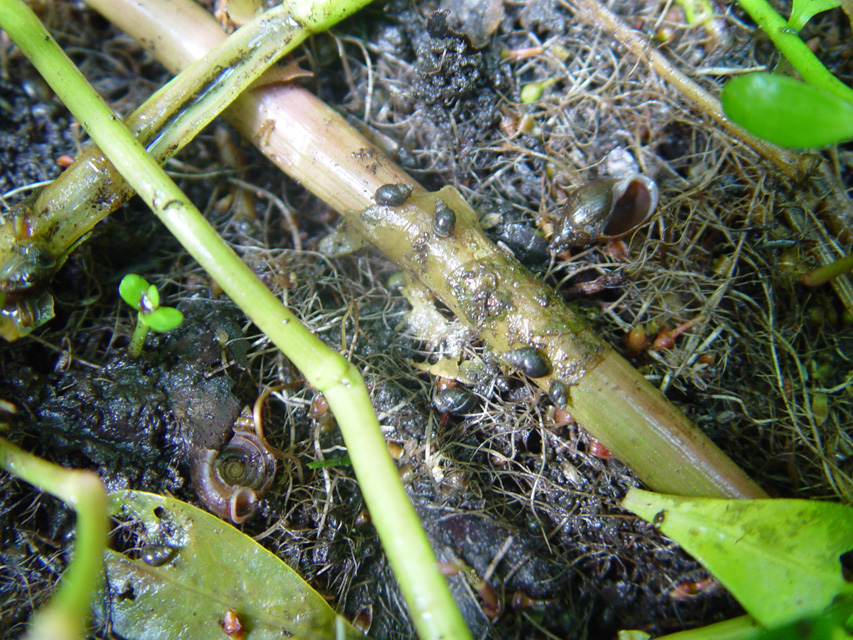
Today most of the island is residential, crisscrossed by roads and drainage ditches. Such ditches are vernal, with a muddy sand base, and typically vegetated with cat-tails and alligator weed (Above, Note 6). And on the exposed margins of the shallow water that fills these ditches after a spring rain, one can find small lymnaeids matching Say’s 1822 description (Below, Note 7). The complication is that, using modern criteria, these little snails would not be identified as Lymnaea humilis today, but rather as Lymnaea cubensis (Pfeiffer, 1839). Click the photo below for an enlargement.

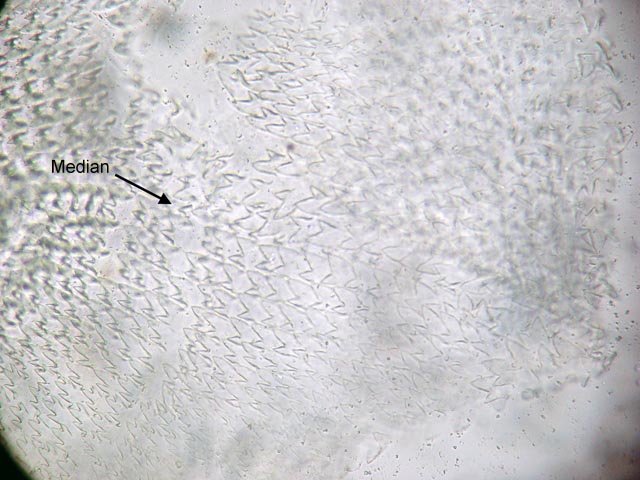
I believe it was F. C. Baker (1911) who published the first systematic observations on the radula of the Lymnaeidae (5). He did not have access to South Carolina humilis (ss), which he assigned to the genus "Galba," but he did publish observations on two taxa he considered subspecies, G. humilis modicella and G. humilis rustica, both of which bore three cusps on their first marginal teeth (Below, Note 8). At the same time he also observed that the radula of Galba cubensis bore bicuspid first marginals.

By 1928, Baker (10) had discarded "Galba" in favor of "Fossaria" as a genus to contain small amphibious lymnaeids of this sort. Tricuspid species he kept in the subgenus Fossaria (ss), and the bicuspid species (Below, Note 9) he separated to a new subgenus "Nasonia," which was subsequently emended to "Bakerilymnaea" (11). See my post of Dec '06 for a review of the tortuous history of the classification of the Lymnaeidae.

In any case, the association of the name humilis with tricuspid populations persisted. Hubendick (2) collapsed all the little "fossarine" lymneids of North America down to four: tricuspid truncatula in Alaska (12), tricuspid humilis through Canada and most of the United States (including South Carolina), bicuspid bulimoides west of the Mississippi River, and bicuspid cubensis ranging only as far north as Florida, Louisiana, and Texas.

But Say specified nothing about the radula in his original description. His three brief sentences referred only to the shell, and would fit bicuspid and tricuspid taxa equally well. And recent field observations suggest that bicuspid populations are widely scattered through coastal areas of South Carolina and into North Carolina as well. But the nearest population of small, amphibious lymnaeids with tricuspid first-marginals to Charleston seems to be by the Catawba River in Lancaster County, about 250 km north.

At this point in the history of American Malacology, the nomen humilis has become firmly associated with the tricuspid populations common through most of the United States and Canada. It would be a great disservice to workers in the field today to reapply Say's 1822 name to the southern bicuspid populations now known as L. cubensis, leaving one of 18 younger names for the tricuspid. I therefore propose that the type locality of L. humilis be reassigned.

The concept of the "type locality" did not exist in the early 19th century. And fortunately, Thomas Say mentioned a second locality in his 1822 description of Lymneus humilis. He wrote, “It differs much from any other species I have seen; a variety of it, sometimes quite black, was found by Dr. M'Euen at Oswego on the Susquehanna." I interpret this comment to mean that, although Say's description did in fact initially state, "inhabits South Carolina," the author considered that his Lymneus humilis ranged throughout much of North America. Hence it is within the discretion of subsequent workers to "restrict" Say's type locality, under Recommendation 72E of the International Code of Zoological Nomenclature, to some more precise spot.

The present essay is not a publication for purposes of the ICZN. But I have gotten the impression from our colleague Prof. Dr. Mas-Coma that he is currently working on such a publication, and that the specimens from Sullivan's Island I am packing to send him this week will figure in it. So in the final analysis, this post is an informal appeal to him, and to all workers who may follow us into posterity. Let us restrict the type locality of Lymnaea humilis (Say 1822) to the banks of the Susquehanna River, where the little amphibious lymnaeids are entirely tricuspid.

There is yet one final complication. In 1825, Say formally described the population "found by Dr. M'Euen at Oswego, on the Susquehanna River" as Lymneus modicelles. It was this taxon that Baker (1911) lowered to subspecific rank, as Galba humilis modicella, noting as he did that Say misspelled the name of the town. The locality is correctly spelled Owego, not "Oswego."

In conclusion, let us resolve henceforth that the type locality of Lymnaea humilis shall not be "South Carolina," but rather Owego, Tioga County, NY, on the Susquehanna River. And I plan to write "Lymnaea cubensis" on the label of the vial I'll be packing for Valencia tomorrow.

Notes

(1) "Lymneus humilis - Shell ovate-conic, with slight wrinkles; volutions nearly six, convex, terminal one very minute; suture well indented; aperture about equal in length to the spire; labium with an obvious plate of calcareous deposit; a distinct and rather open umbilical aperture; color pale reddish-white or yellowish-white. Total length seven-twentieths. Inhabits South Carolina. Of the dozen specimens sent me by Mr. Elliott, none exceeded the limit here assigned to the species.” (J. Acad. Natl. Sciences Phila 2: 378, 1822)

(2) Hubendick, B. (1951) Recent Lymnaeidae. Their variation, morphology, taxonomy, nomenclature, and distribution. Kungl. Svenska Vetensk. Akad. Handl., 3: 1-223.

(3) Synonyms of humilis include: cyclostoma, dalli, decampi, doddsi, exigua, ferruginea, galbana, modicella, obrussa, owascoensis, parva, peninsulae, petoskeyensis, pilsbryi, rustica, sterkii, tazewelliana and umbilicata.

(4) There's a fairly complete introduction to the biology of Fasciola, from the snail's point of view, in Chapter 6 of my book: Dillon, R. T. (2000) The Ecology of Freshwater Molluscs. Cambridge University Press.

(5) Baker, F. C. (1911) The Lymnaeidae of North and Middle America, Recent and Fossil. Special Publication, no. 3. Chicago: Chicago Academy of Natural Sciences.

(6) Cat-tails mark the ditch at the NE corner of Atlantic Avenue and Station 26.5. The use of "station" rather than "street" in Sullivan's Island harkens back to the days when there was regular trolley service from Charleston.

(7) The habitat close-up shows quite a few small, amphibious lymnaeids, as well as the dead shells of Physa acuta and a land snail. For scale, the Physa shell is 10.2 mm standard length.
.
(8) Radula of L. humilis, collected by the James River in Botetourt Co, Virginia. The median row is marked with an arrow. Examine the rows immediately to the left and right of the median row to see the tricuspid first marginals.

(9) Radula of Sullivan's Island lymnaeids. Again, the arrow marks the median row – look to the left and right for bicuspid first marginals.

(10) Baker, F. C. (1928) Freshwater Mollusca of Wisconsin, Part I, Gastropoda. Bull. Wisc. Geol. Natur. Hist. Survey, no. 70. Madison: University of Wisconsin Press.

(11) See page 249 and note #80 of Burch, J. B. (1989) North American Freshwater Snails. Malacological Publications, Hamburg, MI.

(12) Lymnaea truncatula (Muller 1774) is a holarctic species common throughout Europe and Asia. Hubendick wrote, "It is a matter of some doubt whether L. humilis in North America is a distinct species or is specifically connected to L. truncatula." This would be a fertile ground for future inquiry.

Thursday, May 15, 2008

Pomacea Spreads to South Carolina

Editor’s Note – This essay was subsequently published as: Dillon, R.T., Jr. (2019d)  Pomacea spreads to South Carolina.  Pp 15 - 18 in The Freshwater Gastropods of North America Volume 4, essays on Ecology and Biogeography.  FWGNA Press, Charleston.

Word reached us last week that a population of Pomacea has become established in the vicinity of Myrtle Beach, SC, extending the range of this invasive pest north about 500 km. The South Carolina Department of Natural Resources is currently studying options for control.

At this time the introduction seems localized to a single pond in a trailer park in the town of Socastee, about 10 km W of Myrtle Beach. The area was quite poorly drained prior to development, and ditching and filling operations have resulted in the creation of several retention ponds in the neighborhood. The population of Pomacea was discovered by SCDNR personnel investigating complaints of excessive algal growth in these bodies of water.


On May 6 our colleague David Knott of the SCDNR reported "lots of P. insularum egg clutches (above) and three snails (two were copulating) in one of several ponds." Thanks to David for the photo below.

Most of us in this group are all too familiar with the damage to aquatic crops and macrophytic vegetation caused by populations of Pomacea introduced worldwide. The pest has spread throughout Florida since its initial introduction in the 1980s. In 2005 it appeared in South Georgia (Post of 11/05), where attempts to control it have not been notably successful.

Although we do not have any evidence regarding the origin of the South Carolina population, we speculate that the initial introduction may have come through the release of unwanted pets. Pomacea (of several species) were readily available in local aquarium stores until a few years ago, and hobbyists traveling up from Florida might easily transport wild-collected animals.

The pond inhabited by the South Carolina population drains through underground culverts toward the Intracoastal Waterway, a degraded habitat that would not suffer terribly from the release of molluscicides. But upstream just a few kilometers is the mouth of the Waccamaw River, still lovely in spots, leading north to Lake Waccamaw, the pristine home of several endemic species.

Come on, boys! Are we going to take back-sass from a bunch of fat snails in a scum pond (above)? This is South Carolina - let's nuke 'em!

Friday, April 11, 2008

The Classification of the Planorbidae

Editor's Note.  This essay was subsequently published as: Dillon, R.T., Jr. (2019b)  The classification of the Planorbidae.  Pp 127-135 in the Freshwater Gastropods of North America Volume 2, Essays on the Pulmonates.  FWGNA Press, Charleston.

The Planorbidae is the most diverse of the basommatophoran pulmonate families, including hundreds of species and dozens of higher taxa worldwide. Planorbids are the most successful freshwater pulmonates in the topics, the notorious Biomphalaria, Bulinus, and Indoplanorbis serving as the intermediate hosts of schistosomiasis in both the Old World and the New. It is a point of pride for us in North America, therefore, that the classification of this family generally recognized around the world today was heavily influenced by the work of a hometown boy, Frank Collins Baker of Urbana, Illinois (1).

Here we pick up a thread left dangling somewhat over a year ago, the life and career of F. C. Baker (1867-1942). Baker cultivated a comprehensive knowledge of freshwater pulmonate taxonomy, great skills as an anatomist, and a tremendous feel for the living organisms to which he devoted his life. And his (1945) "The Molluscan Family Planorbidae" was a masterwork (2).

Baker originally conceived of his monograph in two parts - a systematic review of the anatomy and classification of all higher planorbid taxa worldwide, recent and fossil, and a survey of the nominal species inhabiting the Americas. Although only a skeletal 16 pages of text for the second half of the project had been completed at the time of his death, together with a phenomenal 140 plates, the first half was sufficiently complete for his editor (H. J. van Cleave) to carry to publication posthumously.

Baker left us lovely anatomical illustrations and detailed morphological observations for 81 species and races of planorbids representing diverse taxa worldwide, together with ranges (both geological and geographical) and species lists. On this basis he proposed a classification of the family recognizing 4 subfamilies, 36 genera and 18 subgenera.

We have noted previously that Baker's taxonomy remained firmly rooted in 19th-century typology throughout his career. The quality of the science in his 1945 monograph of the Planorbidae was not substantially different from that in his 1911 treatment of the Lymnaeidae. But what made the 1945 work so special was its worldwide scope. Baker offered detailed anatomical observations for Pingiella and Polypylis from China, Intha and Indoplanorbis from India, and Planorbis, Anisus, Segmentina and Hippeutis from Europe, and included seven higher taxa known only as fossils. The work should be better known today than it is.

For our modern understanding of planorbid systematics has developed in close parallel to (but lagging slightly behind) our understanding of the Lymnaeids. And just as Baker's (1911) lymnaeid monograph was supplanted by Bengt Hubendick's (1951) masterpiece (3), so too was Baker's (1945) monograph of the Planorbidae supplanted by Hubendick in 1955 (4).


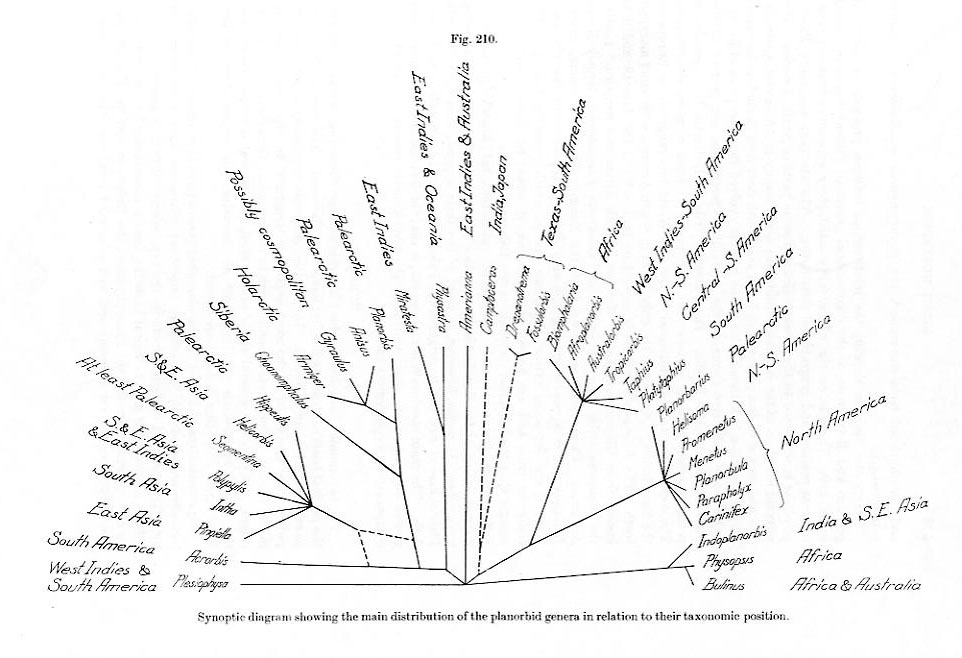
With his greater access to the African and Eurasian faunas and his skill with thin-section microscopy, the Riksmuseum's Bengt Hubendick was able to explore planorbid anatomy down to the finest detail. The classification he proposed ten years after Baker's was explicitly evolutionary (Above, Note 5), postulating ancestral and derived character states and hypothesizing phylogenetic relationships. But rather than setting aside all the earlier classifications and starting afresh, as he had done with the lymnaeids four years previously, Hubendick built directly upon the foundation that F. C. Baker had laid. He wrote, "It is not my intention to give a complete account of the morphology of the different planorbids. Baker (1945) has already presented a comprehensive monograph on the subject." So taking "the recent genera accepted by him as a starting point," Hubendick was able to re-monograph the entire family Planorbidae in just 90 pages. Hubendick's monograph of the Lymnaeidae, a much smaller family with but two genera, had required 223 (6).

Hubendick criticized Baker rather severely for neglecting two major planorbid groups, the African Bulinus and the South American Plesiophysa (7). And indeed Hubendick's classification began by recognized three subfamilies - the Planorbinae, the Bulininae, and the Plesiophysinae - the latter two of which Baker had omitted. But within the Planorbinae, Hubendick recognized 31 genera gathered into 6 - 9 "tribes," broadly agreeing with Baker's genera and subfamilies. Hubendick did not advocate subgenera.

Later in his life, Hubendick (1978) suggested that the ancylid limpets be might united with the planorbids into a gigantic "Ancyloplanorbidae," but this idea never caught on, at least in its proposed form (8). The concept has recently been revived by a number of molecular phylogenetic studies, which tend to confirm that the planorbids and the ancylids are both paraphyletic and interdigitated (9). The classifications implied by molecular data are jarringly different in some respects from those that have been established by common practice over the last 50 years (10), and time will be required to see what new system stabilizes.

Meanwhile, back in North America, Burch (11) adopted the Hubendick (1955) classification with a couple minor tweaks and one big shove. He subsumed the genus Armiger under Gyraulus following Meier-Brook (12), and substituted the older name Vorticifex for the younger synonym used by Hubendick, Parapholyx (13). In addition, Burch also advanced a rather dramatic change to the genus Helisoma that has baffled me and many of our colleagues for quite a few years.

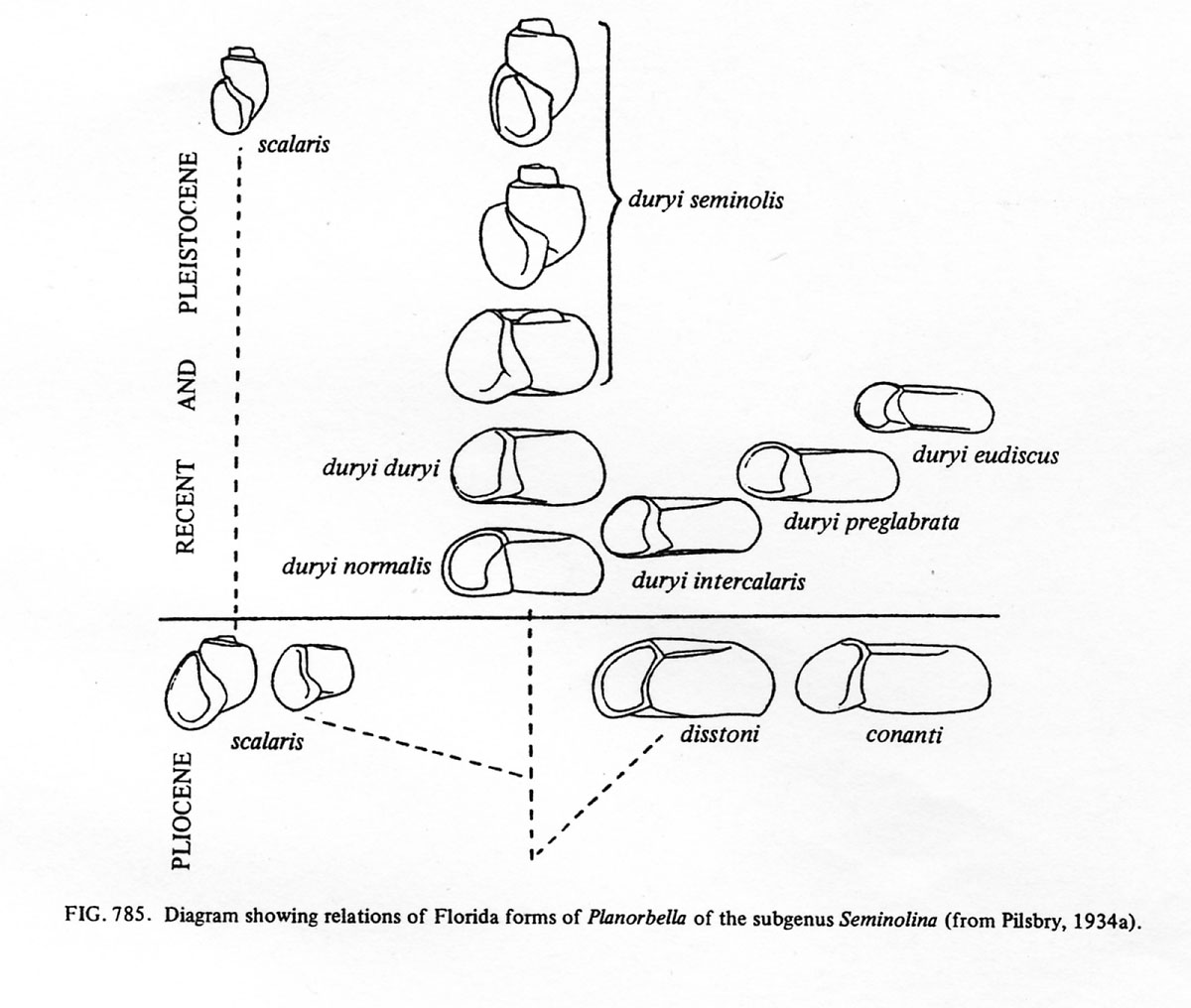
Both Hubendick and Baker recognized the North American genus Helisoma as a large, natural group. Baker sorted roughly 77 species and subspecies of Helisoma (too many!) into four subgenera: Planorbella, Seminolina, Pierosoma, and Helisoma (ss). Burch trimmed the specific nomina down to about 17. Then without explanation or attribution, he raised Planorbella to the genus level and diverted 16 of the species (from three of Baker's former subgenera) into it. To the single species of Helisoma left behind (H. anceps) Burch added the single species of the Baker/Hubendick genus Carinifex, C. newberryi. No rationale was offered for any of the Helisoma rearrangements whatsoever.

During the course of my research for last month's essay, however, I stumbled across a clue to Burch's "mystery of the exploded Helisoma" - the 1966 monograph that Dwight Taylor published on the Plio/Pleistocene mollusk faunas of the American West (14). At the end of that lengthy work, in his section entitled "taxonomic notes," Taylor raised Baker's Planorbella to the genus level and removed the Helisoma exactly as Burch was to advocate ten years later, offering as his rationale the apparent axis of shell coiling (15). Baker's 530 pages of anatomical observations seem to have been dismissed by Taylor, and he was apparently unaware of Hubendick's monograph entirely (16). Variance on a single shell character was sufficient for D. W. Taylor to explode the genus Helisoma, and apparently Burch found Taylor's evidence convincing.

The FWGNA project has adopted a (slightly updated) version of the Hubendick (1955) system for the classification of the (roughly 45) species of planorbids inhabiting North America, preserving Helisoma and Carinifex as recognized by Baker. We do not mean to imply that a 50-year-old hypothesis is (or could be!) the definitive model of planorbid evolution. Indeed, we think it quite likely that future malacologists may adopt some classification that combines the ancylids and planorbids along the lines that Hubendick himself foresaw in 1978. But for now, this is it:


Notes

(1) The Legacy of Frank Collins Baker  [20Nov06]

(2) Baker, F. C. (1945) The Molluscan Family Planorbidae. University of Illinois Press, Urbana. 530 pp.

(3) The Classification of the Lymnaeidae [28Dec06]

(4) Hubendick, B. (1955) Phylogeny in the Planorbidae. Trans. Zool. Soc. London 28: 453-542

(5) Hubendick's "synoptic diagram" is depicted above [click here for an enlargement]. Although one certainly sees evolutionary trees proposed for fossil taxa in papers of this era, I do think that Hubendick's construction of phylogenetic trees for entirely modern taxa was much ahead of his time.

(6) But in fairness, the Hubendick (1951) lymnaeid monograph went down to the species level. Neither Baker nor Hubendick seems to have contemplated reviewing the immense worldwide diversity of planorbids any lower than the genus.

(7) And to be fair to Baker, I think he probably considered "Bulinidae" and "Pleisiophysidae" separate families.

(8) Hubendick, B. (1978) Systematics and comparative morphology of the Basommatophora. pp 1 - 47 in "Pulmonates, Volume 2A," (V. Fretter & J. Peake, eds). Academic Press, New York.

(9) Morgan, J.A.T. et al. (2002) A phylogeny of planorbid snails, with implications for the evolution of Schistosoma parasites. Mol. Phylogenet. Evol. 25: 477-488. Jorgensen, A., T. K. Kristensen & J. R. Stothard (2004) An investigation of the "Ancyloplanorbidae" (Gastropoda, Pulmonata, Hygrophila): preliminary evidence from DNA sequence data. Molec. Phylogenet. Evol. 32: 778-787. Albrecht, C., K. Kuhn & B. Streit (2007) A molecular phylogeny of Planorboidea (Gastropoda, Pulmonata): Insights from enhanced taxon sampling. Zoologica Scripta 36: 27 - 39.

(10) Albrecht and colleagues propose that Bulinus and Indoplanorbis be split out into a separate Bulinidae, and that the most of the ancylid limpets might best be considered a subfamily within an enlarged Planorbidae.

(11) Burch originally proposed his classification for the North American freshwater gastropods in 1978 (Journal de Conchyliologie 115: 1-9). His "North American Freshwater Snails" was published as an EPA manual in 1982, as three volumes of Walkerana (1980, 1982, 1988), and as a stand-alone book in 1989.

(12) Meier-Brook, C. (1979) The planorbid genus Gyraulus in Eurasia. Malacologia 18: 67 - 72. Meier-Brook, C. (1983) Taxonomic studies on Gyraulus (Gastropoda: Planorbidae). Malacologia 24: 1 - 113.

(13) Parapholyx (Hanna 1922) was apparently a bit more prominent in Hubendick's day, but Vorticifex (Meek 1870) clearly has priority. See Burch's Note #60.

(14) Taylor, D. W. (1966) Summary of North American Blancan nonmarine mollusks. Malacologia 4: 1 - 172.

(15) While understanding that the group he called "Planorbella" bore sinistral shells, Taylor considered the shells of Carinifex and Helisoma anceps to be dextral. In point of fact, all planorbids are embryonically sinistral, but the shells of some species flip over their backs ("hyperstrophically") so as to appear more or less dextral in adults.

(16) Actually, I suspect this was an intentional snub. See the illuminating anecdote about Hubendick in the D. W. Taylor obituary, Malacologia 50: 175-218.

Wednesday, March 12, 2008

Red Flags, Water Resources, and Physa natricina

Editor’s Note – This essay was subsequently published as: Dillon, R.T., Jr. (2019d) Red Flags, Water Resources, and Physa natricina.  Pp 153 - 158 in The Freshwater Gastropods of North America Volume 4, Essays on Ecology and Biogeography.  FWGNA Press, Charleston.

This past December brought the publication of a brief paper by our colleagues Christopher Rogers and Amy Wethington synonymizing the federally listed “Snake River Physa” (Physa natricina) under the cosmopolitan P. acuta (1). How a local population of an invasive pest came to be protected under the Endangered Species Act is but one blunder in the sad history of fumbles and missteps that has characterized the record of American Malacology in the Snake River Canyon of southern Idaho. Can anything be learned to prevent such embarrassments in the future?

The misadventure began in the early 1980s, when Idaho Power Company proposed the construction of six new hydroelectric projects on the middle Snake River, perhaps to impound the last free-flowing reaches of a 122 mile section already tightly controlled by 11 dams. Environmental groups rose up in opposition (2), and I would freely confess sympathy for their cause. I have a visceral love of rivers and the lotic biota, and hate impoundments because they are ugly, stinking blights, all too rapidly infested with Bud-swilling bass fishermen.

But insults to the public aesthetic will never be as compelling to the permitting agencies as hydropower, irrigation, and jobs, no matter how egregious the choice of beer. Thus it is not a coincidence that within ten years of the announcements by Idaho Power, five species of endangered freshwater gastropods were discovered in the middle Snake River. Pyrgulopsis idahoensis, Valvata utahensis, Taylorconcha serpenticola, Physa natricina, and the undescribed "Banbury Springs lanx" were added to the federal list of endangered and threatened wildlife on December 14, 1992 (3). The Idaho Power hydro projects were shelved.

About "Pyrgulopsis idahoensis" we have written much in recent years (4). Although originally believed endemic to the Snake River, it proved to be a junior synonym of P. robusta, its actual range extending over four states. Far from being endangered, the Snake River population of P. robusta may be the largest single population of freshwater gastropods on earth. Taylorconcha and V. utahensis are also not rare, and are currently being studied for delisting as well (5). And now published is the paper by Rogers & Wethington sinking Physa natricina.

Physa natricina was described in 1988 by Dwight Taylor, a reclusive millionaire whose 44-page obituary will appear in the next Malacologia (6). Although perhaps better qualified as a paleontologist, Taylor often published on the modern terrestrial and freshwater malacofauna of the American West. He is best remembered for his fanciful treatments of the Physidae (7) and the Cuatro Cienegas hydrobiids (8), imagining more higher taxa than valid biological species actually exist to sort into them.

To be fair, Taylor’s 1988 work (9) conformed to the same 19th century standards of practice under which most elements of America's molluscan fauna have been described. He did distinguish his Physa natricina from P. gyrina, a strikingly different animal which is very common in the Snake River. But the brief comparison he offered between his new species and P. integra, the synonym for P. acuta most commonly applied in the upper Midwest, should have raised a red flag. Taylor wrote that the penial sac of P. integra "is more slender, with a kink near its distal end, and is not bent near the middle." Kinks and bends in mollusk anatomy? Was Taylor nuts? (10) One need not be a malacologist - one need only to have eaten an oyster - to realize that anybody who would distinguish the internal anatomy of a gastropod by reference to kinks and bends is simply unqualified for his profession.

Taylor's work was generally characterized by false precision. For example, in his introductory description of the (entire!) subgenus Physa, he stated that the "spawn capsule...is up to about 10 mm long with 20 eggs." But even under controlled conditions here in my laboratory, we commonly record individual Physa egg masses ranging from over 100 embryos to fewer than 1. Meanwhile, about truly important matters Taylor seems to have been careless at best. His statement that the natricina holotype was deposited in the Los Angeles County Museum ("LACM 2256") seems to have been a fabrication. Christopher Rogers was finally able to track down Taylor's P. natricina holotype at the California Academy of Sciences, where it was not deposited until 1999.

And here's another red flag - the hypothesized rarity of the new species. Taylor's original description was based on but two live-collected animals, "despite arduous effort" to obtain more. But species do not exist as individuals - they exist in populations. Any generally-trained biologist might well wonder how a population as sparse as P. natricina seems to have been for over 20 years could remain viable.
.
In late 2005 I was pleased to accept an invitation from the Bureau of Reclamation to visit the Minidoka Dam (photo above) on the Snake River east of Rupert, Idaho, for a Physa strategy meeting. Also present were our colleagues Amy Wethington, John Keebaugh, Steve Lysne, and several others. The product of that meeting was a consensus that a sequencing project should be undertaken as soon as the next fresh P. natricina individual might be recovered from the river – a day which never arrived (11). But on the basis of what I was able to learn about that elaborately managed river system, together with my own limited observations of the environment and my general experience with the biology of physids, I offer the following hypothesis (12).

I suggest that the two individual P. acuta from which Taylor described his “Physa natricina” in 1988 may have been flushed into the main Snake River from irrigation ditches. In addition to power generation, many of the Snake River dams serve to divert irrigation water to the surrounding farm land. This is done seasonally, and both the peak diversions and the peak release flows back to the river can be high. I suggest that irrigation waters may sporadically carry elements of the canal-dwelling macrobenthos into the Snake River, including occasional individual Physa acuta.

Science is a self-correcting process. It is gratifying to see two of our own, Rogers and Wethington, designing the research program and publishing the paper that has turned us back from our 20-year blunder. But at such a cost! Literally millions of dollars have been wasted monitoring, managing, and protecting a snail that anyone on six continents could find in the ditch behind his local McDonalds, licking special sauce off the hamburger wrappers. Can we avoid even the first step down such paths in the future?

Yes, if we watch for red flags. And the biggest red flag waving over the Physa natricina blunder was not the vacuous description, the false precision, or the biological implausibility of the phantom snail's very existence. The biggest red flag was that this entire research program was motivated, from its very inception, by water resource politics.

You have heard me preach this sermon before - science and politics do not mix. When the two worldviews collide, compromises must be made, and it's always the science that suffers, in my experience. Malacology was corrupted at least four times by water resource politics in the middle Snake River 20 years ago. And science continues to be corrupted in our professional organizations, from the AAAS to the NAS, on matters ranging from global climate to stem cells. But when we see that red flag fly, we must stop.

Notes

(1) Rogers, D. C. & A. R. Wethington (2007) Physa natricina Taylor 1988, junior synonym of Physa acuta Draparnaud, 1805 (Pulmonata: Physidae). Zootaxa 1662: 45-51. A pdf reprint can be requested from the author.

(2) Wuerthner, G. (1992) No Home for Snails. Defenders May/June 92: 8 - 14.

(3) US Fish & Wildlife Service (1992). Endangered and threatened wildlife and plants; Determination of endangered or threatened status for five aquatic snails in south central Idaho. 50 CFR Part 17. Federal Register 57(240)59244-57. (December 14, 1992)

(4) I've offered four previous posts on the Snake River Pyrgulopsis: Idaho Springsnail Showdown [28Apr05], Idaho Springsnail Panel Report [23Dec05], When Pigs Fly in Idaho [30Jan06], and FWS finding on the Idaho Springsnail [4Oct06].

(5) More Snake River Gastropods Studied for Delisting [14June07]

(6) Kabat, A. R. & R. I. Johnson (2008) Dwight Willard Taylor (1932-2006): His life and malacological research. Malacologia 50: 175-218.

(7) Wethington, A. R. & C. Lydeard (2007) A molecular phylogeny of Physidae (Gastropoda: Basommatophora) based on mitochondrial DNA sequences. J. Moll. Stud. 73: 241-257.

(8) Hershler, R. (1985) Systematic revision of the Hydrobiidae (Gastropoda: Rissoacea) of the Cuatro Cienegas Basin, Coahuila, Mexico. Malacologia 26: 31 - 123.

(9) Taylor, D. W. (1988) New species of Physa (Gastropoda: Hygrophila) from the western United States. Malac. Rev. 21: 43-79.

(10) Yes.

(11) See the Bureau of Reclamation's web site for the "Physa Amendment" to its "2004 Biological Assessment and Opinions for Operations and Maintenance of Reclamation Projects in the Snake River Basin above Brownlee Reservoir." There's also an (8/05) "Implementation Plan for Proposed Snake River Physa Surveys" available toward the bottom of the page.

(12) I don’t remember who first advanced this hypothesis – it was very likely in existence long before my introduction to the matter. And I’m pretty sure I’m not the only one who holds it, but I wouldn't presume to speak for anybody else.