Dr. Rob Dillon, Coordinator


Showing posts with label Adventure. Show all posts

Tuesday, March 11, 2025

The Phantom Lymnaeid of the Pacific Northwest

Editor’s Note – This is the second installment in a projected four-part series on Lymnaea (Galba) bulimoides in Oregon.  You might want to refresh your memory of last month’s post [13Feb25] before proceeding.

My goodness, the Willamette Valley is wide open – fields and pasturelands stretching to the horizon in all directions.  My target, early on the morning of August 2, 2024, was a ditch along the west side of Bellfountain Road 5 miles SW of Corvallis, Oregon, in the “south-east corner of section 18, range 5 west, township 12 south.”  That ditch, as best I could figure, was the study site of a British Columbian biologist named Greg R. Foster, over 50 years ago.

The results of Foster’s charming little 1971 mark-recapture study [1], entitled “Winter vagility of the aquatic snail Lymnaea (Galba) bulimoides,” do not concern us here.  But by all criteria – its accessibility, its protection, and the biological characterization of the crappy little amphibious lymnaeid population there dwelling, Foster’s study site stands even unto the present day as the best candidate to restrict the type locality of the intermediate host of livestock liver fluke in the Pacific Northwest.

By Bellfountain Road, 2Aug24

Foster’s study was conducted over a period of ten weeks from December 26 – March 8, 1969, quite the surprising time window, if you stop to consider it, for so northerly a latitude.  He explained this peculiarity in the first paragraph of his discussion, as follows:

“In many aspects concerning life cycle and ecology L. bulimoides is quite similar to the aquatic snail Aplexa hypnorum (L.) found in the Molenpolder at Yerseke, Holland (Den Hartog & De Wolf, 1962). Both are found in shallow ditches on soil of about the same type. Both are extremely tolerant of cold and desiccation. Both have life spans coinciding with the time between the end of the summer drought in one year and the beginning of the drought in the next year.”

I had flagged the Den Hartog paper [2] in the early-1990s, when I was doing research for my book [3], collecting all the diverse pulmonate life cycles into a single synthesis on pp 156 – 162.  And I myself had a bit of field experience hunting Aplexa in Michigan, as well as the (ecologically analogous) Physa carolinae in our local swamps right here in the Southeastern coastal plain [4].  And I was quite well aware that Aplexa populations cannot be sampled in the summer.  In retrospect, perhaps I should have taken Foster’s analogy as a warning.

Foster’s follow-up paper of 1973 [5], “Soil type and habitat of the aquatic snail Lymnaea (Galba) bulimoides during the dry season,” was even more interesting, and even more revealing of the peculiar biology of the critters I was determined to sample this day.  This second study was conducted in July and August of 1969 over a much larger area, “publicly owned ditches, streams and pastures that could be reached with a truck and then by foot” in a large township-and-range block around Corvallis.  Foster used a bucket auger to collect 456 soil samples to a depth of 3 inches, carrying each back to the lab and submerging each in water.  A total of 60 living L. bulimoides were collected, depending on soil type.

View SW, from Bellfountain Rd.
If Greg R. Foster had any observations on populations of L. bulimoides living anywhere above the surface of the soil anywhere in NW Oregon in the summer of 1969, he did not mention them.  Again, in retrospect, I might have taken note.


I had prepared myself by inspecting the fields along Bellfountain Road using that little “Street View” man at the lower right corner of Google Maps, which showed a soggy fallow field, with significant standing water, and several inches of water dribbling through the roadside ditch.  That was the last time the Googlemobile had passed that way, in April of 2024.


The situation that greeted my eye on the morning of August 2, 2024, however, was Not That.  If I have ever seen a soil so dry and hard as the bottom of that ditch, or smelled grass so brown and brittle, or felt a wind so arid as that which stung my cheek that morning, standing on the verge of that road from nowhere to nowhere in the middle of flat nothing Oregon, I cannot remember it.


Ah, but there were dead shells in that ditch, L. bulimoides sure enough, in some places quite a lot of them.  And I jumped the ditch and stomped through the hayfield, very much as I had at the Gahr Farm the previous afternoon, and additional shell remains were not uncommon.  And at one point I even stumbled upon a little pile of Helisoma trivolvis shells, frozen in death, confirming that the water levels here had at some day in the recent past been significant.  But today was not that day.

The Oregon Snail Team! [6]

And I had a late-morning appointment to keep with my buddy Bill Gerth at the OSU Department of Fisheries, Wildlife and Conservation.  I trust my readership will remember Bill from his introduction last month, yes?  I was pleased to meet Courtney Hendrickson in Bill’s lab as well, along with parasitologist Mike Kent.  Courtney gifted me that small sample of N = 2 L. bulimoides she had collected at Gahr Pond in May of 2023, for which I will remain eternally grateful.  Bill offered a suggestion on a locality where I should be able to find water, even at this date so advanced in the summer, a creek just east of the little city of Halsey, about 15 miles south of Corvallis.  And he pointed me to the local Fred Meyer Department Store, where I was able to purchase a shovel and a 5-gallon bucket.


And I was off again.  Halsey (pop 904), founded on the Oregon & California railway in 1872, was at one time famous for the iconic Cross Brothers Seed and Grain warehouse, towering 152 feet above the flat ryegrass fields of western Linn County [7].  And it was only there, well into the third day of my Oregon Expedition, that the true enormity of the challenge before me was finally laid bare.


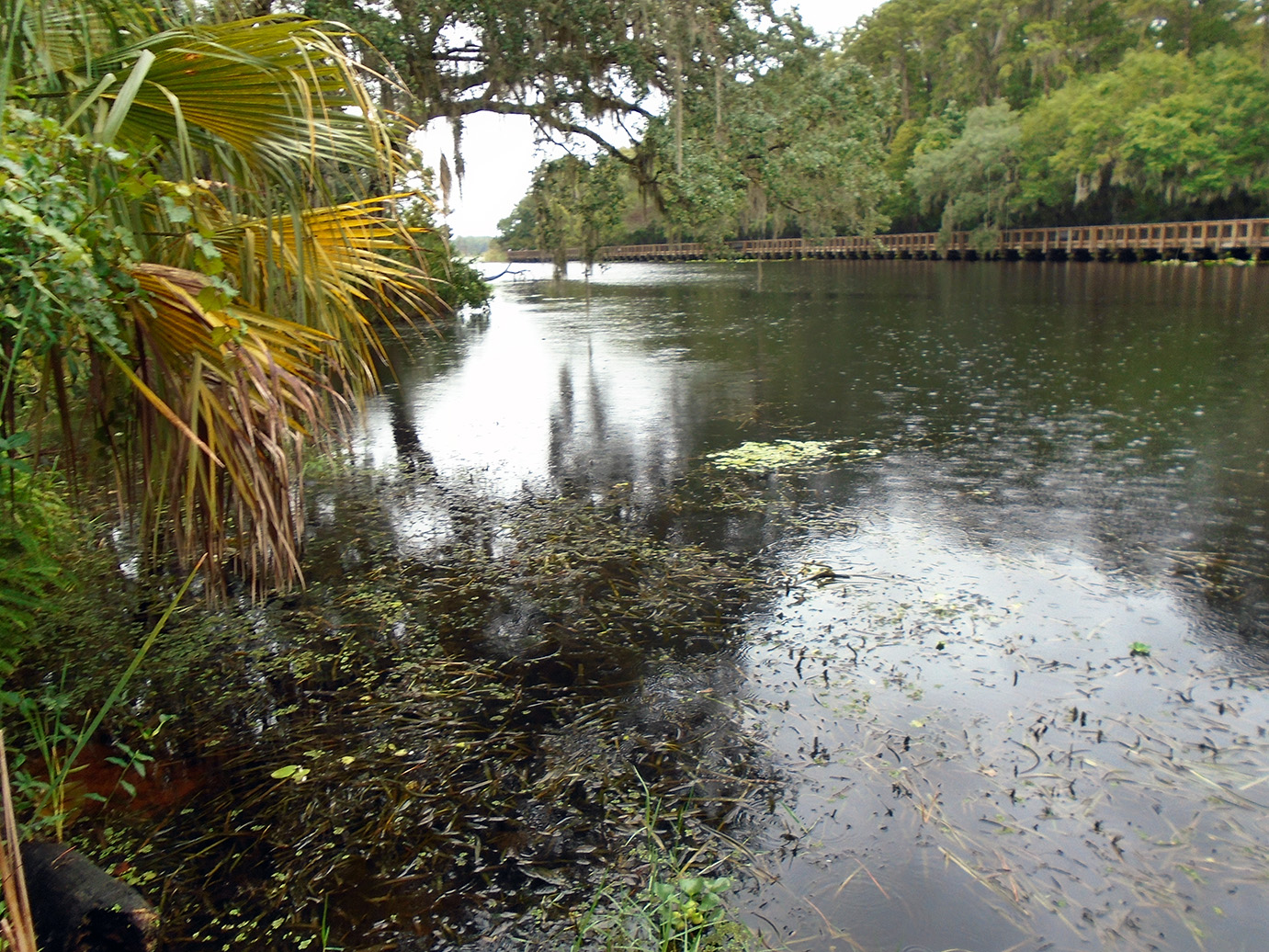
My spirits leapt upon arrival at Spoon Creek, 2 km east of town, as pretty an agricultural ditch as I can ever remember stomping down into (A).  The water was surprisingly clear and cool; the habitat surprisingly rich and diverse.  Physa acuta, Helisoma trivolvis, and Gyraulus parvus were all common.  And without any difficulty I was able to survey extensive mud banks of the sort where, in The East, crappy little amphibious lymnaeids would have been jumping into my sample vials.  But alas, no lymnaeid snails of any rank or description volunteered that morning, nor did any evidence thereof present itself to eyes that ached to see it, not so much as a dry shell.

What is the problem here?  What is the problem?  Too baffled to be dispirited, I returned to my rental car, reversed course back toward town, and crossed the railroad tracks 2,000 m west.  There between the tracks and a gravel service road ran a bone-dry ditch choaked with grass, weeds, and roadside litter (B).  And in that shallow ditch I found L. bulimoides shells.  Lots of them.  But none alive – no water.


Returning to my car and driving another 200 meters west – honestly, I should have walked – I crossed another agricultural ditch, this one green and carrying water (C).  It was marked as an intermittent creek on USGS maps, much smaller than Spoon Creek, without the habitat diversity.  I found sparse populations of both Lymnaea elodes and Helisoma trivolvis in the grasses there, however, and a singleton individual Succinea grazing along the water’s edge, mimicking an L. bulimoides so startlingly I almost had a heart attack, three days building [8].


But absolutely no bulimoides in green ditch (C), nor any shell, nor any sign thereof.  There you have it, in a triptych.  A linear transect of 2,200 meters returned no evidence that bulimoides had ever inhabited a summer-watered habitat (A), lots of evidence of bulimoides in a summer-dry habitat (B), and no evidence of bulimoides in a second summer-watered habitat (C).  Lymnaea bulimoides populations are obligately vernal.  They cannot be found in the summer, not in this part of the world, anyway.


But I had time, spirit and wherewithal for one last Hail Mary.  Back to the ditch along Bellfountain Road I drove, determined to replicate Greg R. Foster’s experiments from the summer of 1969.  I picked a low point near a drainage pipe, where dead shells had accumulated.  Then, shiny new Fred Meyer shovel flashing in the hot August sun, I chopped – literally chopped – rock hard earth out of the ditch down to a depth of maybe 10 inches and loaded it into my crisp orange five-gallon bucket.  This I carried back to the Airbnb my wife and I had rented in town, hosed down, stirred and waited.  Stirred and waited.  Stirred.  Waited overnight.  Nothing.


My wife and I dropped by Bill’s house on our way out of town the next morning.  He had indicated that he could make some use of a slightly tarnished shovel and a muddy five-gallon bucket, the like of which I just happened to have in the hatchback of our rental car.  Bill promised that he and the OSU students would monitor G. R. Foster’s Bellfountain Road site, and return in the winter, with the rains.


I myself had been completely skunked – humiliated – by Lymnaea (Galba) bulimoides.  Even unto the present day, over a malacological career spanning 50 years, I have yet to see one on the hoof.  But tucked into my shirt pocket as we boarded Delta Flight 675 for home was a glass vial of alcohol.  And in that alcohol were exactly N = 2 bona fide bulimoides from Gahr Pond, courtesy of Ms. Courtney Hendrickson.  Might the centuries-old confusion over the very identity of the Phantom Lymnaeid of the Pacific Northwest somehow yet be resolved?  Tune in next time.


Notes


[1] Foster, G.R. (1971)  Winter vagility of the aquatic snail Lymnaea (Galba) bulimoides Lea.  Basteria 35: 63 – 72.


[2] Den Hartog, C., and L. DeWolf (1962)  The life cycle of the water snail Aplexa hypnorum. Basteria 26: 61-88.


[3] Dillon, R.T., Jr. (2000) The Ecology of Freshwater Molluscs.  Cambridge University Press, UK.  509 pp.


[4] Wethington, A.R., J. Wise, and R. T. Dillon (2009) Genetic and morphological characterization of the Physidae of South Carolina (Pulmonata: Basommatophora), with description of a new species.  The Nautilus 123: 282-292. [pdf]  For more, see:

  • TRUE CONFESSIONS: I described a new species [7Apr10]

[5] Foster, G.R. (1973) Soil type and habitat of the aquatic snail Lymnaea (Galba) bulimoides Lea during the dry season Basteria 37: 41 – 46.


[6] From left, Emilee Mowlds, Bill Gerth, Courtney Hendrickson & McKenna Varela.


[7] Alas, the top off the derelict structure was demolished in 2012, due to concerns over its structural integrity.


[8] Yes, in my field notes I wrote, “Succinea gave me a heart attack.”  Death by Stylommatophoran.  My goodness, we malacologists are a strange and tender lot, aren’t we?

Thursday, February 13, 2025

Oregon, bulimoides, or bust

Editor's Note – Exactly one year ago, on [13Feb24], I posted an essay in the columns of this blog asking the question, “What is Lymnaea bulimoides?”  And I concluded that essay, “Malacologists of America, we must do better.”  Here is my effort.

L. bulimoides Gahr Pond
Thomas Nuttall (1786 – 1859) was a man of distinction [1].  He was among the first naturalists to explore Arkansas, among the first to botanize California, and the author of the first field guide to the North American birds.  The breadth and depth of his experience with the natural history of temperate America was unequalled in his day, arguably since.  And of the 400,000 pioneers who travelled the Oregon Trail west from its opening in the early 1810s through its heyday in the 1840s – 1860s, Thomas Nuttall was one of the very, very few who ever came back east again.

And packed deep in the luggage he carried with him aboard the merchant brig Alert in 1836 [2], bound from Monterey to Boston with a cargo of cowhides, was the world’s first sample of crappy little amphibious lymnaeids that Isaac Lea [3] ultimately described as Lymnaea bulimoides [4].  And as my wife and I boarded Delta Flight 954 for Portland on the morning of July 31, 2024, in that one tiny distinction, I meant to join him.


Never has a freshwater gastropod subsequently so important been subsequently so widely misunderstood.  Lymnaea (Galba) bulimoides is the primary intermediate host of Fasciola hepatica – the livestock liver fluke – in the Pacific Northwest.


Fasciola is a digenetic trematode, which means that it has two hosts, a primary host, typically hooved livestock [5], and an intermediate host, typically a lymnaeid snail.  The worm infects the liver of its primary host, laying eggs which are defecated.  Those eggs hatch into swimming miracidium larvae which find a snail, burrow in, and develop into rediae, which in turn shed swimming cercaria larvae. 


In all of those details, Fasciola is no different from the better known fluke Schistosoma.  But unlike Schistosoma, the cercariae do not burrow into the skin of their primary hosts but rather encyst on grasses and vegetation.  And the cysts must be eaten by the primary host to complete the life cycle.

Life cycle of Fasciola [6]

So, from the standpoint of the fluke, the best environment would be a pasture cycling wet to dry, inhabited by an amphibious lymnaeid that might be exposed to swimming miracidia and shed swimming cercariae during the wet season, then drying so that the cysts might be grazed over by livestock.  Remember that.  That will be a key to understanding the remainder of this essay, and next month’s as well.


Liver flukes are a problem for the livestock industry [5] on six continents, and significant research efforts have been directed toward understanding the crappy little amphibious lymnaeids that host them worldwide for many years [7].  Except in the Pacific Northwest.  Where there is not a worker in the field today – not malacologist, nor parasitologist, nor veterinarian, nor guardian of the public health – who could identify a bona fide Lymnaea (Galba) bulimoides if it bit him on the boot toe.  Or at least, that was my hypothesis, as I boarded Delta Flight 954.


My library and museum research over several years previous had revealed to me what appeared to be repeated and systematic confusion between Lymnaea (Galba) bulimoides and Lymnaea (Galba) cubensis/viator, a similarly small, similarly amphibious, similarly susceptible lymnaeid much more widely distributed across The Americas, North and South [8].  That confusion seemed to have its origins in the late 19th century, redoubling in the early 20th, with the description of Lymnaea (Galba)  cockerelli, a third distinct biological species sometimes co-occurring with bulimoides in mixed populations [9].


I became convinced of a widespread, systematic, three-way confusion in early 2024 but had no evidence to support it, much less solve the problem.  To test that hypothesis, I needed a control, and none was to be had.  Thomas Nuttall’s original sample, surviving the perilous voyage around The Horn with their collector, was described by Isaac Lea as simply coming from “Hab. Oregon.”  In 1841, “Oregon” included all or part of five U.S. States, and much of British Columbia.


So, the first step out of the darkness, it seemed to me as I settled into my narrow seat early that July morning, would be to restrict the type locality of Lymnaea bulimoides to some more precise spot.  And then to sample and characterize the population of crappy little, amphibious lymnaeids inhabiting that spot as a standard, against which all other populations of lymnaeids might be compared.

The ideal type locality should be well-characterized, accessible, and protected.  Thus, folded in my shirt pocket that morning was a map of Oregon I had printed off line with a pin dropped on 44.5229, -123.3377, a drainage ditch by Bellfountain Road about 8 km SW of Corvallis where, as best I could figure, one Greg R. Foster had conducted the only decent studies of the biology of L. bulimoides ever published in the scientific literature, way back in 1969.  More about those studies [10] next month.


And there were other pins dropped on my map as well.  In addition to establishing a type locality, I very much wanted to find at least two additional populations of bona fide L. bulimoides to get some feel for intraspecific variation – one north of Corvallis, and one south.  For the former, I had researched online quite a few museum collections of apparently bona fide L. bulimoides in the Portland area, perhaps 70 miles north of Corvallis. And I had also marked the bowl of a rolling hayfield in a lovely and remote corner of Yamhill County about 40 miles north of Corvallis, locality courtesy of Ms. Courtney Hendrickson of Oregon State University, and the hero of our story, Mr. William (Bill) Gerth.


Bill is a senior faculty research assistant in the OSU Department of Fisheries, Wildlife, and Conservation Sciences in Corvallis, and a longtime friend of the FWGNA Project.  I could not name a cheerier or more enthusiastic colleague.  I had emailed Bill several days before flying off to Oregon, just to touch base, and he replied almost immediately with a gang of students and coworkers on the CC line all interested and eager to help.


And attached to his email was the jpeg that opened this essay, depicting a nice individual L. bulimoides collected by Ms. Hendrickson from a seasonal pond in a hayfield on the Gahr Farm property in Yamhill County. The itinerary I had outlined for myself and my lovely wife Shary, as we retrieved our luggage in the Portland airport and headed for the rental cars that hot July morning, was an ambitious one.

We drove north over the Columbia River that very afternoon, and into the state of Washington.  And my first noteworthy observation was made while still battling the urban sprawl of Vancouver: a population of very ordinary-looking Lymnaea (Galba) humilis inhabiting the muddy margins of a retention pond across Mill Plain Blvd from the Walmart (A).  I don’t suppose I was terribly surprised.  Those things are the Physa acuta of the Lymnaeidae.  But it was interesting to see our old friend humilis here in the Pacific Northwest, making cozy with the much more mysterious bulimoides I hoped to find, and the cubensis I rather hoped I would not.


The environment turned more propitious at Grass Valley Slough (B), but here we encountered the problem that would bedevil us for the remainder of our sojourn in the Pacific Northwest.  The slough was bone dry, baked hard as a rock.  I was most impressed by the dramatic accumulation of bleached Physa gyrina shells in the brittle mud at the culvert under Bybee Road, but finding no evidence of lymnaeid remains among them, neither shell nor meat, moved on.


Further north the topography evolved into rolling hills, the drainage improved, and scattered forest appeared.  And at point (C) I made an observation that forever changed my life [11].  Juga in a ditch.  This was a little roadside ditch, not three feet across, choked with grass, a place one would never expect to find a prosobranch gastropod of any sort back East, ever [12].  Yet Juga [14] does.  There simply is no substitute for field experience if one wants to understand the biology of a study organism, or indeed an entire Linnaean Family of study organisms, and I was once again reminded, harshly, that in the Pacific Northwest, I had none.


 At Battleground Lake (D) we reached the foothills of the Cascades, and finding the poorly drained fields and open pasturelands that best serve as habitat for the elusive L. bulimoides essentially gone, and the light failing, reversed our course for Portland, disappointed.  Tomorrow, I hoped, conditions might be more favorable.


Shary at Baker Cabin
The next morning we set our course east along the left bank of the Columbia River, swooping wide around the eastern suburbs of Portland toward the Willamette River valley to the south.  The freshwater gastropod fauna was gratifyingly diverse in the sloughs along the south bank of the big river (E), that of Kelly Creek (F) and several other sites in the Sandy and Clackamas River Valleys (G), rather less so [16].  My goodness, the day was turning hot.


All of the sites we visited that morning, and into the early afternoon, included some exposed mud bank, which would have been fine habitat for crappy little amphibious lymnaeids in The East but seemed devoid of molluscan life here in the environs of Portland.  We ran into the Oregon Trail at the historic Baker Cabin (H) and followed the trail down to its terminus at Oregon City (I).


Well, to be technical, Oregon City was the terminus of the Barlow Road section, a passage through The Cascades that did not open until 1846.  Thomas Nuttall pioneered the newly opening trail in 1834.  In those days the only route to Oregon was down the Columbia River, through the treacherous rapids at The Dalles.


My wife and I, on the other hand, opted to take I-205 and OR-18 south through the rich agricultural landscape of Yamhill County, now dry and brown in the August sun. The rotating sign in front of the bank was reading 103 degrees at 4:20 in the afternoon, when we passed through McMinnville on our way west toward Gahr Farm (J).

Bill’s colleague Courtney had thoughtfully alerted the landowner to expect visitors that afternoon and sent me a link to a map with a suggestion on a parking spot, as well as the precise coordinates [17] where she had collected N = 2 L. bulimoides in the spring of 2023, some 400 meters south through Farmer Gahr’s stubbly hayfield.  She added somewhat cryptically, however, “Just a heads up that the ponds can be a little tricky to find.”


My standard wardrobe for fieldwork is built on a foundation of hip boots over blue jeans, at least as much to protect my legs stomping though underbrush on my way to the creek as to protect my piggies upon arrival.  But the sun beat so mercilessly on Farmer Gahr’s fallow fields late that afternoon I changed into shorts and water shoes by  the desolate roadside, willing to pay the cost of few degrees of cooling in blood from my ankles.  And off I stomped toward an island of cattails flickering in the distance.


Alas, dry-rooted cattails were the only evidence that any pond had ever existed in the rolling hills of the Gahr Farm on August 1, 2024.  I staggered, dazed, from patch to patch, beating down through the willows to the Muddy Creek ditch, finding not puddle, nor pebble, nor polliwog.  The singleton bleached shell of Physa gyrina I ultimately recovered, in over an hour of pawing through brittle cane and cattail root, felt like a trophy.

Gahr Farm, 1Aug25

As I trudged back to our rental car, where my wife sweltered in the late afternoon sun [18], singleton Physa rattling dry in a vial in my chest pocket, I found myself meditating on the mantra, “Malacology in The West is different.”  And as the sun set on that exceptionally long, exceptionally hot day, southbound on OR-99W with Corvallis lit green on our GPS, a question crystallized.  Might any better fortune await me in Greg R. Foster’s ditch on the morrow?  Tune in next time.


Notes


[1] Most of the biographical information that opened this post came from:

  • Nelson, John R. (2015) Thomas Nuttall: Pioneering Naturalist (1786 – 1859).  Bird Observer 43: Article 2.

[2] By remarkable coincidence, Richard Henry Dana was serving as an ordinary sailor on this very voyage, later to record the adventure in his famous memoir, “Two Years Before the Mast.”


[3] For a brief bio of “The Nestor of American Naturalists,” see:

  • Isaac Lea Drives Me Nuts [5Nov19]

[4] Lea initially described Lymnaea bulimoides in brief Latinate form in 1841, with more complete English description in 1844:

  • Lea, I (1841) On fresh water and land shells (continued).  Proceedings of the American Philosophical Society 2(17): 30 – 34.
  • Lea, I. (1844/46) Continuation of Mr. Lea’s paper on fresh water and land shells.  Transactions of the American Philosophical Society 9(1): 1 – 31.

[5] Human cases of fascioliasis are becoming more common, according to the WHO website on neglected tropical diseases.  Transmission is apparently by ingestion of watercress or mint, although “encysted larvae may be found on other salad vegetables.”


[6] From the U.K. National Animal Disease Information Service [Nadis.org.uk]


[7] My sheaf of research papers on Galba worldwide fills an entire drawer of my filing cabinet.  For an opening into the vast literature, you might start with:

  • The Lymnaeidae 2012: Fossarine Football [7Aug12]
  • The American Galba and The French Connection [7June21]
  • Exactly 3ish American Galba [6July21]
  • What Lymnaea (Galba) schirazensis is not, might be, and most certainly is [3Aug21]

[8] For a review of the bulimoides/cubensis confusion, see:

  • What is Lymnaea bulimoides? [13Feb24]

[9] For a review of the bulimoides/cockerelli confusion, see:

  • Lymnaea (Galba) cockerelli, Number 15. [12Mar24]

[10] Greg R. Foster’s contributions:

  • Foster, G.R. (1971)  Winter vagility of the aquatic snail Lymnaea (Galba) bulimoides Lea.  Basteria 35: 63 – 72.
  • Foster, G.R. (1973) Soil type and habitat of the aquatic snail Lymnaea (Galba) bulimoides Lea during the dry season Basteria 37: 41 – 46.

[11] No, not really.  I’m straining to create some sort of drama out of parking by a weedy ditch in a rented Acura.  Work with me here.


[12] Well OK, the water was cool, and there was a little bit of current.  Melanoides populations can reach great densities in such ditches down in Florida [13].  But the point I’m trying to make is that pleurocerid gastropods do not live in such environments, under any circumstance, period.


[13] And Pomacea too, if you want to quibble.  Ditches are different in Florida.  See halfway through my essay:

  • The Mystery Snail Color Genetics Project [6June23]

[14] I would have identified this population as Juga hemphilli, but opening the 2022 revision by Strong and colleagues [15] it appears that hemphilli has been synonymized under Juga plicifera.  I really need to dig into that paper.  Perhaps in a future post.


[15] Strong, Ellen E., J.T. Garner, P.D. Johnson, and N. V. Whelan (2022) A systematic revision of the genus Juga from fresh waters of the Pacific Northwest, USA (Cerithioidea, Semisulcospiridae).  European Journal of Taxonomy 848: 1 – 97.


[16] In the Columbia Slough Natural Area (E) I recorded Cipangopaludina chinensis, Physa acuta, Helisoma trivolvis, Lymnaea auricularia, and Gyraulus parvus.  At Kelly Ck (F) just Physa acuta.  At the Clackamas River (G) I recorded Juga plicifera, Fluminicola virens, and Physa acuta.


[17]  045.1666690, -123.3129760, to be quite precise.


[18] Throughout the day, my long-suffering wife had been chauffeuring me around NW Oregon like a poodle and patiently waiting for me in the car, reading a book, with the motor running and the AC on.  At some point during my lengthy explorations at the Gahr Farm, a public-spirited citizen stopped to warn her about the hazards of parking a car at idle over a grass stubblefield as dry as Farmer Gahr’s.  She cut the engine immediately, of course.  But was a bit on the cranky side when I eventually returned.


Wednesday, September 18, 2024

The Type Locality of Melania laqueata

Nashville, home of the Grand Old Opry and the Brand-New Parthenon, was founded on a low hill overlooking the Cumberland River in 1779.  Well situated on a deepwater port with an easy float to the Mississippi River, at the northern terminus of the Natchez Trace to walk home again, the town grew quickly.  Nashville was chartered as a city shortly after Tennessee was granted statehood in 1796, and selected as state capitol in 1843, thanks in large part to her favorite son, Andrew Jackson.

Pleurocera laqueata [1]
My faithful readership might remember the thumbnail portrait we sketched back on [6Dec19] of a colorful character named Prof. Gerard Troost (1776 – 1850).  Troost was a pioneering Dutch American geologist, the founding president of the Academy of Natural Sciences in Philadelphia, who in 1825 sailed down the Ohio River with Thomas Say to the utopian community of New Harmony, Indiana.  A scant two years later, however, Troost accepted a call to the University of Nashville, becoming state geologist in 1831.  From that date until his death, he travelled widely across the Volunteer State, becoming (according to the Tennessee Encyclopedia online) “the state’s best-known antebellum scientist.”

Meanwhile, back in New Harmony, his buddy Thomas Say kept the printing presses cranking.  And in 1829 Say described a pleurocerid snail named Melania laqueata, as follows [1]:

“Shell oblong: spire longer than aperture, elevated, conic, acute: volutions moderately convex, with about seventeen regular, elevated, equal, equidistant costae on the superior half of each volution, extending from suture to suture, and but little lower, and becoming obsolete on the body whirl; suture moderately impressed; sinus obsolete.  This species was found by Dr. Troost in Cumberland River.  Aside from a difference in form, it may be distinguished from cancellata, nob., and catenaria, nob., by being altogether destitute of elevated revolving lines.  The young shell is carinated.”

Today, of the (roughly 1,000) names for species of pleurocerid snails described from the waters of North America, Thomas Say’s “Melania laqueata” is twelfth oldest [2].  And populations matching the snails that Gerard Troost sent to Thomas Say from the “Cumberland River,” reidentified as “Goniobasis” laqueata between 1862 and 1980, re-reidentified as “Elimia” laqueata 1980 – 2011, re-re-reidentified as Pleurocera laqueata in the modern day [3], have turned out to be common and widespread in rivers and streams throughout the greater Cumberland and Green River drainages, the upper Kentucky River, and Tennessee River drainages west of Chattanooga.

So, “The Cumberland River” is a big place.  Who could honor the Volunteer Spirit of Tennessee better than a malacologist stepping forward to narrow down (or “restrict’) Thomas Say’s type locality for Melania laqueata to some more precise spot?  And one’s natural first thought – correct me if I am wrong – would be to assume that Gerard Troost collected that first specimen of M. laqueata from the Cumberland River as it runs by his adopted home of Nashville.  But alas.

Modern Nashville

Efforts by the U.S. Army Corps of Engineers to blast the Cumberland River clear of obstacles to navigation began as early as the 1830s.  The first lock and dam on the Cumberland River was constructed at Nashville in 1887, and by the 1920s a system of 15 locks and dams regulated the Cumberland River to a minimum depth of 6 feet through the entire state of Tennessee.  Attention then turned to the generation of hydroelectric power, the COE constructing a series of gigantic dams in the 1940s through the 1970s, including Old Hickory Dam just 20 river miles upstream from Nashville in 1956.

A visit to the Nashville waterfront today betrays no hint of gastropod habitat, nor indeed, home for macrobenthic life of any sort or description.  Downstream the Cumberland River is armored with rip rap boulders.  Upstream the flow is increasingly controlled by the generation schedule at the Old Hickory Dam, daily cycles at the Edenwold Gage often reaching amplitudes of 6 feet.  Slackwater extends 100 miles above the dam, essentially to the base of Lake Cordell Hull, which extends another 70 miles, essentially to Kentucky.  If a viable population of pleurocerid snails of any description survives in the Cumberland River of Tennessee today, I am not aware of it.

It seems to me that we are left with no alternative but to select a tributary of the Cumberland River as the type locality for Thomas Say’s Melania laqueata.  And the tributary closest to Gerard Troost’s base of operations currently inhabited by a viable population of pleurocerid snails matching Thomas Say’s 1829 description would be Browns Creek, a small stream running north through the state fairgrounds to empty into the Cumberland entirely within the modern city limits of Nashville.

I visited Browns Creek at the state fairgrounds on a sunny Saturday morning this April just past, as crowds were beginning to gather for the INEX Spring Nationals at the Fairgrounds Speedway [4].  If you click the image below for an enlargement, you can see a supertruck practicing on the track below, at far left.  Browns Creek runs under that bridge I’ve marked with an arrow.

Tennessee State Fairgrounds

The stream itself doesn’t stink anywhere near as bad as you might expect from its entirely urban catchment.  Sure, there was garbage and litter of all sorts everywhere down in the rather narrowly incised ditch through which Browns Creek runs.  But the water was clear, and coolish for April, and running over riffles, and you could flip rocks and find mayfly larvae.  I’ve waded into much worse.

The pleurocerids were not abundant, but with an hours’ effort I was able to collect N = 29 topotypic Pleurocera laqueata laqueata (Say 1829) from Browns Creek at the state fairgrounds, in Nashville, TN (36.1282, -86.7628).  At this point I propose to restrict the type locality of Melania laqueata Say 1829.

My sample demonstrated the range of shell morphological variation typical of pleurocerid populations everywhere.  But before we follow that thread any further, we need to clarify some terminology.

In his original description, Thomas Say focused on the “regular, elevated, equal, equidistant costae” on the whorls of the shell.  Such scallop-shaped ridges on the whorls have also been called, by other authors at other times, “costations,” “plicae,” or “plications.”  Generally, in previous posts on this blog, I have tended to prefer plications (adj. plicate) to describe that particular shell feature, so let’s try to be consistent.

And Thomas Say also went on to stipulate that the shell of his Melania laqueata was “altogether destitute of elevated revolving lines.”  Such shell features have also been called, by other authors at other times, “spiral lines” or “spiral cords” or “striae” or “striations.”  I have generally preferred striation (adj. striate) in past essays on this blog, so again, let’s stick with that.  Thomas Say’s holotype shell figured way up above demonstrates very strong plications but no striation whatsoever.

So a small sample of the shells born by the newly designated topotypic population of P. laqueata is figured below.  And it should come as no surprise to see significant intrapopulation variation in shell plication.  All are plicate around the apex, but the body whorl of shell on the left is essentially smooth, that of the shell on the right strongly plicate, and the shell in the middle approximately half-plicate, around the top of the body whorl only.

Topotypic P. laqueata

The subject of shell plication in pleurocerid snails has come up at least three times previously in the columns of this blog, maybe more [5], most recently in an essay I published on P. troostiana back in [15Apr20].  My loyal and attentive readership may recall that Calvin Goodrich devoted #3 in his “Studies on the Pleuroceridae” series to plication way back in 1934 [6].  The laboratory rearing experiments of Misako Urabe [7] returned evidence that at least some variation in the strength of shell plication may be an ecophenotypic response to substrate.

And we shouldn’t let this opportunity pass to tip our caps to Thomas Say, the Father of American Malacology, as well.  In a quaint nineteenth-century fashion, I think he may be trying to telegraph that he noticed intrapopulation variance in the plication of Melania laqueata, like a Charles Darwin on the American frontier.  His figured holotype clearly shows strong plication (“costae”) across the entire body whorl “from suture to suture,” much like topotypic shell C above.  But in his description, he specified:

“seventeen regular, elevated, equal, equidistant costae on the superior half of each volution, extending from suture to suture, and but little lower, and becoming obsolete on the body whirl.”

The wording of Say’s written description about plication on “the superior half of each volution … and but little lower” implies to me a morphology more like topotypic shell B.  And that final clause about plication “becoming obsolete on the body whirl” suggests more the morphology demonstrated by topotypic shell A.

Darwin’s theory depended on three hypotheses: that populations vary, that such variation yields fitness differences, and that fitness differences drive evolution.  The first hypothesis is the easiest to test, but historically, was the most difficult to accept.  It is humbling to see a pre-Darwinian systematic biologist such as Thomas Say entertaining an hypothesis that so many 21st-century systematic biologists refuse to consider.

Ah, but.  Thomas Say was very, very certain that the shell of his new Melania laqueata was “altogether destitute of elevated revolving lines.”  What is the situation with striation?  Tune in next time.

Postscript:

On 10Feb25 this essay was combined with four companion pieces and published as a pdf separate entitled, "Systematic review of the Pleurocera laqueata/troostiana complex."  That document is available for download as FWGNA Circular No. 8.

Notes:

[1] Say, T. (1829) Descriptions of some new terrestrial and fluviatile shells of North America.  New Harmony Disseminator of Useful Knowledge 2(18): 275 – 277.

[2] Melania laqueata is in a five-way tie for twelfth oldest, to be precise, with the four other pleurocerids described by Thomas Say in 1829: semicarinata, obovata, canaliculata, and trilineata.

[3] The history of the genus of pleurocerid snails to which Say’s Melania laqueata has been assigned is long and tortured.  For a brief review, see:

  • Goodbye Goniobasis, Farewell Elimia [23Mar11]

[4] The Nashville Fairgrounds Speedway is the second oldest continually operating motorsports track in the United States.  It hosted Grand National / Winston Cup NASCAR races 1958 – 1984, and NASCAR Busch Series races 1984 – 2000, before being replaced on the schedule by the 1.33 mile Nashville Superspeedway in 2001.  Here’s a quote from the sportscaster Dave Moody (interviewing Sterling Marlin): “If they announced that five old ladies would push baby buggies around that track, 4,000 people would show up.”

[5] Previous essays touching on shell plication in the Pleuroceridae:

  • Semisulcospira research: A message from The East [6Jan08]
  • Semisulcospira research: A second message from The East [1Feb08]
  • What is a subspecies [4Feb14]
  • What subspecies are Not [5Mar14]
  • Huntsville Hunt [15Apr20]

[6] Goodrich, C. (1934)  Studies of the gastropod family Pleuroceridae – III.  Occasional Papers of the Museum of Zoology, University of Michigan 300: 1 – 11.

[7] Urabe, M. 2000. Phenotypic modulation by the substratum of shell sculpture in Semisulcospira reiniana (Prosobranchia: Pleuroceridae). J. Moll. Stud. 66: 53-59.

Tuesday, February 7, 2023

New Clothes for The Emperor

Editor’s Notes - If you’re just joining us, I apologize.  This month’s blog builds from a series of eleven essays on the morphology, systematics, ecology and biogeography of the planorbid genus Helisoma in the southeastern United States, stretching all the way back to 2004, as listed at footnote [1] below.  No, you don’t have to read that entire list, unless you are seriously interested in the science.  But the story below won’t make any sense at all unless my two most recent essays, [6Dec22] and [5Jan23], are fresh in your mind.  Oh, and all that anatomical mishmash I reviewed two years ago, in [9Feb21] will be super helpful for this month’s essay, as well.

This essay was subsequently published as: Dillon, R.T., Jr. (2023c)  New Clothes for The Emperor.  Pp 307 – 317 in The Freshwater Gastropods of North America Volume 7, Collected in Turn One, and Other Essays FWGNA Project, Charleston, SC.

Both Helisoma scalare and Helisoma duryi were described in the 19th century from “The Everglades of Florida.”  Both of their type localities were, however, hundreds of miles north of the ecological region formally recognized as The Everglades here in the 21st.  And none of the 20th century monographers who reviewed the planorbid gastropods in the interim: Henry Pilsbry [2] in 1934, F. C. Baker [3] in 1945, or Bengt Hubendick [4] in 1955, had on his lab bench any live-collected topotypic material for either nominal species.  And as I merged into the eastbound lanes of I-10 on Tuesday morning Feb 23, 2021, Tallahassee in my rearview mirror, neither did I.

Both Pilsbry and Baker based their extensive and detailed redescriptions of Helisoma scalare on a population of planorbids sampled from “Lake Butler, Pinellas County.”  In 1949 the Florida legislature changed the name of that particular body of water to “Lake Tarpon” to mitigate confusion with another Lake Butler elsewhere in The Sunshine State. And so, it was the coordinates of a boat launch in the John Chestnut Park on the SE shore of Lake Tarpon, about 15 miles NW of Tampa, that I had keyed into the GPS on my dash that cloudy February morning.

Helisoma scalare from Lake Tarpon (nee Butler)

And the body of water into which I launched my kayak some four hours later, light drizzle notwithstanding, was a lovely lake of 2,500 acres, average depth 8 feet, clear and cool and blessed with an abundance of macrophytic vegetation of all sorts: floating, emergent, and submerged.  And the weeds of that last-listed category, wafting in the gentle currents at depths of an arm’s length, were laden with Helisoma scalare bearing shells of a most gratifyingly classic morphology, as depicted in the figure above.

The situation in Lake Tarpon (nee Butler) turned out to be quite reminiscent of that I described in The Everglades at the 40-Mile-Bend a couple years ago [5Oct20].  The flat-topped Helisoma seem to reach maximum abundance in the rooted-submerged macrophytes in both places, especially inside beds of eel grass (Vallisneria).  I also noted high densities around the roots of emergent vegetation, such as cat tails (Typha).  The snails do not seem to crawl up those Typha stems to the surface under any circumstance, however.  Their life habit appears exclusively benthic.

Indeed, during the couple hours I waded and kayaked around the margins of Lake Tarpon, I developed the strong impression that no element of the entire population of Helisoma dwelling therein ever, from its birth to its death, rose to enfold an air pocket under its mantle, under any circumstance.  This suggested to me that they would not adapt well to warming or artificial enrichment, or to any perturbation that might cause levels of dissolved oxygen to dip in their lovely lacustrine environment.  Helisoma scalare populations seem to need large volumes of cool, clean, clear water.

Such a situation contrasts strikingly with the typical habitat of Helisoma duryi in my experience, or (indeed) Helisoma trivolvis throughout the remainder of North America.  Populations of more typically-planispiral planorbids are ordinarily found grazing in floating macrophytes in warm, rich ponds or ditches, or on the margins of riverine backwaters, almost always near the surface.

Lake Tarpon

And back wading in Lake Tarpon, I also developed the strong impression that, setting aside their peculiar scalariform morphology, the shells borne by this particular population of pulmonate snails were exceptionally thick, heavy, and robust.  This seemed to imply some special adaptation for defense against crushing predation.  At this suggestion, the schools of bream darting about in the clear waters around my feet seemed to nod their heads in agreement.

The skies were growing leaden over the crystalline waters of Lake Tarpon as I loaded my kayak back into my pickup and pushed the button on my GPS unit for home.  And the next afternoon I dumped my big, fresh sample of H. scalare in an enamel pan on my lab bench and pulled out the big samples of H. duryi I had collected in 2020.  And I opened my well-thumbed copy of Pilsbry 1934 on the left side of my lab bench, and my much-beloved copy of Baker 1945 on the right.  And to refresh everybody’s memory:

In 1934 “The Elderly Emperor” gathered four previously described species of Floridian planorbids into a new subgenus of Helisoma he called Seminolina: scalare (Jay 1839), duryi (Wetherby 1879), and two fossil species of Dall (1890), conanti and disstoni.  Under Helisoma (Seminolina) duryi he recognized six subspecies: the typical H. duryi duryi (Wetherby), intercalare (Pilsbry 1887), preglabratum (Marshall 1926), and three new ones: normale, eudiscus, and seminole.  Together this set of six subspecific nomina described a completely seamless progression from the compressed, tightly-planispiral eudiscus to the typical, loosely-planispiral duryi to the flat-topped, scalariform seminole.

From Pilsbry [5]

But to be clear.  Pilsbry did not subscribe to the modern convention that subspecies demonstrate any sort of geographical isolation.  He wrote:

“In a well-watered region of low relief, like Florida, no barriers to the migration of these snails exist, so that the geographic limits of such races are only vaguely defined. The shell characters are so variable that with single shells or small series the identity may often be in doubt.”

In the image below, clipped from Pilsbry’s Plate 7, the top row of shells (5a – 5f) were all borne by a Helisoma duryi population sampled from “near Lake Apopka,” the second row (6a – 6f) all from a population inhabiting Lake Eustis (Lake Co.), and the third row (7a – 7e) all from the Head of the Miami River.  This entire set of 17 shells he identified as varying subspecies of Helisoma duryi.  There is no difference between shells 5e, 5f, 6e, 6f, and any of the shells I collected from Lake Tarpon.

So again, I ask.  If not the shell morphology, what exactly is the difference between Helisoma duryi – particularly the subspecies that Pilsbry began calling H. duryi seminole in 1934 – and the earlier-described H. scalare?  The distinction that Henry Pilsbry drew in 1934 turned out to be entirely anatomical.  The duryi/scalare situation is very closely analogous to the duryi/trivolvis situation we reviewed at great length back on [9Feb21], involving many of the same anatomical features, and (indeed) the same illustrations of them.  So to refresh everybody’s memory, again:

It was upon Henry Pilsbry’s head that rested the crown of American Malacology, pretty much his entire career, from 1887 to 1957.  Frank Collins Baker, more experienced as a field biologist and more gifted as a scientist, studied under Pilsbry in 1889, and labored in his shadow thereafter, predeceasing his mentor by 15 years.  And to understand what I’m getting ready to tell you about scalare and duryi, you need to understand the relationship between Pilsbry and Baker.  A bit of familiarity with the reproductive plumbing of pulmonate gastropods will also be helpful, but not necessary.

From Pilsbry [2] Plate 7.

When not in use, pulmonate gastropods invert their penis – turn it outside in – to make a bag with the business end inside.  Figure (A) in the montage below shows the structure that Pilsbry (1934) simply called the Helisoma scalare “penis, unopened.”  It’s an (upside down) sack, with an opening in the bottom through which the penis everts for copulation.  The figure I’ve marked (B) shows a Helisoma scalare penis sack opened, Pilsbry’s “V” standing for “verge,” which is a polite name for the business end of the penis during copulation.  And the organ Pilsbry has marked “pg” is the penial gland, which presumably supplies some sort of lubrication during copulation, or stimulation, heaven knows.

So, to distinguish the two nominal species of the subgenus Seminolina, scalare and duryi, Pilsbry focused exclusively upon differences he perceived in the penial gland.  In his description of his new scalariform subspecies H. duryi seminole, he wrote:

“I dissected specimens collected many years ago in Polk Co., Florida, by S. Hart Wright, and similar in shape to fig. 6d of Plate 7. The bodies are brittle, and only the penis was examined (figure C), cylindric, with the upper sac divided off inside by a thin rather high ridge. The stout conic verge projects into the lower sac. The penial gland is oblong with the smooth lateral borders folded in the alcoholic specimens, as in figure (C). This structure is quite unlike that found in H. scalare (B).”

And to reinforce the distinction, here is what Pilsbry said in his redescription of H. scalare:

“In the specimens of H. duryi seminole opened, the penial gland was found to differ [from H. scalare] in important details. It [the duryi penial gland] has a broad oblong face directed toward the cavity, with the lateral borders infolded in alcoholic specimens, as in figure (C). The division between upper and lower sacs of the penis is a single rather high thin ridge. The stouter shape of the verge in H. d. seminole may be due to greater contraction, as the specimens had evidently been killed in strong alcohol.”

Now moving forward ten years.  In addition to the three Pilsbry figures I have reproduced below F. C. Baker’s (1945) figure of the same organ – less artistic but more scientific (D).  Baker did not execute separate drawings for scalare and duryi.  This single figure was offered to represent the entire subgenus Seminolina, including scalare and duryi of all subspecies.

Penial complexes from Pilsbry [2] and Baker [3]

Baker dissected 35 individuals from the “Lake Butler” (now L. Tarpon) population of H. scalare, and populations of H. duryi from seven different sites, representing three subspecies.  Regarding the Lake Tarpon population, Baker was quick to pay homage to the Elderly Emperor:

“The genitalia of Helisoma scalare examined agree perfectly with the figures published by Pilsbry 1934.”

Turning to his H. duryi samples, Baker figured on his Plate 33 the “penial complexes” (Pilsbry’s “penis unopened”) from 12 different H. duryi individuals dissected from four populations of three different subspecies, all pushed, pulled, shrunk and extended into a myriad of diverse, blobby profiles.  And hidden among his observations was this single-line bombshell, directly contradicting the only distinction that Pilsbry had ever drawn between scalare and duryi:

“The penial gland in the duryi complex is of about the same shape as that organ in scalare.”

Poor Frank Collins Baker!  I can still feel the anguish seeping from page 132 of his planorbid monograph, here 80 years later.  The character of the penial gland that Pilsbry called “lateral borders infolded” is trivial at best, entirely artifactual if it ever existed.  Baker couldn’t confirm it in a dozen H. duryi sampled from four populations.  But neither could he risk offending his Emperor.  So, all he could do was to dissemble, which he did, five sentences later:

“The figures of the duryi complex agree with those by Pilsbry (1934).  As Pilsbry remarks on page 36, the anatomical differences are sufficient to separate scalare from duryi and its races.”

The bottom line for us today is, however, that there is no evidence of any morphological distinction whatsoever, shell or anatomical, heritable or otherwise, let alone any evidence of reproductive isolation, between the diverse planorbid populations found throughout Florida and around the world conventionally identified as Helisoma (Planorbella) duryi, and the earlier described planorbid populations of deeper, cooler and cleaner Floridian waters identified as Helisoma (Planorbella) scalareWetherby’s (1879) nomen duryi is a junior synonym of Jay’s (1839) scalaris or scalare [7].

But let’s save duryi at the subspecific level to describe populations of H. scalare bearing planispiral shells, shall we?  I hasten to remind everybody, once again, that the FWGNA has adopted the definition of the word subspecies in currency since the birth of the modern synthesis: “populations of the same species in different geographic locations with one or more distinguishing traits.”  No additively heritable basis for the shell morphological distinction between the typical scalariform morphology and the planispiral duryi morphology is necessary, or implied [8].

And I also hasten to remind my readership that the “different geographic locations” may differ at very small scales in freshwater gastropods.  See my essay of [18Feb05] for an example here in the Charleston area where populations of the duryi subspecies and the typical subspecies are separated by only a few meters.

As we have seen, the most obvious correlation seems to be with the habitat: scalariform populations inhabiting submerged macrophytes and benthic substrates in large, permanent clearwater lakes and springs absent contact with the surface, planispiral populations inhabiting emergent or floating macrophytes on the margins of ponds, ditches and riverine backwaters.

There is also a correlation with predator pressure: the scalariform populations of clearwater lakes suffering more fish predation, the planispiral populations more beset by invertebrate predators like crayfish and leeches.  And trematode parasites, apparently.  For completeness, here’s an interesting observation from Baker, page 134:

“The Helisoma duryi complex includes several races more or less heavily infested with parasitic worms.  These include normale, intercalare, eudiscus, and duryi.  Many specimens were so badly infested that most of the organs, especially the genitalia, were completely obliterated.  Helisoma scalare was the least affected.”

In conclusion.  Nothing I have written in this essay is intended as a criticism of Henry Pilsbry or (heaven forbid!) Frank Collins Baker, both of whose works stand today at the pinnacle of classical American malacology [9].  Pilsbry was The Emperor, and if in his judgement some wrinkle or fold in some gland or tube confirmed the specific status of some gastropod population somewhere, in late pre-modern systematic biology, that settled it.  Baker was a courtier, following in retinue behind.

I’d like to imagine myself in the story as a small boy watching the grand parade, naively observing that even if the margins of some particular gland in some particular snail really were folded in the particular fashion The Emperor decreed, naturally and not the result of some sort of artifact, it just wouldn’t matter anyway.

But alas, The Emperor, his Retinue and his Grand Parade have long, long passed, many years ago.  And I’m just sweeping up behind.


Notes

[1] Here’s a complete list of all essays previously posted on this blog relevant to the argument I am advancing this month:

  • Gigantic pulmonates [29Nov04]
  • Shell morphology, current, and substrate [18Feb05]
  • Juvenile Helisoma [9Sept20]
  • The Flat-topped Helisoma of The Everglades [5Oct20]
  • Foolish things with Helisoma duryi [9Nov20]
  • The Emperor Speaks [3Dec20]
  • Collected in turn one [5Jan21]
  • Dr. Henry A. Pilsbry was a jackass [26Jan21]
  • The Emperor, the Non-child, and the Not-short Duct [9Feb21]
  • In the Footsteps of the Comte de Castelnau [6Dec22]
  • The Helisoma from the Black Lagoon! [5Jan23]

[2] Pilsbry, H. A. (1934) Review of the Planorbidae of Florida, with notes on other members of the family.  Proceedings of the Academy of Natural Sciences of Philadelphia 86: 29 – 66.

[3] Baker, F. C. (1945) The Molluscan Family Planorbidae. University of Illinois Press, Urbana. 530 pp.

[4] Hubendick, B. (1955) Phylogeny in the Planorbidae. Trans. Zool. Soc. London 28: 453-542.

[5] This is quite possibly the most famous figure Pilsbry ever published.  It depicts the only overtly evolutionary thought that ever flickered through The Elderly Emperor’s mind, as far as I know.  It was reproduced on page 280 in Burch [6], and I dredged it up again for my Helisoma essay of [18Feb05].

[6] This is a difficult work to cite.  J. B. Burch's North American Freshwater Snails was published in three different ways.  It was initially commissioned as an identification manual by the US EPA and published by the agency in 1982.  It was also serially published in the journal Walkerana (1980, 1982, 1988) and finally as stand-alone volume in 1989 (Malacological Publications, Hamburg, MI).

[7] Pilsbry re-spelled the feminine scalaris to the neuter scalare to agree in gender with the neuter noun-construct Helisoma.  His Imperial Majesty did not stoop to explain that fine point of Latin grammar himself, however.  My good buddy Harry Lee was much more helpful.

[8] For a complete discussion of the subspecies concept as adopted by the FWGNA project, see:

  • What is a subspecies [4Feb14]
  • What subspecies are not [5Mar14]

[9] Neither Pilsbry nor Baker was touched by the modern synthesis, although I’d like to think that Baker would have been receptive, had he survived beyond 1942.  This makes the 1934 work of Calvin Goodrich [10] all the more impressive, if you think about it, am I right?

[10] For an appreciation of Calvin Goodrich, see his brief bio, then review his 1934 masterwork:

  • The Legacy of Calvin Goodrich [23Jan07]
  • CPP Diary: The spurious Lithasia of Caney Fork [4Sept19]
  • Intrapopulation gene flow: Lithasia geniculata in the Duck River [7Dec21]