Dr. Rob Dillon, Coordinator


Showing posts with label Information Resources. Show all posts

Wednesday, December 6, 2023

FWGNA Volumes 5, 6, and 7 Now Available!

It is our great pleasure to announce the publication of Volumes 5, 6, and 7 in the Freshwater Gastropods of North America series, now extending FWGNA coverage from U.S. Atlantic drainages into the Ohio, Cumberland and Tennessee River systems of the American interior.  These three important new references, essential for the libraries of malacologists, aquatic biologists and natural resource managers with interests anywhere in the East, are now available at a substantial discount directly from the print shop, only to friends of the FWGNA Project.

FWGNA Volume 5, by Dillon, Kohl, Winters, Pyron, Reeves, Watters, Cummings, Bailey and Whitman [1], reports the scientific results of a freshwater gastropod survey covering all or part of 14 U.S. states, a total study area of over 200,000 square miles.  Our database of 9,370 records, sampled from approximately 4,250 distinct sites, was drawn from museums (24%), state natural resource agencies (34%), and personal collections.

We document 80 species and 19 subspecies of freshwater gastropods in this malacologically rich region.  For each we provide: 

  • A dichotomous key for identification. 
  • Full-color figures. 
  • Range maps at county scale. 
  • Notes on habitat, ecology, life history and reproductive biology. 
  • Systematic and taxonomic updates to modern standards.

Three new species of cave-dwelling hydrobioid snails: Fontigens hershleri, F. benfieldi, and F. davisi, are described in the appendix [2].

Our complete FWGNA database, updating Atlantic drainage records and combining them with our fresh data from the interior, now comprises 22,044 records documenting 107 species of freshwater gastropods, with 21 subspecies.  In Volume 5 we offer a new continent-scale biogeographic analysis, dividing records into North Atlantic, South Atlantic, Ohio, and Tennessee/Cumberland subsets.  Our analysis suggests that natural selection has been more important in the evolution of freshwater pulmonate snails than gene flow restriction, but that gene flow restriction has been more important in the evolution of freshwater prosobranch snails than natural selection.

In Volume 1 (2019) we pioneered a new method to rank freshwater gastropods by incidence categories for the purposes of conservation, based on the work of K. J. Gaston.  Here in Volume 5 that system is updated to include all 107 species across all regions, re-assigning incidence ranks as necessary.

Our modern understanding of the taxonomy and systematics of the North American freshwater gastropod fauna is a function of both the natural history of the vast rivers, lakes and streams through which that diverse fauna has evolved, and the human history of the biologists who have come behind, struggling to catalog the biodiversity as it has elaborated before their eyes.  In FWGNA Volume 6 [3] we collect 32 essays, originally published on the present blog 2019 – 2023, exploring the relationship between natural history, human history, and the evolutionary models we impose today upon the pleurocerid snails of the American interior, and upon the hydrobioid snails, broadly understood.

Featured topics include intrapopulation gene flow, barriers to dispersal, character phase disequilibrium, and speciation.  Special attention is called to the phenomena of cryptic phenotypic plasticity and mitochondrial superheterogeneity, both of which were introduced in Volume 3 of the present series (2019).  Along the way we meet Professor Gerard Troost, who was twice-captured and ransomed by privateers, Captain S. S. Lyon, who singlehandedly saved the Union command of George W. Morgan in 1862, and Dr. Isaac Lea, the Nestor of American Naturalists, who drives us nuts.  Together these 32 studies comprise an essential companion to the scientific results of the 14-state survey of the freshwater gastropod fauna The Ohio, Cumberland, and Tennessee River systems published in Volume 5.

And what is the place of freshwater snails in modern culture, if any?  Does their alleged rarity and undeniable strangeness elicit conservation concern in small circles of the environmentally conscious?  Might even smaller circles of professionals in tropical medicine and health worry about their potential to host parasitic diseases?  And aren’t some freshwater snails invasive?  Or maybe they’re just cute pets?

Collected in FWGNA Volume 7 [4] are 36 essays, originally published in the genre-defining artistic universe known as the FWGNA Blog, exploring freshwater gastropod biology in the modern milieu.  Our focus here is on the larger prosobranchs – the viviparids and the ampullariid “mystery snails” – as well as on the familiar pulmonate snails of the hobbyist aquarium and the lab bench. 

Reproductive allocation and the species concept, especially as applied to asexually-reproducing populations, emerge as primary themes, together with the omnipresent phenomenon of phenotypic plasticity.  And along the way we’ll check in with Gary, a pet mystery snail, who doesn’t smell so good.  The essays collected here will be an essential companion both to the Volume 1 results of the FWGNA surveys of Atlantic drainages published in 2019, and to the results of the Volume 5 Ohio drainage surveys published alongside.

Buy Yours Now!

The retail price of these three indispensable volumes, if purchased separately, would be $56.00 + $48.89 + $53.79 = $158.68.  But we have worked out a special deal with the print shop for friends of the FWGNA Project.  Go directly to my author page on the printer’s website, link above.  Add each of the three new titles [5] separately to your cart and proceed to checkout.  At the checkout page you will find a box to enter a “coupon code.”  Apply the coupon code FWGNA3 to each of the three volumes.  This will discount your price to $99.95 for the set.  A bargain!

Notes

[1] Dillon, R.T. Jr., M. Kohl, R. Winters, M. Pyron, W.K. Reeves, G.T. Watters, K. Cummings, J. Bailey, & M. Whitman (2023a) Ohio, Cumberland, and Tennessee River Systems.  Freshwater Gastropods of North America, Volume 5.  FWGNA Press, Charleston, SC. 315 pp.

[2] Dillon, R.T., Jr., T.E. Malabad, W.D. Orndorff & H-P. Liu (2023) Three new Fontigens (Caenogastropoda: Fontigentidae) from caves in the Appalachian Ridge and Valley Province, Virginia. Pp. 283 - 306 in Dillon, R.T., Jr. et al. The Freshwater Gastropods of North America Volume V: Ohio, Cumberland, and Tennessee River Systems. FWGNA Press, Charleston. [pdf]

[3] Dillon, R.T., Jr. (2023b) Yankees at The Gap, and Other Essays. Freshwater Gastropods of North America Volume 6.  FWGNA Press, Charleston, SC.  306 pp.

[4] Dillon, R.T., Jr. (2023c)  Collected in Turn One, and Other Essays.  Freshwater Gastropods of North America Volume 7.  FWGNA Press, Charleston, SC. 345 pp.

[5] Oh, and the special deal we worked out for Volumes 1 – 4 back in 2019 is still valid.  If you follow the entire procedure outlined above for Volumes 1 – 4 and add the coupon code FWGNA4, you will receive a discounted price of $99.95 for that set as well.

Monday, April 13, 2020

A stultifyingly boring review...


I heard  a lot of nice comments about my online presentation to the Charleston Natural History Society Wednesday evening.  Several of you asked if the event might be available for later viewing.

Alas, it doesn't look as though my handsome face and cheery commentary were archived anywhere.  But I have uploaded a pdf version of the powerpoint presentation I offered that evening on the FWGNA site, here:

The Freshwater Gastropods of South Carolina [pdf, 6.9 mb]

Abstract:  Founded In 1998, the Freshwater Gastropods of North America Project is the largest-scale inventory of any element of the macrobenthos ever conducted in the United States. At present the survey extends over all or part of 15 states, including the Atlantic drainages from Georgia to the New York line, Ohio drainages above the mouth of the Cumberland, and Tennessee drainages above Chattanooga. For the 113 species of freshwater snails inhabiting this vast region we have developed dichotomous keys, range maps, figures, ecological notes and an overall rank-abundance tabulation.

The first state surveyed by the FWGNA Project was South Carolina. The rivers, streams, swamps, ponds and reservoirs of The Palmetto State host a fauna of 35 freshwater gastropod species, 19 prosobranchs (bearing gills) and 16 pulmonates (bearing lungs). Almost all are tiny, brown, and obscure. None are endangered, commercially important, useful in any way, or indeed even interesting. Three are exotic invasives, and another five (apparently) domestic invasives, but of no consequence. Bring clothespins for your eyelids, folks – this one’s a real snoozer.

Wednesday, May 22, 2019

20 Years of Progress in the Museums

Editor’s Note – This essay was subsequently published as: Dillon, R.T., Jr. (2023c)  Twenty Years of Progress in the Museums.  Pp 9 – 13 in The Freshwater Gastropods of North America Volume 7, Collected in Turn One, and Other Essays FWGNA Project, Charleston, SC.

The first FWGNA project was the “digitization” of museum collections.  The year was 1999, and at the dawn of the worldwide web, only two national collections of freshwater gastropods were searchable online: those of the Academy of Natural Sciences of Philadelphia (ANSP) and the Florida State Museum (FLMNH).  So the first NSF proposal a committee of nine of us wrote – Phase I of three projected phases – was to unify the freshwater gastropod holdings of 21 North American museums into a single, online database of approximately 200,000 records.  A Phase II field survey and a Phase III monographic review were set to follow [1].

That proposal was not funded.  But progress in the national museums continued, difficult though it was for me to understand at the time.  I revisited the subject of the online availability of freshwater gastropod collections ten years later, in April of 2009 [2].  And at that point, the number of national or regional mollusk collections searchable online had grown to ten.  To quote myself directly: “I’m impressed!”

Which of those ten might be the most useful for the FWGNA Project?  Research suggests that the world is inhabited by mollusks that are not freshwater snails.  And although Class = Gastropoda is a common search criterion in almost all malacological databases, Habitat or Environment = freshwater is surprisingly rare.  So my first idea was to compare the freshwater gastropod fractions of the ten museums by searching for “Family = Physidae.”  But as of 2009, several important museum databases were not even effectively searchable by family.  So as a crude estimate of the freshwater gastropod holdings of the ten databases available online as of 2009, I executed a simple search for “Campeloma.”


My results, published on this blog 15Apr2009, showed the University of Michigan Museum of Zoology (UMMZ) in the lead at Campeloma = 2,456 records, followed by the FLMNH Campeloma = 1,414, then ANSP = 890, and Harvard’s Museum of Comparative Zoology (MCZ) = 488.

Brand new, as of 2009, was the Global Biodiversity Information Facility (GBIF), hosted at Copenhagen [2].  Many of our colleagues felt as though the GBIF was the wave of the future.  And quite a few prominent North American museums were cooperating, including the USNM, ANSP, and FLMNH.  My query of the GBIF database (executed 26May09) returned Campeloma = 3,210.

So another ten years have passed.  And as impressive as C = 3,210 most certainly is, how does that statistic compare with the online freshwater gastropod records retrievable today?  Spoiler alert!  C = 11,874.

In February of 2010 a workshop was held at the National Evolutionary Synthesis Center in Durham, NC, ultimately yielding “A Strategic Plan for Establishing a Network Integrated Biocollections Alliance” [3].  And shortly thereafter, the NSF began accepting proposals to its new “Advancing Digitization of Biological Collections Program.”  The effect has been remarkable.

Initial projects were “thematic” around the various Kingdoms and Phyla of Biology, rather reminiscent of the chromosomally-based approach pioneered by the Human Genome project.  The “Thematic Collection Network” most directly relevant to our interests here was “Invert-E-Base,” kick-started in 2014 by a consortium that included our colleagues Rudiger Bieler of the Field Museum of Natural History in Chicago (FMNH), Diarmaid O’Foighil of the UMMZ, and Elizabeth Shea of the Delaware Museum of Natural History (DMNH) [4]. Ultimately Invert-E-Base grew to involve 18 US museums, universities and other institutions, including many with substantial freshwater gastropod holdings, such as the Carnegie Museum of Natural History (CMNH), the Illinois Natural History Survey (INHS), and the North Carolina Museum of Natural Sciences (NCSM).

Meanwhile, NSF also funded the “Advancing Digitization of Biodiversity Collections Program” (iDigBio) to serve as a hub for all the data being collected by the various thematic collection networks [5]. Additional contributions rolled in from all the other museums where digitization efforts had been proceeding independently, such as ANSP, USNM, FLMNH, MCZ, and so forth. 

Today the iDigBio database includes 4.3 million gastropod records held by scores of institutions worldwide, including The Canadian Museum, the British Museum, the Australian Museum, all over Europe – everywhere.  My search of the iDigBio database for Genus = Campeloma last week returned that eye-popping 11,874 figure quoted above.  And how about Family = Physidae AND Continent = North America?  Drum roll, please.  The iDigBio database boasts 31,417 records of the North American Physidae.

Here are the top-ten museums, ranked by their North American physid holdings, as I retrieved them through iDigBio last week.  The links are to their local online search facilities, if maintained, which tend to hold more current data. 
  1. UMMZ 5,492
  2. NMNH 5,417
  3. MCZ 3,619
  4. ANSP 3,415
  5. FMNH 2,726
  6. FLMNH 2,083
  7. INHS 1,717
  8. CMNH 1,051 (No local search)
  9. NCSM 824
  10. DMNH 653 (No local search)
Back in 2017 The American Malacological Society sponsored a symposium entitled, “The North American Mollusk Collections – A Status Report,” which subsequently yielded several excellent papers in the American Malacological Bulletin.  Here’s a tidbit I gleaned from the contribution by Sierwald and colleagues [6]:
“Of the 6.2 million cataloged lots (of mollusks), 4.5 million (73%) have undergone some form of data digitization (which includes all forms of digitization, e.g. ledger records entered, transcribed, or imported into word processor, spread sheet, or relational database formats). About 1.1 million (25%) of digitized records have been georeferenced, which represents 18% of all cataloged lots. Only 20 collections (less than 25%) claim to be fully Darwin Core compliant, however, 34 of the 66 collections with some form of digitization are searchable online through iDigBio, Arctos, or other portals, or directly through institutional websites.”
That's great, but there’s certainly still work to be done.  Prominent among those institutions not searchable online at present is the Ohio Museum of Biodiversity (OSUM) in Columbus, which boasts very significant freshwater gastropod holdings.  Our good buddy Tom Watters is gittin’ ‘er done, even as we speak.

I should conclude with a word of warning.  One of the many criticisms leveled at our FWGNA proposal way back in 1999 was simply the question of data quality.  How would we know that all those collections of freshwater snails we were proposing to digitize really were what their museum labels said they were?  Darn good question.

The reason that I have become such an avid customer of online databases over the last 20 years is that I am preparing to visit the actual collections themselves.  I print shopping lists, fasten them to an old-fashioned clipboard, and walk around the actual, physical collections, inspecting every lot personally.  Only after I have personally verified a record is it added to the FWGNA database.  One at a time.

The more powerful a tool, the more dangerous it becomes.  You  can hurt yourself with a saw, you can kill yourself with a chainsaw.  I feel sure that 100% of my readership is acutely aware that a simple Google search is simultaneously very powerful, and very dangerous, and all of us know how to use Google safely.  Exactly the same caveats pertain to the NCBI GenBank, and to the iDigBio database.  Like my Momma used to say, “You be careful with that thing now, you hear?”

Notes

[1] For more about the history of the FWGNA Project, see:
[2] My 2009 museum survey was a two-parter.  See:
  • Progress in the Museums [15Apr09]
  • Freshwater Gastropod Databases Go Global! [26May09]
[3] A Strategic Plan for Establishing a Network Integrated Biocollections Alliance:
NIBA Brochure [pdf]

[4] Sort-of obsolete, but nevertheless interesting:
  • Welcome to Invert-E-Base [html]
[5] Integrated Digitized Biocollections:
[6] Sierwald, P. R. Bieler, E.K. Shea and G. Rosenberg (2018) Mobilizing Mollusks: Status Update on Mollusk Collections in the U.S.A. and Canada.  American Malacological Bulletin 36(2):177-214. https://doi.org/10.4003/006.036.020

Thursday, May 10, 2018

Dichotomous Dichotomous Keys


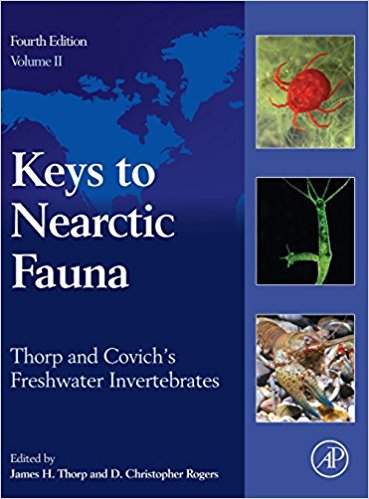
Last month [1] we reviewed the Gastropoda chapter contributed by Christopher Rogers to the new Fourth Edition of Thorp & Covich’s Keys to Nearctic Fauna [2].  The bottom line was, “Buy this book.”  And among the several lines of support I offered for this recommendation was a somewhat enigmatic observation to the effect that the new fourth-edition dichotomous key complements, but is in many cases strikingly different from, the old third-edition key.  What did I mean by that?

In two words, Christopher’s new key is evolutionary, whereas the old one was ecological.  Christopher has divided the North American freshwater gastropods phylogenetically, designing his dichotomous key to branch as a phylogenetic tree might branch.  The older key divided the fauna functionally, according to morphological adaptation.

Broad/flat vs. Narrow/filiform, if you're curious...

 So, couplet #1 of the old Third Edition was a choice between “shell coiled” and “shell an uncoiled cone.”  The former choice took the user onward into the body of the key, while the latter choice immediately took the user aside to seven limpet genera.  Those seven limpet genera are assorted into three families: the Ancylidae with four, the Acroloxidae with one, and the Lymnaeidae with two.  This is an ecological distinction – the limpet shape demonstrating superior strength against predation, and superior performance against hydrodynamic drag, given a solid substrate upon which its bearer can graze.

That patelliform shape has, of course, evolved many, many times independently in many, many different gastropod lineages, both freshwater and marine [3].  And it has apparently evolved (at least) three times separately in the freshwater gastropods – in the Acroloxoidea, in the Lymnoidea, and in the ancylid taxa of the Planorboidea.

So Christopher elected to open his new Fourth Edition gastropod key with operculum present/absent as his couplet #1. This is the easiest character by which to distinguish pulmonates from prosobranchs, the primary phylogenetic division in the freshwater gastropod fauna.  All the freshwater limpets are pulmonates, missing an operculum, hence all go together to his couplet #7.  Then at Christopher’s couplet #7, the user finds: 
7(1) Shell not patelliform, or if patelliform, then spire sinistral (apex centered or to right of midline) and blunt, with adult patelliform shell larger than 7 mm … go to #8.
7’ Shell patelliform with spire dextral (apex to left of midline), acute; adult shell less than 7 mm in length … Acroloxidae.
So I understand what Christopher is trying to do here, and I appreciate his effort.  He is beginning to sort the pulmonate families using evolutionary distinctions.  But I’m just not sure it works.

First, as a practical matter, users cannot determine if the spire is sinistral or dextral for 99.999% of all the limpets in the creek – they’re blunt and smooth.  So, users must read over that text to “apex centered or to the right of midline” vs. “apex to left of midline.”  And second, being finely evolutionary, both Acroloxus and the lymnaeid limpets (Lanx and Fisherola) demonstrate shell apexes to the left of midline, at least when young [4].

Now I understand if Christopher does not want to engineer his dichotomous key to the entire freshwater gastropod fauna of North America around an accommodation for juvenile-Lanx-collectors.  So I’ll let it go.  Let’s suppose we have under our scope some non-patelliform pulmonate, like Physa or Helisoma.  And we have dodged through couplet #7 to arrive at couplet #8, undiscouraged.  Here we read: 
8(7) Tentacles narrow, filiform …. 9
8’ Tentacles broad, flat, triangular; haemoglobin absent; coiled shell always dextral, patelliform shell with apex central or sinestral [sic]; never planospiral … Lymnaeidae
For heaven sake!  Now Christopher seems to expect us to have a living animal under our scope, or at least a very well-preserved one, to distinguish narrow tentacles from broad tentacles?  Narrow compared to what?  There’s no tentacle figure.  Haemoglobin, are you serious?  Must I medevac this little speck of coiled brown nothing to England and set up an IV?  Typed and cross-matched, stat?

In the Third Edition key, after I had observed that my Physa was coiled and been directed to couplet #8, I was next asked if the shell was planospiral or “with raised spire.”  If planospiral go to Planorbidae, otherwise go on to couplet #20.  Simple.

I am not going to criticize every couplet in Christopher’s entire 20-page key.  It’s a tremendous effort, and I don’t want to diminish his contribution.  I will simply observe that the evolutionary approach taken in the Fourth Edition is not as user-friendly as the ecological approach taken in the third.

So, here’s the bottom line for this month’s essay.  Don’t throw away your old Third Edition of Thorp & Covich.  Open it up on the lab bench next to your new Fourth Edition and use both simultaneously.  The two works side by side are a dichotomous perspective on the wonderful diversity that marks the North American freshwater gastropod fauna.


Notes

[1] REVIEW: Thorp & Covich Fourth Edition [12Apr18]

[2] Thorp, J. H., and D. C. Rogers (2016) Keys to Nearctic Fauna.  Thorp and Covich’s Freshwater Invertebrates, Fourth Edition.  Volume II.

[3] Actually, the “hypothetical ancestral mollusk,” from which all sevenish of the molluscan classes diverged back in the Precambrian, is generally modelled with a limpet-like (or plate-like) shell similar to that borne by the present-day Monoplacophora.

[4] Basch, P. (1963) A review of the recent freshwater limpet snails of North America. Bull. Mus. Comp. Zool. Harvard 129: 399-461.

Thursday, April 12, 2018

REVIEW: Thorp & Covich Fourth Edition


Thorp, J. H., and D. C. Rogers (2016) Keys to Nearctic Fauna.  Thorp and Covich’s Freshwater Invertebrates, Fourth Edition.  Volume II.

“What a marvelous contribution!  I never thought I would live to see the day.”

Both these sentiments oscillated through my mind in rapid succession as I flipped through the pages of Christopher Rogers’ “Class Gastropoda” key in the new edition of Thorp & Covich displayed on the auction table in Raleigh [1] last June.  The taxonomy is complete, thorough, well-researched and modern.  Just three genera of living pleurocerids, check.  Hubendick’s single, broadly-inclusive genus of lymnaeids, check.  Just two genera of physids, check!  Bellamya yes, Planorbella no.  Onward as the pages turned.  What a marvelous contribution!  I never thought I would live to see the day.

This was not the first time such thoughts had flickered through my mind, however.  It had happened twice before.

I imagine that most of my readership will be familiar with the Thorp & Covich tradition.  The first edition of Ecology and Classification of North American Freshwater Invertebrates, as the collaboration was originally called, was published in 1991, with a second edition in 2001 and a third in 2010.  Over this 20-year span Thorp & Covich has become the primary bench reference for biologists working with the (non-insect) freshwater macrobenthic fauna of the United States [2].

Ken Brown was the solo author of the Gastropoda chapter through its first two editions, Chuck Lydeard joining him in 2010 [3].  Ken has an excellent background in freshwater gastropod ecology, which together with anatomy, physiology and (later) gene trees comprised the first 70% of the chapter.  The remaining 30% was allocated to a dichotomous key following the taxonomy of Burch [4] rather closely [5], but I am not criticizing.  That’s all there was.

So the first time that “marvelous-contribution-but-it’ll-never-happen” thought flickered through my brain was in March of 2011, when I opened an email from Jim Thorp.  Jim intimated to me that, even though his third edition was only a single year off the press, he and Christopher were already making plans for a major revision.  He projected that his fourth edition would expand into a series of volumes, the first of which would be dedicated to more ecological themes, the second of which would present dichotomous keys to the Nearctic fauna, the third to the Palaearctic, and so forth [6].  The fourth-edition keys would be much larger and more detailed than those of the third edition, extended down to the species level wherever possible.  And he wanted me to lead the Nearctic Gastropoda team.

I was flattered, of course.  But the series of negotiations into which we entered did not ultimately yield fruit.  I am a big fan of review and synthesis, and I greatly appreciate the value of reference works like Thorp & Covich for biologists in the field today.  But I climb onto the shoulders of giants with a pair of binoculars looking up, not down.  An historian I am not.

So for example, of the roughly 150 nominal species of pleurocerid snails Calvin Goodrich recognized in North American fresh waters [7], forwarded to the present day by Burch, I should estimate that no more than about 30 – 40 are biologically valid.  How am I to construct a dichotomous key to such a biota, I asked Jim, if most of the taxa to be keyed are not legitimately distinguishable?  Could I synonymize?

Jim (quite understandably) demurred.  Christopher suggested that, in cases such as the Pleuroceridae, I simply key down to the lowest firm taxon and drop it, with some language to the effect that “This genus is in need of revision and therefore identifications are left at genus level.”  Well, I thought to myself, all the North American freshwater gastropod genera are in need of revision.  Most have never had a vision in the first place.  Ultimately, I found it impossible to rationalize the expenditure of my own time and effort unless I could move the ball forward [8].

So Volume 1 of the Fourth Edition appeared in 2015, our good friend Mark Pyron’s name appearing above that of Ken Brown as author of Chapter 18, “Introduction to Mollusca and the Class Gastropoda.”  I was pleased to see that the Pyron & Brown contribution extended to 41 pages, up from the 30 pages of the 1991 original.  And sure enough, those 41 pages were focused entirely upon ecology and evolution, no dichotomous key anywhere in evidence.

And the second time that “marvelous-contribution-but-it’ll-never-happen” thought flickered through my brain was later that same year, when Christopher emailed me to request that I review the dichotomous key he himself had prepared for Volume 2.  His draft looked excellent – I really didn’t have a whole lot of suggestions to offer.  In retrospect, I think that from among the entire 3 x 10^8 population of the United States of America, I might have been the worst possible choice to review a freshwater gastropod key.  Because I understood what Christopher was trying to say, and I often skipped ahead, knowing where he was trying to go.

Regarding the problematic groups, I was gratified to see that Christopher had taken the approach he had first advocated during our 2011 negotiations.  Here’s a verbatim quote from his section entitled Limitations: 
“Particularly vexing is the strange confusion in the taxonomic literature, with many taxa accepted or rejected without explanation, and good quantitative taxonomic revisions ignored without explicit justifications.  Because of this issue, the keys are taxonomically conservative, often terminating with species groups rather than species.”
 So Christopher judged such terminations to be necessary for 13 “species groups” in the Nearctic freshwater gastropod fauna all told: the hydrobioid genera Amnicola, Lyogyrus, Clappia and Fluminicola, the hydrobioid families Cochliopidae and Hydrobiidae (ss), assorted prosobranch genera Valvata, Campeloma, Pleurocera/Lithasia, and Leptoxis, and the planorbid genera Helisoma, Carinifex, and Menetus.  Fine.  It’s hard to know which of those thirteen groups is the biggest mess.

The rest of the freshwater gastropods of North America Christopher did, very bravely, key all the way down to the species level.  Among the pulmonates he recognized 10 species of Lymnaea, 9 species of Physa, and 24 species of (non-Helisoma, non-Carinifex, non-Menetus) planorbids [9].  All good estimates – probably pretty close.  From among the entire 3 x 10^8 population of the United States of America, I may well appreciate the effort that Christopher must have put into this contribution the most.

So buy this volume.  Actually, you should back up and buy Volume 1 if you haven’t already, as well as Volume 2.  Do it for three reasons.  First, the gastropod taxonomy is correct, complete, and current.  Second, the new fourth-edition keys complement, but in many cases are strikingly different from, the old third-edition keys.  We’ll develop that theme next time.  And finally, assuage my guilt.  In retrospect, I may have been more a hindrance than a help to Christopher as he labored over this marvelous contribution.  I never thought I would live to see the day.


Notes

[1] SFS Raleigh  [4Apr17]

[2] Pennak held that position when I was coming up through the ranks, and is still an excellent reference.  Nothing in the essay above is intended to take anything away from Doug Smith’s (2001) Fourth Edition of “Pennak’s Freshwater Invertebrates of the United States” at all.

[3] Alan Covich and Ken Brown asked me to help with the 2010 edition.  I was flattered, but ultimately declined, for reasons similar to the ones I gave Jim Thorp in 2011.  I can be a difficult person to deal with.

[4] This is a difficult work to cite.  J. B. Burch's North American Freshwater Snails was published in three different ways.  It was initially commissioned as an identification manual by the US EPA and published by the agency in 1982.  It was also serially published in the journal Walkerana (1980, 1982, 1988) and finally as stand-alone volume in 1989 (Malacological Publications, Hamburg, MI). 

[5] The hydrobioid subfamilies were raised to the full family level in the third (2010) edition.

[6] Twelve volumes are now on the drawing board, according to a more recent communication I enjoyed with Jim.  Volume III is now Neotropical Hexapoda, and Volume IV is the Palaearctic Fauna, which was slightly delayed.  But both are currently in press. 

[7] The Legacy of Calvin Goodrich [23Jan07]

[8] My exact words to Jim and Christopher were, “It’s the fourth quarter of my career.  I won’t take a knee on the ten-yard line.”

[9] Ancylid limpets integrated with the Planorbidae.  OK, fine.

Tuesday, June 22, 2010

Unlocking the Keystone State

Editor’s Note. This essay was subsequently published as: Dillon, R.T., Jr. (2019d) Unlocking the Keystone State.  Pp 219 - 222 in The Freshwater Gastropods of North America Volume 4, Essays on Ecology and Biogeography.  FWGNA Press, Charleston.

The Commonwealth of Pennsylvania spans every aquatic habitat that one might characterize as "northeastern," across the Delaware, Chesapeake, Ohio, and Great Lakes drainages, both the glaciated and the not. The Keystone State also includes two large and important cities, Philadelphia and Pittsburgh, each with a fine natural history museum. The diverse waters of Pennsylvania have been sporadically but professionally surveyed for almost 200 years.

In 2008 our colleagues Ryan Evans and Sally Ray published a thorough review of museum holdings in Pennsylvania freshwater gastropods, not just at the Academy of Natural Sciences in Philadelphia and the Carnegie Museum in Pittsburgh, but through the electronic databases of 9 other institutions as well (1). Perhaps not surprisingly, they found records of an impressive 63 species.

Now in the most recent American Malacological Bulletin, Evans and Ray have published the results of the first modern survey of The Keystone State, "Distribution and environmental influences of freshwater gastropods from lotic systems and springs in Pennsylvania, with conservation recommendations (2)." The authors sampled 398 sites selected to cover the range of USGS "hydrologic units" encompassed by the state (3), measuring water chemistry variables and extracting a variety of landscape variables using GIS techniques. And the number of species they have confirmed by field collection was ... 37.


Has there been some catastrophic extinction? Almost as alarming as the complete absence of 26 specific nomina from Evans and Ray's field survey were the details of their Table 1, which reported 7 of the 37 species actually recovered at but single sites, of the 398. Has a meteor smashed into the Keystone State in the last 200 years, leaving no trace but the bleached shells of 52% of the freshwater gastropod fauna?

Of course not. We must not overlook the fact that Evans and Ray focused their fieldwork almost entirely upon wadeable streams and springs, excluding marshes, ponds and lakes, and gave very little coverage to large rivers. And natural lakes and ponds are not common in Pennsylvania in any case; the Erie/Ontario drift and lake plains ecoregion just barely nips the northwest corner of the state.

So downloadable from Note (4) below is a spreadsheet listing the 63 freshwater gastropod species that Evans and Ray documented from Pennsylvania in 2008, ranked by the number of sites at which they were recovered by the field survey of 2010. The 26 missing species are listed at the bottom, with number of sites = 0.

Subtracted in Column D are 13 specific nomina with taxonomic problems, leaving 50 species I wouldn't question. Then in Column E I have listed 17 species as "Northern Lentic" - primarily characteristic of lakes, ponds, and marshes, becoming much more common north of Pennsylvania. This subset includes 11 of the 26 species missing from Evans and Ray's 2010 field survey, and 3 of the species collected at but single sites.

Column F subtracts five species for "other sampling problems" as noted by Evans and Ray themselves, and Column G subtracts six introduced species. The bottom line seems to suggest that just two Pennsylvania freshwater gastropod species may warrant conservation concern if viewed from a larger perspective - Lioplax subcarinata (5) and Gillia altilis.

Think Continentally, Act Regionally. It is clear that the conservation implications of the data collected by Evans and Ray can only be interpreted in the context of the larger freshwater gastropod faunas north, south, and west. But it is equally clear that the field survey that brought us these marvelous data was funded by the Pennsylvania Department of Conservation and Natural Resources, an organization with no mandate outside the state lines. Evans and Ray and the PaDCNR are to be highly commended for this effort. If the FWGNA project can only be built one stone at a time, they have contributed a key.


Notes
(1) Evans, R. R. & S. J. Ray (2008) Checklist of the freshwater snails (Mollusca: Gastropoda) of Pennsylvania, USA. Journal of the Pennsylvania Academy of Science 82: 92-97. [PDF]

(2) Evans, R. R. & S. J. Ray (2010) Distribution and environmental influences of freshwater gastropods from lotic systems and springs in Pennsylvania, USA, with conservation recommendations. Am. Malac. Bull. 28: 135-150. [PDF]

(3) The EPA "Surf your Watershed" website lists 58 eight-digit HUCs for Pennsylvania: Surf Pennsylvania

(4) Download an excel spreadsheet analyzing Evans and Ray's (2008, 2010) freshwater gastropods of Pennsylvania. [FW-gastropods-PA.xls]

(5) Evans and Ray "did not feel that adequate survey data were available to give a conservation status recommendation for Lioplax subcarinata."

Wednesday, May 27, 2009

Freshwater Gastropod Databases Go Global!


Last month we reviewed the not-insubstantial progress that many of our larger national and regional research museums have made with electronic data capture, evaluating their on-line holdings of North American freshwater snails. Among the many nice comments I received from that post were several calling my attention to the Global Biodiversity Information Facility, a remarkable data network hosted in Copenhagen. Some of our colleagues feel strongly that the GBIF “Portal” represents the future of online museum databases worldwide.

The system is administered by a governing board, 30 participating countries, and 20 associate countries. It hosts (as of 26May09) over 174 million records across the diversity of eukaryotic life, contributed by 289 data providers worldwide. My query for “Campeloma” entered into the single, simple search box returned an impressive 3,210 records, as follows:

1,414 Florida Museum of Natural History
852 Academy of Natural Sciences, Philadelphia
498 North Carolina State Museum
145 University of Colorado Museum
127 US National Museum
55 Yale (Peabody) Museum
116 (Nine other institutions)

The FLMNH, ANSP, and USNM numbers are reassuringly close to the figures I obtained from my queries to their local on-line datbases, as reported last month. I didn’t think to look at the NCSM last month (Shame on me!) but the (rather impressive) 498 records I retrieved from the GBIF also closely approximate the results I would have gotten from a query to their local site, had I visited. I also didn’t think to look at the Peabody Museum last month, but in this case, the 55 records available from the GBIF are significantly improved over the 15 I would have come away with from a visit to their local on-line database. And the University of Colorado Museum records are a bonus – the UCM no longer maintains a local site, so it’s Copenhagen or nothing. The power of the GBIF idea is undeniable.

The GBIF portal features a gee-whiz mapping function for your results, which plots the occurrence of your taxon of interest on one-degree cells, with the capability of zooming to 0.1 degree and exploring. It also offers the option of exporting search results in several vanilla types of file formats, which you can download, sort and subsample to your heart's content.

So I've added a link to the Global Biodiversity Information Facility from the FWGNA information resources page, and I expect to be hitting that link with increased frequency in the coming years.

Wednesday, April 15, 2009

Progress in the Museums

To the FWGNA group:

It's been several years since we last took an electronic tour around the major systematic collections of North American freshwater mollusks. And it's nice to see such good progress being made in on-line database access. When the FWGNA project kicked off in 1998, only two national or regional collections of freshwater gastropods were effectively searchable on line: The Florida Museum and the ANSP. Today that small club has been joined by eight other museums. I'm impressed!

Databasing efforts are, of course, an ongoing project in all active systematic collections. But I thought it might be useful for our group if I took a snapshot of the distributional information available on-line for North American freshwater gastropods, as of April 2009. Developing an independent metric by which to evaluate and compare ten disparate databases was, however, something of a challenge.

My first thought was to query each database for all records of a common and widespread freshwater gastropod family, such as the Physidae. But alas, many of the ten databases are not searchable by family - only by genus or species. And most of the lower taxa are regional in their distributions and taxonomically unstable - not the best targets for a comparative search.

After some head-scratching, I've decided to evaluate the ten on-line databases by the number of Campeloma records currently retrievable. Campeloma is the most widespread and stable genus of North American freshwater gastropods I can think of, although its distribution does introduce a bias against museums with predominantly western holdings. The California Academy of Sciences ranks #8 by Campeloma, but would certainly rank above the Field Museum (#6) by physid records, if all the collections were rankable using that criterion. But for what it's worth:

(1) University of Michigan Museum of Zoology
Campeloma = 2,456
Searchable by Family = No

(2) Florida Museum of Natural History
Campeloma = 1,414
Searchable by Family = Yes (Physidae = 2,063)

(3) Academy of Natural Sciences, Philadelphia
Campeloma = 890
Searchable by Family = Not effectively

(4) Museum of Comparative Zoology, Harvard
Campeloma = 488
Searchable by Family = Yes (Physidae = 1,033)

(5) National Museum of Natural History, Smithsonian
Campeloma = 127
Searchable by Family = Yes (Physidae = 793)

(6) Field Museum of Natural History
Campeloma = 88
Searchable by Family = Yes (Physidae = 149)

(7) Illinois Natural History Survey
Campeloma = 62
Searchable by Family = No

(8) California Academy of Sciences
Campeloma = 2
Searchable by Family = Yes (Physidae = 290)

(9) Los Angeles County Museum
Campeloma = 1
Searchable by Family = Yes (Physidae = 3)

(10) Bailey-Matthews Shell Museum
Campeloma = 1
Searchable by Family = Yes (Physidae = 0)

All of these on-line databases, I'm pleased to report, are searchable by double criteria, such as species AND state/province. Two databases were able to handle my (rather complicated) "Physa OR Physella" query, by which I was trying to eliminate the double-counting of records where Physella is a subgenus but not a genus: MCZ and LACM.

Kudos to all our hard-working colleagues in the ten museums listed above! And for our colleagues working at the museums listed below - a word of encouragement. I know funding is tight, but we're all in this together. So hang in there, get those grants, we're rooting for you!

Other Museums visited, Collections not on line at present:
American Museum of Natural History
Canadian Museum of Nature
Carnegie Museum (Pittsburgh)
Delaware Museum of Natural History
Ohio State Museum

And keep in touch, everybody!
Rob

Friday, January 23, 2009

The Freshwater Gastropods of Indiana

Editor’s Note. This essay was subsequently published as: Dillon, R.T., Jr. (2019d) The Freshwater Gastropods of Indiana.  Pp 215 - 218 in The Freshwater Gastropods of North America Volume 4, Essays on Ecology and Biogeography.  FWGNA Press, Charleston.

Kudos go to our colleague Mark Pyron and his students Jayson Beugly, Erika Martin and Matthew Spielman for their thorough survey of the freshwater gastropods of Indiana, appearing in the most recent American Malacological Bulletin (1). No big surprises here, but a job well done!

Physiographically, Indiana can be divided into three regions from north to south: the Great Lakes plains, the till plains, and the southern low plateau (which glaciation did not reach.) Rivers in a northern sliver of the state flow north to the Great Lakes, but the great majority of the state drains south through the Kankakee/Illinois or the Wabash/Ohio systems. Prehistorically the entire state would have been covered with mixed woodland, grassland, and wetland, but today 98% of Indiana has been converted to agriculture. Industrial regions have sprung up in the north and central.

Goodrich & van der Schalie (2) published a nice survey of the entire molluscan fauna of Indiana in 1944, and both the University of Michigan Museum of Zoology and the Ohio State Museum have substantial Indiana holdings today. Pyron's initial review of these historical records led him to expect a freshwater gastropod fauna of 39 species, nothing (to my eye) especially rare or surprising. He and his students then designed a survey of 123 ponds, lakes, rivers and streams around Indiana, covering all drainages and physiographic provinces, revisiting 86 sites for which historical data were available. They documented 36 freshwater gastropod species (3) – missing several that might have been expected from historical records, but discovering a few species not previously listed. Pyron concluded that "the majority of the freshwater gastropod taxa in Indiana are of local conservation concern."

This is the third squarish Midwestern state to be surveyed in recent years, and one is tempted to begin looking for patterns. Shi-Kuei Wu and colleagues (4) published a big monograph of the Missouri freshwater gastropods in 1997 which, boiling off 17 synonyms, listed 39 valid species. Our colleague Tim Stewart (5) had a nice 2006 paper in the AMB reporting 46 species of freshwater gastropods in Iowa (6). Both the Missouri and the Iowa inventories relied on historical records, and in fact, Tim developed his Iowa list without fresh field surveys of any sort. Thus the fair comparison would be with the total fauna of Indiana developed by Pyron - historic as well as modern - a list of 40 species (7).

The figure at left above is a Venn diagram of Midwestern States, using rectangles rather than circles, each state oriented geographically and scaled in proportion to its surface area (8). The most striking feature of this diagram to my eye is an effect of latitude (or perhaps physiography), making the Indiana/Iowa pair far more similar than either state is to Missouri.

Indiana has four unique species - almost entirely pleurocerids (including Leptoxis praerosa, Pleurocera canaliculata, and Pleurocera semicarinata "obovata"). Iowa has five unique species - almost entirely northern pulmonates (including Lymnaea catascopium "emarginata", L. megasoma, L. haldemani, and Physa skinneri). The two states share an impressive 35 freshwater gastropod species – 20 that also occur in Missouri and 15 that do not.

The Missouri fauna is characterized by 12 unique species of freshwater gastropods, including three pleurocerids and seven endemic hydrobiids of the Ozark Plateau. But as its diversity rises by extension into a new physiographic province, Missouri's fauna also declines by the subtraction of quite a few northern elements common in Iowa and Indiana, for example Lymnaea stagnalis, Helisoma campanulata, Aplexa and several Valvata. Thus although the largest of the three states, in net effect Missouri finishes with the shortest faunal list.

Meanwhile, back in Muncie, I'm pleased to report that our colleague Mark is busily developing an FWGNA-style website to disseminate the results of his Indiana survey more fully. And he’s thinking about collaborating and expanding this effort into the surrounding states of the upper Mississippi watershed. Exciting developments, to which we can all look forward!

Notes

(1) Pyron, M., J. Beugly, E. Martin, and M. Spielman (2008) Conservation of the freshwater gastropods of Indiana: Historic and current distributions. Am. Malac. Bull. 26: 137-151. [download PDF]

(2) Goodrich, C. and H. van der Schalie (1944) A revision of the Mollusca of Indiana. Am. Midl. Natur. 32: 257-326.

(3) Pyron's estimate of 36 extant species included four species reported by E. H. Jokinen (2005) Pond mollusks of Indiana Dunes National Lakeshore: Then and now. Am. Malac. Bull. 20: 1 - 9.

(4) Wu, S-K, R. D. Oesch and M. Gordon (1997) Missouri Aquatic Snails. Missouri Department of Conservation, Jefferson City. Natural History Series 5: 1 - 97.

(5) Stewart, T. W. (2006) The freshwater gastropods of Iowa (1821-1998): Species composition, geographic distributions, and conservation concerns. Am. Malac. Bull. 21: 59-75.

(6) Stewart listed 49 species, but here I combine Lymnaea exilis under L. palustris, Helisoma truncata under H. trivolvis, and Laevapex diaphanus under L. fuscus.

(7) Pyron's complete Indiana list included 41 species, but again I have combined Lymnaea exilis under L. palustris.

(8) Indiana 36,000 mi2, Iowa 56,000 mi2, Missouri 70,000 mi2.

Wednesday, November 26, 2008

Review: Field Guide to the Freshwater Mollusks of Colorado

Editor’s Note. This essay was subsequently published as: Dillon, R.T., Jr. (2019d) Field Guide to the Freshwater Mollusks of Colorado.  Pp 211 - 214 in The Freshwater Gastropods of North America Volume 4, Essays on Ecology and Biogeography.  FWGNA Press, Charleston.

Kudos are due to Mardy Nelson Harrold and Rob Guralnick for their charming little (4 x 6”) book, A Field Guide to the Freshwater Mollusks of Colorado, now available as a free PDF download from the Colorado Division of Wildlife. The authors have pioneered a new model for publication in our line of work, and I personally find some inspiration in the effort.

Our good friend Rob Guralnick has been at the University of Colorado Museum since Shi-Kuei Wu retired in 2000. Mardy Nelson Harrold was his M.S. student and Leigh Anne McConnaughey, who illustrated the new Field Guide, is his wife. Rob tells me that their work was primarily targeted toward the needs of CDW field biologists, but they also hoped that the avid fishing community might become interested.

To that end Harrold & Guralnick have produced a beautifully illustrated and cleanly formatted guidebook with 7 pages of introduction in the front, 8 pages of reference material at the back, and 111 pages of identification manual in the middle, covering 25 freshwater gastropod and 16 bivalve species of Colorado. Each species is allotted a pair of facing pages for a brief description, habitat and range notes, and colorful illustrations of the shell, both magnified and life size. Higher taxonomic groups are also introduced with a couple pages of general biological background, and all the species in each group marked with distinctive thumb tabs for easy reference.

Conspicuous by their absence from the Field Guide are literature citations, synonymies, dichotomous keys, anatomical notes, and distribution maps. The scientific name does lead the common name – this isn't quite a bird book yet. But clearly, Harrold & Guralnick are not looking inward toward the Academy, but rather outward, toward an interested and engaged public at large.

The authors dedicated their work to Dr. Shi-Kuei Wu. And it should be clear that A Field Guide to the Freshwater Mollusks of Colorado could not even have been contemplated without the collections that Shi-Kuei stewarded at the University of Colorado Museum for so many years, and the Inventory of Colorado freshwater mollusks he published in 1989 (1).

Shi-Kuei’s 1989 Inventory did feature detailed distribution records and a more complete review of the literature, but is currently out of print. This poses an interesting question. Why didn't Harrold & Guralnick simply update Wu (1989), rather than starting fresh? Might it have been possible for the present authors to preserve Wu’s more scholarly approach, boil his large dot-maps down to shaded figures of a more manageable size, add their lovely illustrations and formatting, and expand the appeal of this new work to amateurs without subtracting any of the utility for professionals?

Maybe not. At some point, formal scholarship becomes off-putting to the general public. And with respect to the taxonomy and systematics of freshwater gastropods, I fear that we professional malacologists may have barreled through the off-put point a hundred years ago. As Exhibit A, I give you the Physidae.

Shi-Kuei’s Colorado Inventory listed eight species of Physa - anatina, cupreonitens, elliptica, gyrina, heterostropha, integra, skinneri, and utahensis. The Harrold & Guralnick Field Guide sets aside P. “skinneri(2) and substitutes Physa acuta and Physa gyrina for the remainder, clean and simple, without explanation or comment.

The actual rationale behind the author’s decision to fold Wu’s elliptica, heterostropha, integra, and utahensis into P. gyrina, and to subsume Wu’s anatina, cupreonitens, and gyrina under P. acuta, was the subject of my email to this group last month (3). But how many of you reading my words right now actually had the patience to wade through the tortuous message I sent on October '08, "Backwards Snails Backwards?" Admit it - most of you hit the delete button last month, didn't you?

There are about 175 addresses in my email address book under the FWGNA tab, roughly 50% academic, 25% agency or other professional, and 25% private individual. So I’d guess I've got at least 50 readers right now (maybe 174!) who would have been perfectly happy never to know that somebody used to think there were eight species of Physa in Colorado, and really don't care why somebody else now thinks there are only two ... well, three actually, but we'll let it go. The Harrold & Guralnick Field Guide is for you.

In the final analysis, it’s hard to gauge the size of the audience to which A Field Guide to the Freshwater Mollusks of Colorado will appeal. But whatever the size that audience may be, I’d like to think that it could grow. Rob tells me that his book has won a couple trade association awards, and the first printing (of more than 1,000 copies) is nearly gone. So viewed perhaps not so much as a scientific monograph, but rather as an outreach effort, the Field Guide of Harrold & Guralnick is to be highly commended.

Notes

(1) Wu, Shi-Kuei (1989) Colorado Freshwater Mollusks. Natural History Inventory of Colorado 11: 1 - 117. University of Colorado Museum, Boulder.

(2) Physa skinneri is a junior synonym of P. jennessi, which is indeed a distinct and valid species. But since Wu (1989) reported skinneri from just five sites in Colorado, I think Harrold & Guralnick can be excused for excluding it.

(3) Malacological Mysteries II: Backwards Snails Backwards!  [14Oct08]

Thursday, May 24, 2007

REVIEW: Global Advances in Apple Snails

To the FWGNA group:

Global Advances in Ecology and Management of Golden Apple Snails. R. C. Joshi & L. S. Sebastian (editors). Philippine Rice Research Institute (2006) 600 pp, hardbound. US$ 102.

The large ampullariid "golden apple snail" (Pomacea) has, in the last 25 years, become a significant pest of rice and other lowland crops throughout Asia and the Pacific. A native of South America, the snail was initially spread by Asian peoples who, at least occasionally, include large freshwater gastropods in their diet. Here in the United States, apple snails have been introduced into Florida, south Georgia, and Texas, and have significantly damaged taro crops in Hawaii.

The new volume on golden apple snails under review here is a collection of 46 chapters by approximately 100 authors. Most chapters do not report primary research, but rather are themselves reviews of even larger bodies of regional or specialized literature, often from sources unfamiliar here in the West. Without question, anybody whose research involves Pomacea will want a copy of this reference on his shelf. But might those of us who do not encounter an apple snail on a normal business day also find some value in this volume? The quick answer is yes.
.
Section 1 (History, Taxonomy and Impacts) includes the eight chapters of most general interest. Members of the FWGNA group will appreciate the contribution on taxonomy by Cowie and colleagues as well as that of Baoanan & Pagulayan. The chapter by Bob Howells and his four colleagues is an excellent review of the ampullariid situation in North America, with ecological notes. The paper by N. J. Cazzaniga entitled "Pomacea canaliculata, harmless and useless in its natural realm (Argentina)" is also packed with good biological information.
.
Section 2 (Country Reports) includes 17 chapters focusing on apple snail invasions and their consequences throughout Asia. Reports are filed from 13 countries, with a nice chapter on the situation in Hawaii contributed by Levin and colleagues. This is the heart of the book. Clearly the environments, habitats, and culture practices to which apple snails have become adapted are extremely diverse. One would expect the variation in their behavior, life history, and other dimensions of their ecophenotypic response to be profound. Thus where the researchers from the diverse countries overlap in the biological data they report, important generalizations begin to emerge.
.
Section 3 (Management Methods) contains seven chapters reporting approaches to apple snail control. I found the contribution by Halwart and colleagues modeling Pomacea population ecology in rice fields to be particularly valuable. Section 4 (Utilization) includes four chapters focusing on apple snails for food, fertilizer, or weed control.
.
Perhaps the most unexpected section was #5 (Electronic Databases), a pair of chapters describing the "Crop Protection Compendium" and the "Asian-Pacific Alien Species Database." Apparently there are so many efforts ongoing throughout the world to electronically catalogue the growing apple snail literature that we need a database of databases.
.
Section 6 (Notes) is an odd lot of eight chapters, apparently bundled together because each is ten pages or less. There are three chapters I would have preferred to see in the section on country reports, two chapters that would have fit in the section on databases, two chapters dealing with utilization, and one chapter on management.
.
So how useful will this 600 page collection be to a general audience of ecologists and evolutionary biologists interested in freshwater gastropods, such as ourselves? I devised an analytical test to answer this question.
.
I picked the single most important life history variable expressed by populations, age or size of maturation, and searched the electronic version of the book on my desktop for instances of "adult" or the two-syllable fragment "matur." I got several hundred hits, which upon direct examination yielded 14 estimates distributed through 11 chapters as follows: 20-80 d, 25-40 d, 59-90 d, 60-85 d, 60-90 d, 60-90 d (25 mm), 60-95 d (30-35 mm), 90 d, 90 d, 90 - 120 d, 107 d (25-40 mm), 20-30 mm, 25 mm, and 35-40 mm.
.
None of these records turned out to be primary - most cited a published source, but some did not. Rather frustratingly, I found the index not to include any entry under the headings adulthood or maturation, and only a single entry under life cycle. The six entries under "reproduction" caught but 5 of the 14 data. Nevertheless, a large amount of information clearly exists regarding the age or size of maturity in Pomacea populations, and the work presently under review can provide a wedge into it.
.
Wow - 25 mm of snail in 20 days, are you kidding me? Even the slower estimates of 60 - 90 days to maturity are impressive for such a large gastropod. Those of us who have spent our professional lives in the higher latitudes may have a hard time wrapping our minds around some of the most fundamental aspects of Pomacea biology.
.
The only caveat I feel compelled to offer has to do with general problems of organization. Shortcomings regarding the chapter arrangement and index have already been touched upon. The work is rather repetitive in spots, featuring two chapters on Taiwan, two on Vietnam, and three on China, as well as two forewords and a preface. Clearly the editors could have boiled this book down and tightened it up into much, much less than 600 pages. But readers with patience and stamina will be rewarded.
.
In summary, it must be a point of great regret to all of us that freshwater gastropod populations have become such terrible pests in the rice and taro fields of Asia and the Pacific. But the experience of science has been that pest species (rats, mice, fruit flies) can prove to be especially useful as model organisms for research into questions of great generality and importance. This volume leads me to expect important advances from the community of Pomacea researchers for many years to come.
.
Keep in touch,
Rob

Friday, August 25, 2006

New Book from the AMS

http://universal-publishers.com/book.php?method=ISBN&book=1581129300 To the FWGNA group,

Some of you may remember a cute little booklet published by the American Malacological Union (now the American Malacological Society) entitled "How to Study and Collect Shells." It was born as a 1941 annual report of the AMU, and by its fourth edition of 1974 had grown to 107 pages with two (!) illustrations. The original chapter on freshwater snails was composed by Frank Collins Baker.

In 1999 the AMS began the process of completely updating and expanding that work, under the able leadership of Charlie Sturm, a research associate in the Carnegie Museum Section of Mollusks. I'm pleased to report that the work is now published:

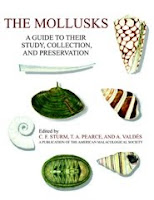
"The Mollusks: A Guide to Their Study, Collection, and Preservation"C. Sturm, T. Pearce, and A. Valdes (eds.)
Universal Publishers, Inc., Boca Raton, FL. xii + 445 pp. 101 ill.
An early proof copy of my Chapter 21 on freshwater gastropods has been available from the FWGNA web site since 2003. But there are 31 chapters in total, including chapters on collecting and cleaning shells, archival methods, digital and film imaging, dredging, taxonomic methods and molecular techniques. There are chapters covering all seven extant classes of mollusks (yes, even the Aplacophora and Monoplacophora) from all environments, including the fossils. The chapter on freshwater mussels is by Kevin Cummings & Art Bogan, and the chapter on non-unionoid freshwater bivalves is by Alexi Korniushin. No malacological library will be complete without a copy of this book!

The bargain price is just $35.95, or two for $71.90. The American Malacological Society is a not-for-profit organization. Revenue from the book will help defray the costs of our scientific program, student scholarships and grants. The AMS will earn more if the book is ordered from the publisher than through commercial ventures such as Amazon.com or Barnes&Nobles.com. Thus, I would encourage you to order directly from the publisher:

Direct any questions to Charlie Sturm at doc.fossil@gmail.com
Thank you all for your support of American malacology!
And we'll keep in touch,
Rob

Thursday, April 20, 2006

Surveying the Heartland

Editor’s Note. This essay was subsequently published as: Dillon, R.T., Jr. (2019d) Surveying the Heartland.  pp 207 - 209 in The Freshwater Gastropods of North America Volume 4, Essays on Ecology and Biogeography.  FWGNA Press, Charleston.

If you had to pick one state to represent the entire freshwater mollusk fauna of North America, how about Iowa? Bounded by the Mississippi River on the east, with its western third in the Missouri drainage and its northern half pocked by prairie potholes of glacial origin, I can't think of a better place to sample the American heartland. And so the article by our colleague, Tim Stewart, in the most recent American Malacological Bulletin (21:59-75), "The freshwater gastropods of Iowa (1821 - 1998): species composition, geographic distributions, and conservation concerns" arrives as a most welcome contribution.

Tim did an extraordinarily thorough job of surveying both the published literature and the electronically-available museum collections in compiling the data for this paper. Lumping several nominal Campeloma species and several nominal species of the lymnaeid subgenus Fossaria into single categories, as well as combing the various synonyms of Physa acuta, Tim documented 49 freshwater gastropod species in Iowa. He also eliminated 6 species that seem to have been reported falsely.

It is interesting to compare Tim's list to the only other previously-existing database of which I am aware, that of NatureServe. My query to the NatureServe Explorer database this morning returned a list of 44 freshwater gastropod species from in Iowa which, paring down the Campeloma, Fossaria, and Physa and eliminating dubious entries, reduced to just 38. The 11 species missed by NatureServe appear to be a random subsample of the fauna: 2 Valvata, 3 lymnaeids, 2 physids, 2 planorbids and 2 ancylids.

Tim briefly reviewed the natural history of Iowa, as it has been developed from a tallgrass prairie to a breadbasket 95% under cultivation. Broadly examining collection records for trend, he found evidence that as many as 25 of the 49 Iowa freshwater snail species may warrant some conservation concern.

The problem with a literature-based approach is, admittedly, the difficulty of controlling for trends such as a decline in the publication or curation of malacological collections. What is needed, of course, are fresh data, and not just in Iowa. Tim concluded his discussion with a call for a "comprehensive field survey to determine which species are truly endangered in this state." And in fact, he assures me personally that such a survey is already underway. Amen, brother!

Keep us posted,
Rob

Subject: Reasonable expectations for NatureServe
Date: Thu, 27 Apr 2006
From: "Dillon, Robert T. Jr."
To: FWGNA group

I might need to correct a misunderstanding from my message of 4/20/06, "Surveying the Heartland." I did not mean to imply anything negative regarding the on-line database maintained by NatureServe. Science is the construction of testable models about the natural world. The NatureServe database constitutes such a model, where essentially no other models exist, and thus makes a valuable contribution.

Any biologist with a minimum of field experience will understand, I hope, that continent-scale distribution maps such as those provided by NatureServe must be based on the broad ranges of the organisms involved, which come from general reviews, large monographs, and regional surveys. Such maps cannot possibly duplicate the precision of a more finely-detailed inventory, such as that for an individual state. So I should hope that nobody would be surprised to read that the results of Tim Stewart's intensive survey of Iowa didn't precisely match expectation from NatureServe's broadly-drawn national ranges.

Nor in fact is it reasonable to expect that the NatureServe database will be kept meticulously current. In addition to his freshwater snail duties, our good friend Jay Cordeiro of NatureServe is also in charge of freshwater mussels, terrestrial gastropods, crayfish, fairy shrimp, clam shrimp, tadpole shrimp, mayflies, stoneflies, caddisflies, and odonates. I myself can't update the freshwater gastropods of South Carolina any more than about annually. Jay is doing a great job. And hey, we're snail people - we can wait.

Finally, it is not reasonable to expect that the NatureServe list (or the list Tim Stewart developed from his more detailed study, for that matter) will accurately reflect the true freshwater snail fauna of Iowa. Neither estimate has been confirmed by any recent field work. And there are some systematic biases in literature review as a method of biotic inventory - removing a dubious record is more difficult than adding one, for example.

Philosophers of science tell us that the true number of freshwater gastropod species is everywhere either trivial or unknowable. But certainly, all the models we've got today can be refined.

So let's get busy!
Rob