Monday, November 27, 2006
Freshwater Gastropods of North Carolina
I'm very pleased to announce that a new website entitled "The Freshwater Gastropods of North Carolina" (R.T. Dillon, B. T. Watson, & T. W. Stewart) is now up and on line!
The new "FWGNC" web resource documents 35 species of freshwater snails inhabiting the Atlantic drainages of North Carolina, using a format intended to be seamlessly compatible with the South Carolina site we've had on line since 2003. You'll find a photo gallery, a dichotomous key, PDF and jpeg maps showing species distributions, a tabulation ranking all species by their statewide abundance (5,645 records!), and conservation recommendations.
The addition of a second state has prompted reorganization of the entire Freshwater Gastropods of North America website. The FWGNA site has now moved, and features expanded information resources and many other improvements. Here's that link:
http://www.cofc.edu/~fwgna/fwgnahome.htm [1]
Update your bookmarks! And drop by for a visit today - we'd be interested to hear your comments, suggestions, and reports of broken links. We expect the Atlantic drainages of Georgia to be up in six months, with Virginia close behind.
Special appreciation is due to Dr. Art Bogan and Ms. Jamie Smith for graciously hosting us at the NC State Museum in Raleigh. Doug Florian was the GIS consultant and Steve Bleezarde the web wizard. The site was made possible by a grant from the Sierra Club Board of Directors. Thanks to all of you!
Note
[1] This link obsolete, as of 2010. New link:
http://www.fwgna.org/FWGNC/


Monday, November 20, 2006
The Legacy of Frank Collins Baker
Editor's Note. This essay was subsequently published as Dillon, R. T., Jr. (2019b) The legacy of Frank Collins Baker. pp 1-5 in The Freshwater Gastropods of North America Volume 2, Essays on the Pulmonates. FWGNA Press, Charleston.
Frank Collins Baker (1) is a hero of mine. Born in Warren, Rhode Island in 1867, he grew up playing with seashells brought to him by his seafaring grandfather. He attended a small business college and spent a year at Brown University before getting his big break, a Jessup Scholarship to the Academy of Natural Sciences in Philadelphia in 1889. At the ANSP he studied under Henry Pilsbry and took part in an expedition to Mexico. Then after several years working for "Ward's Natural Science Establishment" in Rochester (NY), Baker was offered a curatorship at the Chicago Academy of Science (1894 - 1915), where he produced his two-volume "Mollusca of the Chicago Area" (1898, 1902) and his monograph on the Lymnaeidae (1911). A change in research climate at the Chicago Academy sent Baker to the newly-established New York College of Forestry on the campus of Syracuse University for three years, during which time he completed his monumental study of Oneida Lake. In 1918 he accepted a curatorship at the University of Illinois Museum of Natural History (Urbana), where he crowned his productive career with his "Life of the Pleistocene or Glacial Period" (1920), the two-volume "Mollusca of Wisconsin" (1928), his "Fieldbook of Illinois Land Snails" (1939), and his monograph on the Planorbidae, published posthumously (1945).
Frank Collins Baker (1) is a hero of mine. Born in Warren, Rhode Island in 1867, he grew up playing with seashells brought to him by his seafaring grandfather. He attended a small business college and spent a year at Brown University before getting his big break, a Jessup Scholarship
 to the Academy of Natural Sciences in Philadelphia in 1889. At the ANSP he studied under Henry Pilsbry and took part in an expedition to Mexico. Then after several years working for "Ward's Natural Science Establishment" in Rochester (NY), Baker was offered a curatorship at the Chicago Academy of Science (1894 - 1915), where he produced his two-volume "Mollusca of the Chicago Area" (1898, 1902) and his monograph on the Lymnaeidae (1911). A change in research climate at the Chicago Academy sent Baker to the newly-established New York College of Forestry on the campus of Syracuse University for three years, during which time he completed his monumental study of Oneida Lake. In 1918 he accepted a curatorship at the University of Illinois Museum of Natural History (Urbana), where he crowned his productive career with his "Life of the Pleistocene or Glacial Period" (1920), the two-volume "Mollusca of Wisconsin" (1928), his "Fieldbook of Illinois Land Snails" (1939), and his monograph on the Planorbidae, published posthumously (1945).
Baker came from a middle class background, and had just the B.S. degree he earned at the Chicago School of Science in 1896. He was described by H. J. van Cleave (2) as "slight in stature, unpretentious in attitude, mild in disposition, kindly and charitable." Yet his lifetime bibliography extends to 360 titles, including several works to which students of American malacology often refer today.
I can still remember the marvel I felt when, as a graduate student at the ANSP 25 years ago, I first pulled Baker's Oneida Lake monograph off the dusty shelves of the malacology library. The volume was actually three publications of the New York State College of Forestry bound together: Technical Publication #4 (1916), Technical Publication #6 (1918), and Circular #21 (1918). The first work ("The Relation of Mollusks to Fish," 366 pages) was a meticulous description of the diet and habitats of every element of the Oneida Lake molluscan community and a catalogue of all their "enemies," piscine and otherwise. The second work ("Productivity of Invertebrate Fish Food ... with Special Reference to Mollusks," 264 pages) reported Baker's quantitative survey of Lower South Bay, concluding that his study area contained "4,704 million mollusks, and 3,062 million associated animals." The third work ("The Relation of Shellfish to Fish," 34 pages) was an abstract of the two larger works, intended for wider circulation.
Baker's Oneida Lake research was at the vanguard of the new science of Ecology. He took quantitative samples using an Ekman grab, a device so new that he felt obliged to figure it and describe it in detail. His publications featured gigantic fold-out maps of his study areas and equally gigantic fold-out data tables recording the raw counts of every snail, bug, and glob of algae he collected in all CDXII samples he took from Lower South Bay. There are scores of charming photographs where he spilled out the entire catch from selected samples for the camera ... hundreds of tiny little chironomid larvae pushed to one corner and wads of macrophyte knotted up below. The work was a labor of love, and a lighthouse for future studies of benthic ecology (3).
But for lasting influence, few works in American malacology can rival Baker's monographs on the Lymnaeidae (1911) and Planorbidae (1945). Both of these works featured meticulous scholarship and detailed anatomical drawings executed with great skill. His "Lymnaeidae of North and Middle America, Recent and Fossil" (Chicago Academy of Sciences Sp. Publ. #3) ran to 539 pages plus 60 plates, providing descriptions of shell, radula, and genitalia, as well as ranges and life history notes for the 95 species and subspecies he considered valid, organized into seven genera.
His "Molluscan Family Planorbidae" (University of Illinois Press) was intended to be worldwide in scope, with Part I ("Classification and General Morphology," 212 pages) providing complete descriptions of the 36 genera he recognized and Part II ("Planorbidae inhabiting North & South America," 21 pages) describing 26 new species and "varieties." Baker's plan to provide detailed accounts of all the planorbid species then recognized in the Americas was cut short by his death. But his editor (van Cleave) was able to assemble 60 plates which would have accompanied the body of Baker's Part II text, together with their explanations, and add them to the 81 plates the author had intended for Part I.
His "Molluscan Family Planorbidae" (University of Illinois Press) was intended to be worldwide in scope, with Part I ("Classification and General Morphology," 212 pages) providing complete descriptions of the 36 genera he recognized and Part II ("Planorbidae inhabiting North & South America," 21 pages) describing 26 new species and "varieties." Baker's plan to provide detailed accounts of all the planorbid species then recognized in the Americas was cut short by his death. But his editor (van Cleave) was able to assemble 60 plates which would have accompanied the body of Baker's Part II text, together with their explanations, and add them to the 81 plates the author had intended for Part I.
F. C. Baker was innocent of the modern synthesis. It was in 1942, the year Baker died, that Ernst Mayr first formally proposed (and forcefully advocated) the biological species concept (4). Even in his last work, Baker was still attaching Latin nomena to "varieties" of gastropods, as for example, "Helisoma subcrenatum perdisjunctum is similar to disjunctum but is much smaller, about the size of oregonense, but lacks the characteristic shape of the aperture of the last named form."
Baker did not enjoy the understanding of intraspecific variation that informs the research of most evolutionary biologists today. But while he kept one foot firmly planted in 19th century typology, Baker strode forward to the 20th, bearing a profound appreciation for the biology of the animals he was classifying - anatomy, physiology, ecology, and more. I think of him as the "freshwater Pilsbry." His contributions rank second only to those of Thomas Say in their impact on our understanding of the pulmonate gastropods inhabiting lakes and rivers in America today.
Keep in touch,
Rob
Notes
(1) A photo of the older Baker, together with a brief bio and partial bibliography, is available from Kevin Cummings' site at INHS.
(2) The biography above is based largely on "A Memorial to Frank Collins Baker" by H. J. van Cleave, published as pages xvii - xxxvi in Baker (1945). Baker's complete bibliography is available in that work as well. Van Cleave also published briefer obituaries in Science 95: 568 (1942) and The Nautilus 56: 97-99 (1943).
(3) To learn more about the Oneida Lake molluscan fauna, and its sad fate, see Harman & Forney (1970 - Limnol & Oceanog 15:454), Dillon (1981 - Am. Nat. 118:83) or my book (Dillon 2000) Chapter 9.
(4) For a nice historical review of the biological species concept, see Coyne (1994 - Evolution 48:19).
Wednesday, October 4, 2006
FWS Finding on the Idaho Springsnail
To the FWGNA group:
Most of you will probably recall my series of messages last year regarding the Idaho springsnail controversy - a tangle of competing proposals to delist the federally endangered "Pyrgulopsis idahoensis," or to keep P. idahoensis on the list and add several other very similar Pyrgulopsis populations in Oregon, Washington, and Wyoming. See April 2005, December 2005, and January 2006.
Now it would appear that a decision is finally at hand. This past Thursday, Sept 28, the US Fish & Wildlife Service published in the Federal Register a "Notice of two 12-month petition findings and a proposed rule to delist the Idaho springsnail." A press release was simultaneously issued from the Snake River Office bearing this headline: "Protection Not Warranted for Four Springsnail Species." See below.
I'd guess this pretty much settles the matter. Ahead is yet one more comment period, and a final decision by Interior Secretary Dirk Kempthorne, who (ironically) used to be Governor of Idaho. But in all honesty, the Conservation Community has already spent way too much time on this, "the largest single population of freshwater snails ever documented." North America is home to scores of other freshwater gastropod species much more deserving of protection than the Idaho springsnail. Let's move on.
Speaking of which, the website of the Snake River FWS Office features two other news releases of interest - one having to do with the (much more endangered!) Pyrgulopsis bruneauensis and the other regarding the (undescribed) "Banbury Springs Lanx." If anybody on this list has additional information regarding either of these two species, contact the FWS.
And keep in touch!
Rob
NEWS RELEASE
Snake River Fish and Wildlife Office
1387 S. Vinnell Way, Room 368 • Boise, Idaho 83709
http://idahoes.fws.gov/
September 28, 2006
Contact: Meggan Laxalt Mackey
Most of you will probably recall my series of messages last year regarding the Idaho springsnail controversy - a tangle of competing proposals to delist the federally endangered "Pyrgulopsis idahoensis," or to keep P. idahoensis on the list and add several other very similar Pyrgulopsis populations in Oregon, Washington, and Wyoming. See April 2005, December 2005, and January 2006.
Now it would appear that a decision is finally at hand. This past Thursday, Sept 28, the US Fish & Wildlife Service published in the Federal Register a "Notice of two 12-month petition findings and a proposed rule to delist the Idaho springsnail." A press release was simultaneously issued from the Snake River Office bearing this headline: "Protection Not Warranted for Four Springsnail Species." See below.
I'd guess this pretty much settles the matter. Ahead is yet one more comment period, and a final decision by Interior Secretary Dirk Kempthorne, who (ironically) used to be Governor of Idaho. But in all honesty, the Conservation Community has already spent way too much time on this, "the largest single population of freshwater snails ever documented." North America is home to scores of other freshwater gastropod species much more deserving of protection than the Idaho springsnail. Let's move on.
Speaking of which, the website of the Snake River FWS Office features two other news releases of interest - one having to do with the (much more endangered!) Pyrgulopsis bruneauensis and the other regarding the (undescribed) "Banbury Springs Lanx." If anybody on this list has additional information regarding either of these two species, contact the FWS.
And keep in touch!
Rob
NEWS RELEASE
Snake River Fish and Wildlife Office
1387 S. Vinnell Way, Room 368 • Boise, Idaho 83709
http://idahoes.fws.gov/
September 28, 2006
Contact: Meggan Laxalt Mackey
PROTECTION NOT WARRANTED FOR FOUR SPRINGSNAIL SPECIES
Public Comments Accepted through November 27, 2006 on Service’s Proposal to Delist Idaho Springsnail
The U.S. Fish and Wildlife Service today announced the Idaho springsnail, currently listed as endangered under the Endangered Species Act (ESA), has been found to be the same species as three other groups of freshwater springsnails, none of which warrants protection under the ESA. The Service therefore today published a proposal in the Federal Register to remove the Idaho springsnail from the Federal list of threatened and endangered species.
This decision is based on the new taxonomic information and other available scientific information that resulted in four groups of springsnails being classified as one species, Pyrgulopsis robusta. The four groups of springsnails are the Idaho springsnail that inhabits Idaho’s Snake River, the Harney Lake springsnail in southeastern Oregon, the Jackson Lake springsnail in western Wyoming, and the Columbia springsnail from the lower Columbia River between Oregon and Washington.
“The 1992 listing of the Idaho springsnail as endangered was based on the best information available at that time on the species and the threats it faced,” said Ren Lohoefener, director of the Fish and Wildlife Service’s Pacific region. “New scientific information became available that prompted the Service to closely examine the status and classification of the species and other closely related springsnails. The examination of all the information currently available led us quite clearly to this decision.”
Comments from all interested parties regarding the proposal to delist the Idaho springsnail will be accepted by the Service until close of business November 27, 2006. Requests for public hearings must be received on or before November 13, 2006. Comments may be submitted by e-mail to: fw1srbocomment@fws.gov, by fax to 208-378-5262, or by mail or hand-delivery to the Service’s Snake River Fish and Wildlife Office at 1387 S. Vinnell Way, Boise, Idaho 83709. Please include the title “ISS RIN1018-AU66” in the subject line.
The Service conducted a comprehensive 12-month review of the four groups of springsnails. The Service’s review was prompted by two separate petitions concerning the four springsnails: one petition by the Idaho Governor’s Office of Species Conservation and the Idaho Power Company seeking the delisting of the Idaho springsnail, and another from a group of academics and environmental organizations requesting the listing of all four springsnail populations.
The Service also included in this process a five-year review of the Idaho springsnail, a process required by the ESA for all listed species to determine whether the species is properly classified. The five-year review of the Idaho springsnail is available from the FWS Pacific Region website. Pyrgulopsis robusta is a small (4-6mm) freshwater snail species. It may be found in various habitats from small springs and spring-fed creeks to reservoirs and large river systems. The snails feed primarily on algae, bacteria, fungi, diatoms (small plants), and protozoa (small animals) on the surface of rocks or gravel in the water.
Friday, August 25, 2006
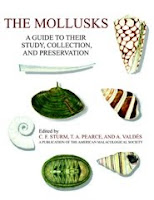
New Book from the AMS
 To the FWGNA group,
Some of you may remember a cute little booklet published by the American Malacological Union (now the American Malacological Society) entitled "How to Study and Collect Shells." It was born as a 1941 annual report of the AMU, and by its fourth edition of 1974 had grown to 107 pages with two (!) illustrations. The original chapter on freshwater snails was composed by Frank Collins Baker.
In 1999 the AMS began the process of completely updating and expanding that work, under the able leadership of Charlie Sturm, a research associate in the Carnegie Museum Section of Mollusks. I'm pleased to report that the work is now published:
"The Mollusks: A Guide to Their Study, Collection, and Preservation"C. Sturm, T. Pearce, and A. Valdes (eds.)
Universal Publishers, Inc., Boca Raton, FL. xii + 445 pp. 101 ill.
An early proof copy of my Chapter 21 on freshwater gastropods has been available from the FWGNA web site since 2003. But there are 31 chapters in total, including chapters on collecting and cleaning shells, archival methods, digital and film imaging, dredging, taxonomic methods and molecular techniques. There are chapters covering all seven extant classes of mollusks (yes, even the Aplacophora and Monoplacophora) from all environments, including the fossils. The chapter on freshwater mussels is by Kevin Cummings & Art Bogan, and the chapter on non-unionoid freshwater bivalves is by Alexi Korniushin. No malacological library will be complete without a copy of this book!
The bargain price is just $35.95, or two for $71.90. The American Malacological Society is a not-for-profit organization. Revenue from the book will help defray the costs of our scientific program, student scholarships and grants. The AMS will earn more if the book is ordered from the publisher than through commercial ventures such as Amazon.com or Barnes&Nobles.com. Thus, I would encourage you to order directly from the publisher:
Direct any questions to Charlie Sturm at doc.fossil@gmail.com
Thank you all for your support of American malacology!
And we'll keep in touch,
Rob
Wednesday, July 26, 2006
Springsnails of The Blue Ridge
Editor’s Note – This essay was subsequently published as:
Dillon, R.T., Jr. (2019c) Springsnails of the Blue Ridge. Pp 211 - 215 in The Freshwater Gastropods of North America Volume 3, Essays on the
Prosobranchs. FWGNA Press, Charleston.
.

I spent many a lazy summer day in my youth picnicking with family on the SKD and the BRP, and not a few warm evenings at the overlooks with my girlfriend. One of my favorite spots was the visitor center at Humpback Rocks (BRP mile 5.8), where latter-day pioneers live in an authentic log cabin and farm the rocky hillside (Photo above). The tiny, hand-hewn springhouse on that property must have stood unchanged for 200 years (Photo below).
.
No surface water enters or leaves the springhouse at BRP mile 5.8. Water seeps up through the rocks, travels in complete darkness for about 3 feet, then seeps back into the earth and disappears. (A narrow PVC pipe has been installed to keep the path from becoming muddy.) But if you crawl through the door, grab a wet rock, pull it out into the sunlight and turn it over, you may be lucky enough to discover a scattering of tiny white hydrobiids, Fontigens orolibas (Hubricht), the spring snail of the Blue Ridge (The white snail below).
.
My attention was first called to this remarkable animal by the wonderful 1990 monograph of Hershler, Holsinger, and Hubricht, “A revision of the North American freshwater snail genus Fontigens” (Smithsonian Contrib. Zool. 509). To tell you the truth, I don’t know which is more amazing – the fieldwork of Leslie Hubricht, the scholarship of Bob Hershler, or the biology of the snails they have teamed up to document. The authors reviewed nine Fontigens species in their work, including four species from the Commonwealth of Virginia, meticulously documenting hundreds of remote and scattered populations.
So one fine morning not too long ago I set off up the Skyline Drive in my pickup truck, HH&H monograph in my lap and topo maps on the seat beside me, determined to visit as many populations of F. orolibas as I could before the sun went down. The habitats I sampled ranged from proper springs with good water flow down to wet seeps in grassy or marshy high meadows many miles from the nearest permanent water. The photo below shows a typical spring, at a visitor cabin operated by the National Park Service down the mountain below SKD mile 81. I found snails only on the underside of rocks very near such springheads, never in any abundance.

The animals themselves are typically no more than a couple millimeters long and essentially colorless. The figure above shows a 2.9 mm F. orolibas (below) crawling with an individual F. nickliniana, a widespread species found throughout the eastern U.S. in valley springs and spring runs. Fontigens nickliniana does not share the retiring habit of F. orolibas, and seems unafraid to crawl about quite brazenly on the open streambed. The body color difference is striking.
I was ultimately able to visit seven of the sites listed by HH&H as habitats for Fontigens orolibas – a pretty full day, but only 20% of the total sites they recorded. And I’m pleased to report successful collections of F. orolibas from five of them. The other two sites had been capped and the water diverted. But given the ephemeral nature of natural snail populations and their habitats, I think the confirmation of 5/7ths of any list of historical freshwater snail records is reassuring.
The little boy from Waynesboro who played hide-and-seek in the springhouse at Humpback Rock forty years ago knew, even then, that he wanted to be a professional biologist when he grew up. I’m not sure why, but a combination of “Wow, how interesting!” and “Man, that’s pretty!” played a big role. Spending a warm summer day hunting tiny populations of mysterious animals, scattered across the crest of the ancient Blue Ridge, it’s not hard to feel the wonder again.
Keep in touch,
Rob
Monday, June 26, 2006
Freshwater Gastropods in State Conservation Strategies - The West
To the FWGNA group:
As most of you will recall, last month I surveyed a set of 10 comprehensive wildlife conservation strategies recently published by states of the southern U.S. I ranked each state by the number of freshwater gastropods on its list of species "prioritized for conservation," relative to its total number of priority species. The resulting ratio, it seems to me, might give some measure of the importance of freshwater gastropods to the overall conservation efforts of each state, and hence (perhaps) the likelihood that grant funding might be available.
This month I've done an identical survey for 12 states of The American West. But before reading any further, I'd challenge each of you to make a prediction. Clearly there is more fresh water in the South than in the West. In which region do you think freshwater snails will attract greater conservation concern?
The answer is in the West, by far. The list below shows that two of the 12 western states did not include any freshwater gastropods in their conservation plans: Montana and Washington. This is identical to the south, where two of 10 states excluded the freshwater snails: Louisiana and Mississippi. But three western states listed eye-poppingly large numbers of freshwater gastropods - 74 (28.1% of all species!) in Nevada, 45 (16.1%) in Wyoming, and 23 (11.7%) in Utah. Among southern states, only Alabama hit the double-digits (11.1%). The average percent freshwater gastropod species on state lists of special conservation concern was 0.070 in the West but only 0.026 in the South.
The difference is largely attributable to endemic hydrobiids. Nevada's 74 freshwater gastropod species of special priority included 61 Pyrgulopsis and 11 species of other hydrobiid genera, almost all narrowly restricted to individual desert springs. Utah's 23 species included 14 hydrobiids, California's 35 included 21 hydrobiids, and hydrobiids comprised all 14 of Arizona's freshwater gastropod species of greatest conservation need.
Many of the lists of the western states also included pulmonate snails, which are rarely mentioned in the south. Idaho and Oregon, for example, were both about equally split between prosobranchs and pulmonates.
A most interesting contrast emerged between the states of Wyoming and Montana. According to the authors of Wyoming's Conservation Strategy, only 44 of that state's 279 species (of all taxa) were listed because of specific, known conservation needs. They stated, "The remaining 235 have been included primarily due to a lack of key data necessary to assess their conservation status." That subgroup of 235 taxa included essentially the entire freshwater gastropod fauna of Wyoming, 45 species in total. In striking contrast, Montana listed only 60 species of all taxa, including no freshwater snails at all. By way of explanation, the authors of the Montana Strategy wrote, "Most invertebrates were not included in the assessment due to lack of data.
"Below are the 12 states of the American West, ranked by the conservation concern they directed toward their freshwater gastropod faunas. As I mentioned last month, some states do appear to be accepting outside proposals for grants to study their species of greatest conservation need. Good luck to all of you!
And keep in touch,
Rob
As most of you will recall, last month I surveyed a set of 10 comprehensive wildlife conservation strategies recently published by states of the southern U.S. I ranked each state by the number of freshwater gastropods on its list of species "prioritized for conservation," relative to its total number of priority species. The resulting ratio, it seems to me, might give some measure of the importance of freshwater gastropods to the overall conservation efforts of each state, and hence (perhaps) the likelihood that grant funding might be available.
This month I've done an identical survey for 12 states of The American West. But before reading any further, I'd challenge each of you to make a prediction. Clearly there is more fresh water in the South than in the West. In which region do you think freshwater snails will attract greater conservation concern?
The answer is in the West, by far. The list below shows that two of the 12 western states did not include any freshwater gastropods in their conservation plans: Montana and Washington. This is identical to the south, where two of 10 states excluded the freshwater snails: Louisiana and Mississippi. But three western states listed eye-poppingly large numbers of freshwater gastropods - 74 (28.1% of all species!) in Nevada, 45 (16.1%) in Wyoming, and 23 (11.7%) in Utah. Among southern states, only Alabama hit the double-digits (11.1%). The average percent freshwater gastropod species on state lists of special conservation concern was 0.070 in the West but only 0.026 in the South.
The difference is largely attributable to endemic hydrobiids. Nevada's 74 freshwater gastropod species of special priority included 61 Pyrgulopsis and 11 species of other hydrobiid genera, almost all narrowly restricted to individual desert springs. Utah's 23 species included 14 hydrobiids, California's 35 included 21 hydrobiids, and hydrobiids comprised all 14 of Arizona's freshwater gastropod species of greatest conservation need.
Many of the lists of the western states also included pulmonate snails, which are rarely mentioned in the south. Idaho and Oregon, for example, were both about equally split between prosobranchs and pulmonates.
A most interesting contrast emerged between the states of Wyoming and Montana. According to the authors of Wyoming's Conservation Strategy, only 44 of that state's 279 species (of all taxa) were listed because of specific, known conservation needs. They stated, "The remaining 235 have been included primarily due to a lack of key data necessary to assess their conservation status." That subgroup of 235 taxa included essentially the entire freshwater gastropod fauna of Wyoming, 45 species in total. In striking contrast, Montana listed only 60 species of all taxa, including no freshwater snails at all. By way of explanation, the authors of the Montana Strategy wrote, "Most invertebrates were not included in the assessment due to lack of data.
"Below are the 12 states of the American West, ranked by the conservation concern they directed toward their freshwater gastropod faunas. As I mentioned last month, some states do appear to be accepting outside proposals for grants to study their species of greatest conservation need. Good luck to all of you!
And keep in touch,
Rob
- Nevada Comprehensive Wildlife Conservation Strategy Species of Conservation Priority: 74 freshwater snails / 263 = 0.281
- A Comprehensive Wildlife Conservation Strategy for Wyoming Species of Greatest Conservation Need: 45 freshwater snails / 279 = 0.161
- Utah Comprehensive Wildlife Conservation Strategy Species of Greatest Conservation Need (all tiers): 23 freshwater snails / 196 = 0.117
- The Oregon Conservation Strategy Strategy Species: 18 freshwater snails / 286 = 0.063
- Idaho Comprehensive Wildlife Conservation Strategy Species of Greatest Conservation Need: 13 freshwater snails / 229 = 0.057
- Arizona's Comprehensive Wildlife Conservation Strategy Species of Greatest Conservation Need (Tiers 1a, 1b, 1c): 14 freshwater snails / 310 = 0.045
- California Wildlife: Conservation Challenges Special Status Species: 35 freshwater snails / 824 = 0.042
- Colorado's Comprehensive Wildlife Conservation Strategy Species of Greatest Conservation Need: 7 freshwater snails / 205 = 0.034
- Comprehensive Wildlife Conservation Strategy for New Mexico Species of Greatest Conservation Need: 14 freshwater snails / 452 = 0.031
- The Texas Comprehensive Wildlife Conservation Strategy Priority Species: 10 freshwater snails / 733 = 0.014
- Montana's Comprehensive Fish and Wildlife Conservation Strategy Species of Greatest Conservation Need: 0 freshwater snails / 60 = 0.0
- Washington's Comprehensive Wildlife Conservation Strategy Species of greatest conservation need: 0 freshwater snails /200 = 0.0
Friday, May 26, 2006
Freshwater Gastropods in State Conservation Strategies - The South
To The FWGNA group,
A bit over five years ago the U.S. Congress created the State Wildlife Grants Program, charging every state in the union to develop a "Comprehensive Wildlife Conservation Strategy" by October, 2005, as a condition for claiming a share of the money. All 50 states did, in fact, meet that deadline, and the CWCS documents that resulted are now available on state DNR web sites around the nation. They present an interesting study in contrasts.
I don't think that the federal government provided any formal definition of the words, "comprehensive" or "wildlife." But I've just completed a brief survey of the CWCS documents published by ten southeastern states, and I'm pleased to report that eight of the ten included freshwater gastropods among wildlife species considered worthy of special conservation concern.
In my review I recorded the total number of all species in all taxa listed by each state, as well as the number of freshwater gastropod species singled out for conservation priority. It seems to me that the ratio of freshwater gastropods-to-total-species might provide some estimate of the importance each state accords to its freshwater gastropod fauna, and perhaps, the likelihood that one of us might win some funding.
Here are the ten southeastern states, ranked by the conservation concern they directed toward their freshwater snails. The number in bold is the number of freshwater gastropod species listed, with total species (of all taxa) in the denominator that follows. I've also provided links to the relevant sites on the web pages for all ten state wildlife agencies:
It is interesting to note that fully half of the ten states I surveyed were cited as "Leaders" in the state wildlife conservation planning process by the Defenders of Wildlife, in an independent review commissioned by the Doris Duke Charitable Foundation. Of the 12 states earning such recognition nationwide, five were in the South: Florida, Georgia, North Carolina, Tennessee, and Virginia. See the report:
http://www.defenders.org/statewildlifeplans/
I would encourage each of you to contact whoever has been involved with developing the CWCP in your state to see what sort of funding opportunities might be available. Although many states are earmarking their State Wildlife Grant money for within-agency use, I do know that some states have been accepting outside proposals.
So good luck, and keep in touch!
Rob
A bit over five years ago the U.S. Congress created the State Wildlife Grants Program, charging every state in the union to develop a "Comprehensive Wildlife Conservation Strategy" by October, 2005, as a condition for claiming a share of the money. All 50 states did, in fact, meet that deadline, and the CWCS documents that resulted are now available on state DNR web sites around the nation. They present an interesting study in contrasts.
I don't think that the federal government provided any formal definition of the words, "comprehensive" or "wildlife." But I've just completed a brief survey of the CWCS documents published by ten southeastern states, and I'm pleased to report that eight of the ten included freshwater gastropods among wildlife species considered worthy of special conservation concern.
In my review I recorded the total number of all species in all taxa listed by each state, as well as the number of freshwater gastropod species singled out for conservation priority. It seems to me that the ratio of freshwater gastropods-to-total-species might provide some estimate of the importance each state accords to its freshwater gastropod fauna, and perhaps, the likelihood that one of us might win some funding.
Here are the ten southeastern states, ranked by the conservation concern they directed toward their freshwater snails. The number in bold is the number of freshwater gastropod species listed, with total species (of all taxa) in the denominator that follows. I've also provided links to the relevant sites on the web pages for all ten state wildlife agencies:
- Alabama Comprehensive Wildlife Conservation Strategy Species of greatest conservation need: 35 freshwater gastropods / 314 = 0.111
- Tennessee's Comprehensive Wildlife Conservation Strategy Species of greatest conservation need: 32 freshwater gastropods / 664 = 0.048
- A Comprehensive Wildlife Conservation Strategy for Georgia High priority species: 19 freshwater gastropods / 619 = 0.031
- North Carolina Wildlife Action Plan Prioritized for conservation: 10 freshwater gastropods / 371 = 0.027
- Virginia's Comprehensive Wildlife Conservation Strategy Species of greatest conservation need (all tiers): 17 freshwater gastropods / 925 = 0.018
- Florida's Wildlife Legacy Initiative Species of greatest conservation need: 15 freshwater gastropods / 974 = 0.015
- Arkansas Comprehensive Wildlife Conservation Strategy 5 species of greatest conservation need: 5 freshwater gastropods / 369 = 0.014
- South Carolina Comprehensive Wildlife Conservation Plan Species of conservation concern: 4 freshwater gastropods / 1240 = 0.003
- Louisiana Comprehensive Wildlife Conservation Strategy Species of concern: 0 freshwater gastropods / 240 = 0.0
- Mississippi's Comprehensive Wildlife Conservation Strategy Species of greatest conservation need: 0 freshwater gastropods / 297 = 0.0
It is interesting to note that fully half of the ten states I surveyed were cited as "Leaders" in the state wildlife conservation planning process by the Defenders of Wildlife, in an independent review commissioned by the Doris Duke Charitable Foundation. Of the 12 states earning such recognition nationwide, five were in the South: Florida, Georgia, North Carolina, Tennessee, and Virginia. See the report:
http://www.defenders.org/statewildlifeplans/
I would encourage each of you to contact whoever has been involved with developing the CWCP in your state to see what sort of funding opportunities might be available. Although many states are earmarking their State Wildlife Grant money for within-agency use, I do know that some states have been accepting outside proposals.
So good luck, and keep in touch!
Rob
Subscribe to:
Posts (Atom)


 Posts
Posts


