Dr. Rob Dillon, Coordinator


Monday, June 13, 2011

Collecting Freshwater Snails by Kayak

About five or six years ago my family gave me a modest kayak as a Christmas present, and shortly thereafter I began carrying it with me on field trips. The first thing I learned was, "Paddle upstream."

The second thing I learned was, if at all possible, do not try to collect freshwater snails from a kayak. There is almost no space inside, and freedom of movement is very constrained. And even such an elementary operation as, “to pick up a submerged stick” without at least two fixed points against which to pick is a genuine education in basic physics.

But much of the freshwater habitat around Charleston is not really “wadeable.” And it is amazing how rarely the portions of large rivers that are readily accessible by motorized vehicle constitute especially productive freshwater snail habitat. And how often the spot just across the river, upstream 100 meters, looks absolutely perfect, at least staring at it from a boat ramp, with one's hands on one's hips. So I have found my kayak quite useful simply as a mode of transportation, to carry me somewhere better, so I can get out.
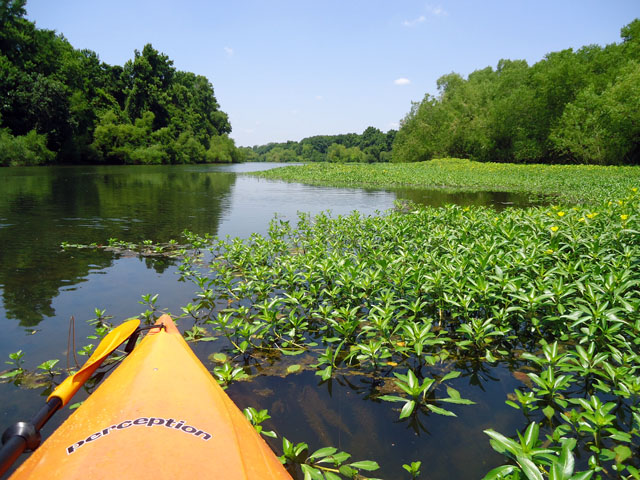
That being said, there are some habitat types that are indeed conveniently sampled by kayak. Swampy areas with soft and flocculent bottoms come to mind, and especially aquatic macrophytes, either the submergents like Elodea and Hydrilla, or floating emergents like water lilies, pondweeds, and Ludwigia (above). Mats of such vegetation can sometimes float over treacherous bottoms, and I can't think of any better method to sample the little pulmonates and hydrobiids they often shelter unless from a low, shallow-draft boat like a kayak.

The idea of tying a dipnet onto the stern of my kayak was pretty obvious. I took a triangular kick net off its pole because it fit under those big black cargo bands on the stern of my particular brand of kayak, but I suppose a D-shaped net head would have advantages as well.

When I brought my first net samples into my kayak, however, I discovered that there was really no place to sort through them except in my lap. And if I was holding my net with one hand and picking through its contents using forceps with the other, where would I perch the little vials I was trying to transfer my little pulmonates and hydrobiids into? And what to do with my paddle?
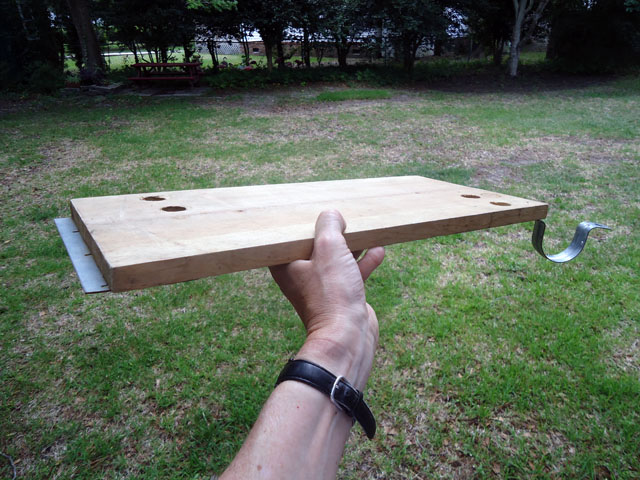
So I cut myself a 20” sorting table out of 1x10” board, and drilled a couple holes in it to hold 21x70 mm vials. On one edge of the board I attached a metal flange, which hooks under the lip of my kayak. And on the other corner I attached a metal bracket, which holds my paddle.

The paddle is actually supported both by the bracket on the corner of my sorting table and by a coat hanger I’ve bent into a hook and attached to the bow of my kayak (visible in the Ludwigia shot above - click for larger). Thus the weight of the paddle on the one edge of my table keeps the metal flange on the other edge firmly hooked under the kayak lip.

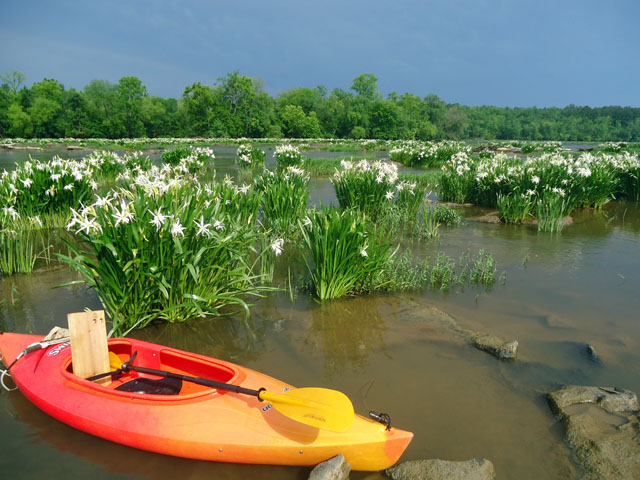
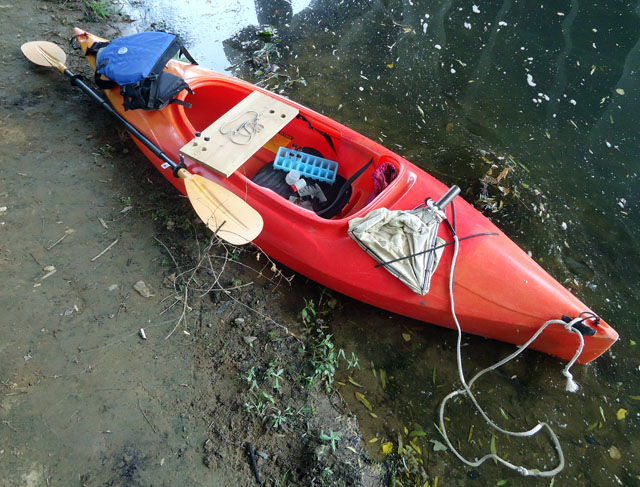
The picture below shows the sorting table in place, counter-weighted by the paddle (click for larger). I keep extra vials in an ice cube tray underneath my seat. I always wear forceps on a string around my neck, regardless of whether I am on land or sea. When I’m not sampling I slide the sorting table behind my seat, where it doubles as a backrest. (I took the factory-installed backrest out of the kayak several years ago.) The nice photo of spider lilies on the Catawba River at the top of this post shows the table in its stowed position.
That's really all the advice I've got, except for the usual, generic reminders about a life jacket, a hat, and sunscreen. Oh, and paddle upstream first. I'm serious about that.

Wednesday, May 18, 2011

Megapetitions II: Armistice Day?

Faithful readers should remember the yarn we spun back on 14July09 entitled, “Megapetitions of the Old West” (1). Who could forget riding sidekick with gunslingers from the Center for Biological Diversity through the badlands of endangered species politics, filing petitions to list hundreds of species in a single crank of our solar-powered fax machines, firing off lawsuits on the 366th day as 12-month deadlines came and went?

In our last episode, the CBD posse had filed a (2008) petition nominating “32 mollusk species from freshwater and terrestrial ecosystems of the northwestern United States” and a (2009) petition to list “42 species of Great Basin Springsnails” under the provisions of the endangered species act. So now almost two years later, how has that megapetitiony, lawsuity thing been working out?

Reference to the ecos.fws.gov website reveals that none of the 74 mollusk species petitioned by the CBD in 2008 or 2009 has advanced beyond “under review – no findings.” Only two species of freshwater snails have in fact been federally listed since 2005 – the two Alabama pleurocerids we featured in late 2009 (2). Indeed, no species of freshwater gastropod has been added to the formal list of candidates maintained by the US Fish and Wildlife Service since 2002 (3).

Undeterred, on April 20, 2010, the Center for Biological Diversity filed a single, massive, 1145 page “Petition To List 404 Aquatic, Riparian And Wetland Species From The Southeastern United States As Threatened Or Endangered Under The Endangered Species Act” (4). This stupendous ark-full of creatures great and small included 4 mammals, 3 birds, 28 herps, 48 fish, 55 insects, 92 crustaceans, 48 mussels and 44 freshwater gastropods from a twelve-state region. Among the gastropods, I have tallied 27 pleurocerids, 15 hydrobiids, 1 ancylid and 1 planorbid (5).

And exactly 12 months and one day later, on April 21, 2011, the CBD filed a notice of intent to sue the US Fish and Wildlife Service to have determinations made for these 404 species. “The Obama administration seems intent only on delay and inaction,” said Sheriff Noah Greenwald. “It’s dangerous foot-dragging — yet another result of an endangered species program that’s been broken for more than a decade and badly needs reform.”

Now pardners, I know just enough about the world of politics and public policy to know how little I know about politics and public policy. And I know even less about the New York Times. But last week a colleague sent me a link to a NYT article entitled, “U.S. Reaches a Settlement on Decisions about Endangered Species,” the timing of which does not seem to be a coincidence (6).


There is apparently at least one other organization very similar to the CBD in both its cause and its approach, styling itself “WildEarth Guardians.” The WEG is also a primarily western outfit focusing on endangered species protection, and in fact rode with the CBD posse in the successful campaign to list Pyrgulopsis roswellensis, Juternia kosteri and Assiminea pecos back in 2005.

So quoting now from the FWS press release (7), last week WildEarth Guardians signed an agreement formalizing a “listing work plan that will enable the agency to systematically, over a period of six years, review and address the needs of more than 250 species listed on the 2010 Candidate Notice of Review.” That would be good news for the 11 freshwater gastropods (entirely western hydrobiids) currently on that formal list of candidates (3).

But it does send 1,230 species more recently petitioned by organizations such as the Center for Biological Diversity to the back of the line. And the CBD was not pleased. According to the New York Times, similar negotiations between the FWS and the CBD “reached an impasse” sometime in April. Sheriff Greenwald was quoted as opining that the FWS failure to keep pace with petition candidates for the endangered species list was more of a reflection of a lack of political will than distractions posed by excess litigation.

Perhaps this is a variant of the old “good cop / bad cop” strategy that could more descriptively be termed, “crazy cop / cop who is merely unreasonable.” Does the spectacle of a genuinely insane Center for Biological Diversity - firing sixshooters into the air like Yosemite Sam - make negotiation with an organization that is simply shrill, such as WildEarth Gardians, politically possible? Even if that has not been the strategy here, it seems to have worked.

Notes

(1) Megapetitions of the Old West [14July09]

(2) We featured the listing of Leptoxis foremani and Pleurocera foremani in a series of four posts on the Mobile Basin: Two pleurocerids proposed for listing [14Aug09], Leptoxis lessons [15Sept09], Pleurocera puzzles [12Oct09], Goniobasis WTFs [13Nov09]

(3) The FWS reviews its formal list of candidate species annually. A PDF of the most recent (10Nov10) "Candidate Notice of Review" can be downloaded here [PDF]. See pp 69255-58 for the freshwater snails.

(4) Here's the page at The Center for Biological Diversity:
The Southeast Freshwater Extinction Crisis
There are links from that page to an interactive map and an "action timeline" of lawsuity stuff, as well as to the entire 1,145 page petition itself.

(5) If you can believe it, the CBD petition itself includes no tabulations of any sort for the 404 species proposed. The 1,100-page list is organized alphabetically by genus. I made my tally of the 44 freshwater gastropods covered by visiting the 12 state pages separately, using the interactive map. Here's a PDF table I created [CBD-southeast-endangered.pdf] freshly updated as of 7Oct11. Only 8 states are represented - no freshwater gastropods listed from VA, WV, SC, or LA.

(6) U.S. Reaches a Settlement on Decisions about Endangered Species [NYT 10May11]


(7) Fish and Wildlife Service Announces Work Plan to Restore Biological Priorities and Certainty to Endangered Species Listing Process [FWS 10May11]

Friday, April 22, 2011

Malacoterrorist Watch List!

Editor’s Note – This essay was subsequently published as: Dillon, R.T., Jr. (2019d) Malacoterrorist Watch List!  Pp 131 - 135 in The Freshwater Gastropods of North America Volume 4, Essays on Ecology and Biogeography.  FWGNA Press, Charleston.

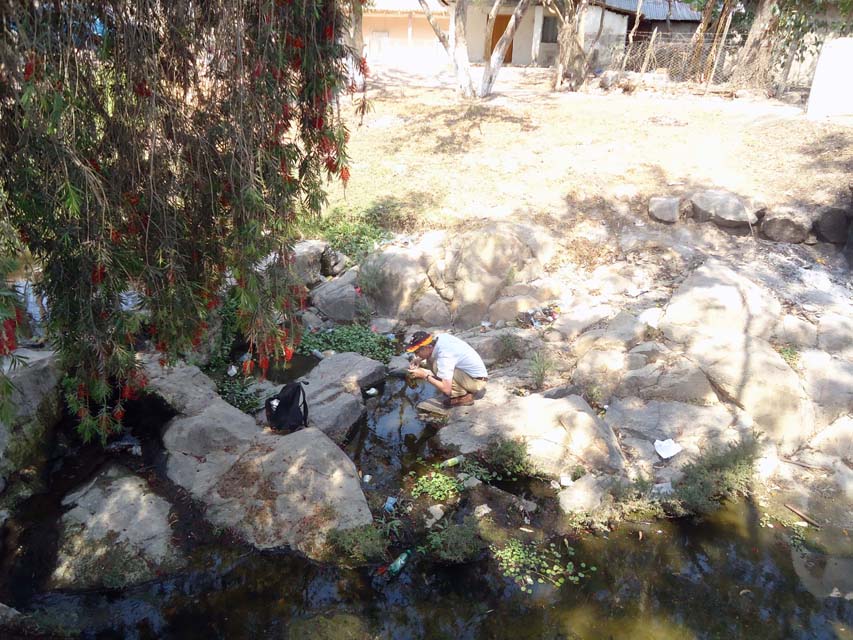
I will open this essay with a confession, of sorts. On the afternoon of 6Mar11 I, Dr. Robert T. Dillon Jr., did in fact collect a small sample of freshwater gastropods from a filthy stream in the little town of Ojojona, south of Tegucigalpa. I recorded Stenophysa marmorata (5), Biomphalaria obstructa, and Uncancylus concentricus, not being terribly sure about those last two identifications. That's a disposable diaper floating about 2-3 feet in front of my right hand down there [click for panorama].

Strangely, none of the citizens of Ojojona seemed to show the slightest interest in what I was doing, squatting down in their little creek like that, even though a steady stream of pedestrians passed by on the bridge above me. In fact, one older gentleman came down the bank, unzipped, and pissed in the creek right behind me, without offering so much as a word of greeting.

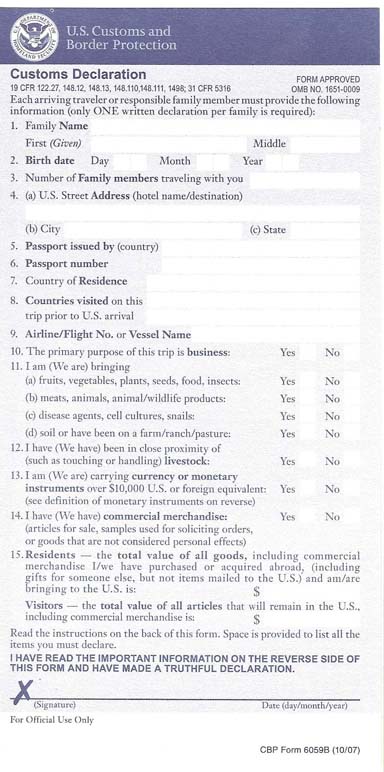
Now I am quite familiar with certain regulations promulgated by US Customs and Border Protection regarding snails. Question 11c on the blue Customs Declaration Form which all arriving travelers must complete specifically inquires whether "I am (we are) bringing disease agents, cell cultures, or snails" into the United States. My answer last month was NO. By the date of my flight home, the sample I took from that little stream in the hills above Tegucigalpa had long been preserved in denatured ethanol and stowed in a white plastic bottle, deep in my day pack, in my checked luggage. That sample was no longer "snails." It had become "specimens for scientific research." That's my story, and I'm sticking to it. [Click the image below to see the full front of the form.]

Did I look guilty, approaching the Immigration desk in Atlanta? I handed the officer my passport, with blue customs declaration inside. He asked me just one or two very harmless questions, including my occupation, stamped my passport, and welcomed me home to the USA.

Did I transmit some sort of telltale body language as I waited to pick up my checked baggage? Did I glance around furtively as I rolled my luggage back through the corridor to where the US Customs Officer was sitting calmly on his stool, retrieving declaration forms? How did he know my name?

As I approached the Customs Officer he rose and asked if I were "Mr Dillon, the college professor from Charleston?" Yes, I admitted that I was. He then asked me pointedly, "Are you bringing any snails with you this afternoon?"  No, I replied, I was not. My Customs Declaration clearly stated that I was not. I had made no mention of snails to anybody, official or otherwise, not even a whisper. Yet somehow, it was to materialize, I had been profiled as a Malacoterrorist!

The officer placed my passport and customs declaration in a clear vinyl pouch and instructed me to roll my luggage through the doors to my right, reporting to the third desk on the left. There to greet me was a stern and stubby woman of Hispanic descent, who asked me to open all my bags and began to inspect them thoroughly, all the while asking, "Do you have any snails? Do you understand that you must have a permit to import snails? Do you understand that any and all snails you might be carrying must be declared?"

Eventually she dumped all the stuff out of my day pack, and briefly held the white plastic bottle in which my specimens for scientific research were preserved. But she didn't think to open the top and look inside. "Are you certain that you are not carrying any snails?" she inquired again. And again I insisted that no snails were in my possession. That's my story, and I'm sticking to it.

My entire detention didn't take much more than ten or fifteen minutes, after which I was released on my own recognizance, irritated (and perhaps a bit humiliated) but otherwise unscathed. And puzzling, as I dragged my recognizance through the airport to my connecting flight, as to how the Feds might so accurately have profiled me, without any overt clues, as a Person of Malacological Interest.

Some of my readership may remember the essay I published on 17Dec08 entitled, "Non-pests, Non-plants, and Non-sense at the USDA" (1). In that essay I described a series of misadventures and hijinks attending my efforts to obtain a USDA permit for the importation of living European planorbid gastropods into the United States. The process was painful and took several months to bear fruit, but ultimately I was granted a "letter of no jurisdiction" by the USDA to facilitate that particular shipment of snails. In retrospect, I feel fairly certain that this honest effort at good-faith citizenship in 2008 may have led to my detention in Atlanta last month. And am I to suffer this same indignity every time I apply to re-enter my own country for the rest of my life?

I like to think of the proper relationship between Science and The State as one of dialogue (2). As a scientist, I understand that my language, culture, and values are different from those of US Customs and Border Protection, US Immigration & Customs Enforcement, and our various federal agencies concerned with agriculture, public health, and natural resources. Nevertheless, a couple years ago I coauthored a paper with USDA colleagues on mollusks of quarantine importance in the United States (3). And just last week the US Fish & Wildlife agent on duty here in Charleston contacted me (yet again) to confirm the identity of some molluscan contraband she'd interdicted at the port (4). I get requests of this sort all the time, and I always try to help.

So why would you Gubmint Bozos go out of your way to piss me off? It seems to me that, of all 300 million citizens in this great country of ours, the one guy whose good word you should believe, if he checked NO on the snails box of his customs declaration, would be Dr. Robert T. Dillon, Jr. I'll bet I'm the only professional malacologist in the history of USDA-APHIS form PPQ-526 who has ever endured the hassle of importing live snails properly. And for my honest efforts, you send some officious woman to rifle through my dirty underwear in Atlanta International Airport? Well, it'll be a long time before this "dialogue" opens up again.


Notes
(1) Non-pests, Non-plants, and Non-sense at the USDA [17Dec08].

(2) Hit the "Science and Public Policy" label above and to the right to review a series of posts on this recurring theme.

(3) Cowie, R. H., R. T. Dillon, D. G. Robinson and J. W. Smith (2009) Alien non-marine snails and slugs of priority quarantine importance in the United States: A preliminary risk assessment. American Malacological Bulletin 27: 113-132. [PDF]

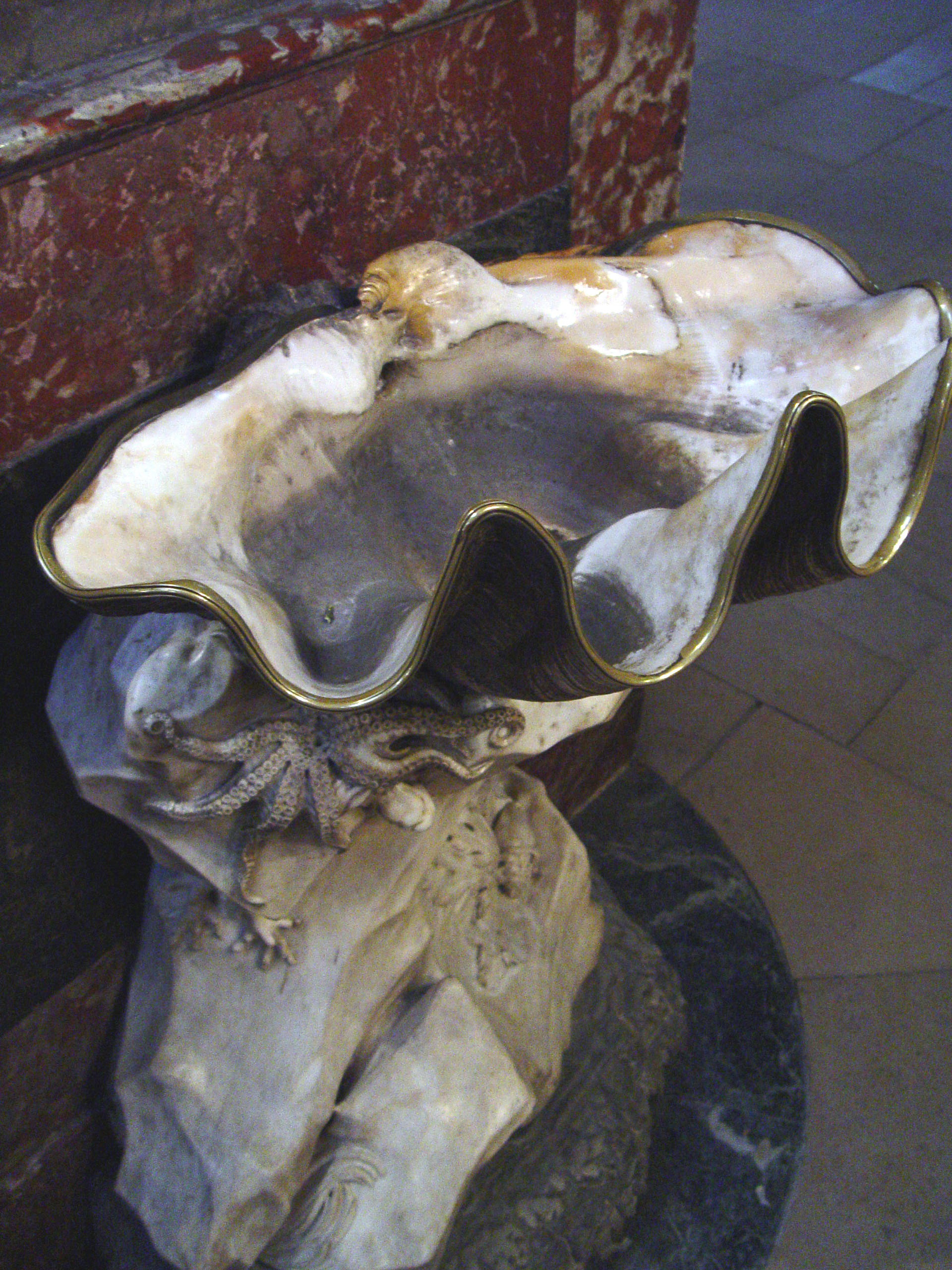
(4) Special Agent Rebecca Roca of the USFWS sent me several photos of the "bear paw clam" Hippopus hippopus back on April 12. I had one of those photos posted below, but she asked me to remove it (without explanation) on May 19.

(5) Note added November, 2011. In subsequent correspondence with other colleagues, I have discovered that there are (almost) no reliable photos of Physa (or Aplexa, or Stenophysa) marmorata available anywhere on the web. If you google images for marmorata, you will obtain pages and pages of photos of trash Physa acuta. So here, as a service to the community at large, is a photo of a bona fide Physa (Stenophysa) marmorata individual (13.5 mm) from Ojojona, Honduras.

Wednesday, March 23, 2011

Goodbye Goniobasis, Farewell Elimia

Editor's Note.  This essay was subsequently published as: Dillon, R.T., Jr. (2019c) Goodbye Goniobasis, Farewell Elimia.  Pp 19-22 in The Freshwater Gastropods of North America Volume 3, Essays on the Prosobranchs.  FWGNA Press, Charleston.

The systematic relationships among Pleurocera, Goniobasis, Elimia, and several other nominal genera of slender pleurocerids in eastern North America first rose to our attention in February of 2007 (1). Faithful readers may remember the post to this blog entitled “Goodrichian Taxon Shift,” in which I reported a survey of gene frequencies in a pleurocerid population inhabiting Indian Creek, a small river in the remote southwestern corner of Virginia. The shell morphology demonstrated by that particular population varied from the slender and carinate “Goniobasis acutocarinata” form in the headwaters to the smooth and more heavily shelled Goniobasis clavaeformis form in the main creek itself. And at the mouth, where Indian Creek emptied into the Powell River, the shell morphology of this single population of pleurocerids became so chunky as to appear to change genera, to “Pleurocera unciale.”

I returned to this subject in October of 2009 under the title “Pleurocera Puzzles” (2). In that second post I reported an extension of my Indian Creek study to include pleurocerid populations inhabiting three additional subdrainages: the Pistol/Little River near Maryville (TN), the Conasauga/Hiwassee River east of Etowah (TN), and the Coahulla/Oostanaula River in North Georgia. In all four cases, the populations of Pleurocera inhabiting downstream reaches were more genetically similar to the local “Goniobasis” populations immediately upstream than to other nominal Pleurocera populations. This would seem to confirm that the shell attributes by which Pleurocera and Goniobasis have historically been distinguished cannot stand.

Taxonomic controversies have simmered within the tiny, closely knit scientific community working on the North American Pleuroceridae since the birth of American malacology. In my blog post of November 2010, I reviewed the longstanding disagreements over the generic nomina Pleurocera, Lithasia, and Oxytrema, which continued through most of the 20th century (3). More visible recently has been the controversy regarding the generic nomina Goniobasis and Elimia, which I reviewed in a blog post way back in September of 2004 (4).

We’ve been beating each other up over whether to call these populations Pleurocera, Oxytrema, Goniobasis, Elimia, and God Knows What Else for almost 200 years, and there’s never been a nickel’s worth of biological difference in the lot of them (5). Let’s put all this behind us, shall we?

The research results I telegraphed to this group in October 2009 have just been published in the issue of Malacologia currently on the newsstands. In Appendix 1 of that paper I formally synonymize Goniobasis, Elimia, and eight more obscure genera under the genus Pleurocera (Rafinesque, 1818). A pdf download is available from link (6) below. See pp 276 - 77.

The FWGNA site has been completely updated to correct all primary instances of the generic nomen “Goniobasis” to the most recent taxonomy (7). I would invite my colleagues to do likewise with the generic nomen, “Elimia.” Let the peace of Pleurocera begin.

Notes

(1) Goodrichian Taxon Shift [20Feb07].

(2) Mobile Basin III: Pleurocera Puzzles [12Oct09]

(3) Joe Morrison and the Great Pleurocera Controversy [10Nov10]

(4) Goniobasis and Elimia [28Sept04]

(5) DAZO, B.C. (1965) The morphology and natural history of Pleurocera acuta and Goniobasis livescens (Gastropoda: Cerithiacea: Pleuroceridae). Malacologia 3:1-80. STRONG, E.E. (2005) A morphological reanalysis of Pleurocera acuta Rafinesque, 1831, and Elimia livescens (Menke, 1830) (Gastropoda: Cerithioidea: Pleuroceridae). Nautilus 119:119-132.

(6) Dillon, R. T., Jr. (2011) Robust shell phenotype is a local response to stream size in the genus Pleurocera (Rafinesque, 1818). Malacologia 53: 265-277. [PDF]

(7) I did not change the file names, only the html text. Even so, the process took several days, and I’m still not sure I've caught every instance. If you find any stray “Goniobasis” in the text of the FWGNA site, let me know.

Friday, February 4, 2011

When Art and Science Collide

Editor’s Note – This essay was subsequently published as: Dillon, R.T., Jr. (2023c)  When Art and Science Collide.  Pp 335 – 338 in The Freshwater Gastropods of North America Volume 7, Collected in Turn One, and Other EssaysFWGNA Project, Charleston, SC.

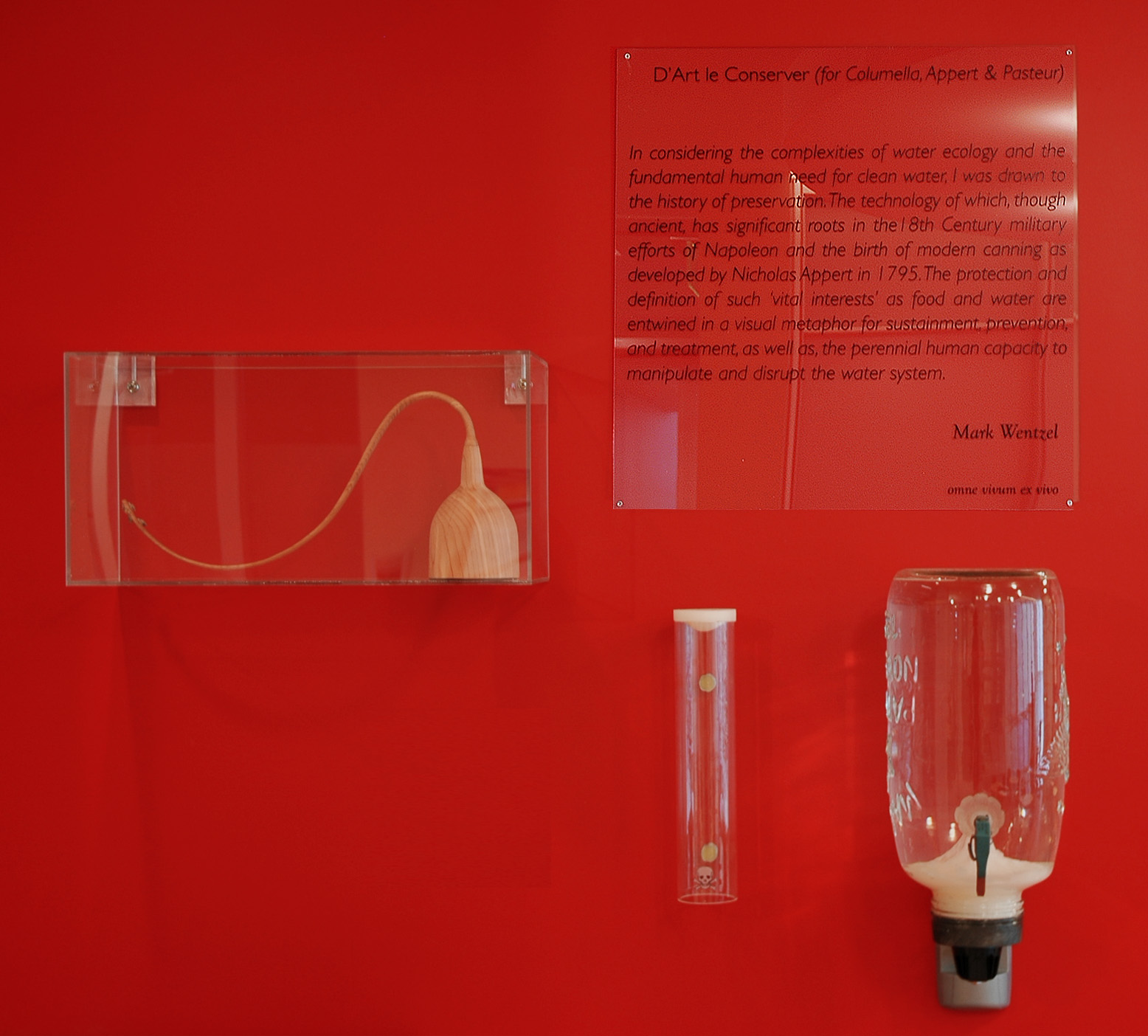
Last fall I received an unusual email from Mr. Mark Wentzel, a sculptor living in the Atlanta area, bearing the subject line “L. columella.” Mr. Wentzel explained that he was working on an art exhibition for the Rollins School of Public Health at Emory University, and inquired whether there might be “a source for ordering Lymnaea columella shells,” or if not, advice as to “a good method (or locality) of obtaining one. I was intrigued.

Connections between the Mollusca and the visual arts have a long and lavish history. Seashells, in particular, become decorative items almost untouched by the hand of man, save for a good cleaning. Entire coffee-table books have been dedicated to seashells as adornment in the primitive peoples, seashell motifs in the works of the renaissance masters, sailor’s valentines, X-ray photographs, and so forth. Upon entering the church of St. Sulpice in Paris, one finds the holy water contained in a massive pair of Tridacna valves, gifts from Venice to Francis I. How they got to Venice in the early 16th century, God knows.

Freshwater gastropods, however, are not decorative. One could certainly fashion the image of a freshwater snail into a logo and put it on a tee shirt. But I cannot (off the top of my head) think of any works of visual art, intended to stand alone, featuring our favorite creatures.

So I struck up an email correspondence with Mr. Wentzel to learn more about his project. Fishing for a connection to public health, I asked if his interest in L. columella might be somehow tied to the potential of lymnaeids to host fascioliasis. He replied that “Fascioliasis comes into play, but mostly as a metaphor.” More directly, the work he was contemplating “involves water, a Vietnam era Mk2 hand-grenade, a four-gallon Mason, lead drinking cups, and the unfamous (sic) L. columella, an indirect nod to Lucius Junius Moderatus Columella, the Roman author of De Re Rustica, including significant early contributions to the field of food preservation.”

Mr. Wentzel added, almost as an afterthought, “My choice of L. columella was no fluke.” Okay, that got me. I sent him a sample of L. columella in the next morning’s “snail mail.”

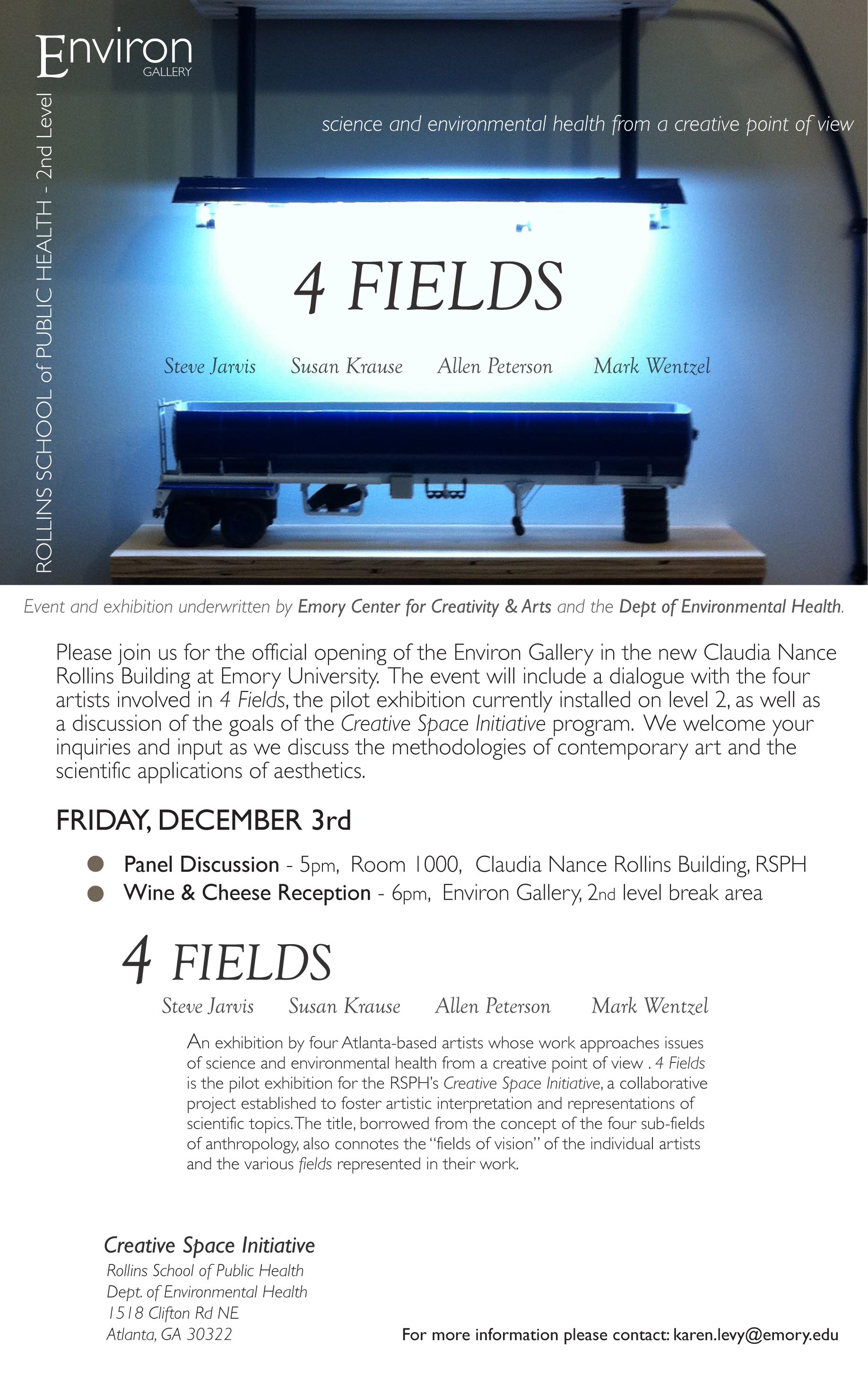
The exhibition opened in December, under the title “4 Fields: Science and Environmental Health from a Creative Point of View.” [Click the image above to read the flyer.] I have not been to Atlanta to view the works first hand, but my overall impression, judging from the brochure, is that it is complicated. The title was “borrowed from the concept of the four sub-fields of anthropology” which turn out to be (according to Wikipedia) physical anthropology, cultural anthropology, archaeology, and linguistics. The connection between anthropology, sculpture, and environmental health is obscure to me. As well as many other things.


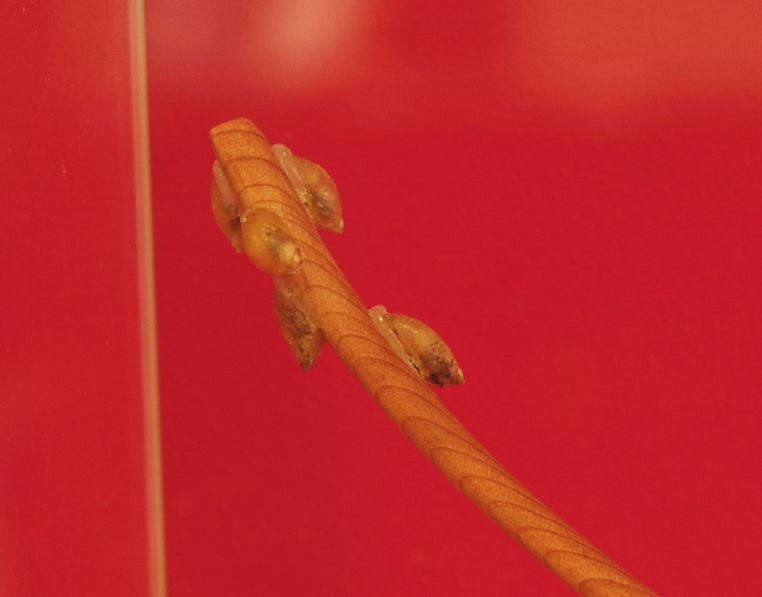
The figure above shows Mark Wentzel's entire work [click for enlargement]. Our Lymnaea columella shells have been given rubbery little bodies and affixed to the tip of a Pasteur-style swan-necked flask at the far left. The hand grenade appears as a spigot for the 4-gallon mason. A close-up of the most exciting part of the piece is shown below.

The next paragraph is going to be boring and obvious, but bear with me. I’m getting ready to make a point.

Art and Science are two entirely different things. Mark Wentzel works in a world with its own unique language, culture, and set of values that are entirely different from, no better and no worse than, the world in which I live. This does not mean that artists and scientists cannot work together. Our worlds are not incompatible. But neither are our worlds compatible in any sense, either. They are just completely, utterly different.

Now scratch out the word "art" in the paragraph above, an insert the phrase, “law and public policy.” The paragraph will remain just as true. Science is no more compatible with public policy than it is with fine art.

Last month I got a (rather routine) email from a DNR biologist working on a revision of the South Carolina priority conservation invertebrate species. He wanted to know what freshwater gastropods in our state might be “of conservation concern.” So I pointed him to Table 1 on the Freshwater Gastropods of South Carolina website, where all 32 of our species are ranked by their abundances at many hundred sampling sites. My own (completely subjective) opinions regarding which of those species might warrant some conservation concern are to be found under "Recommendations" on that same site.

But in a larger sense, the concept of "conservation concern” in law is no more scientific than the concept of “beauty” in the fine arts. Neither can be measured, and hence science has nothing to say about either.

I was happy to send data to our DNR biologist, just as I was happy to send Mr. Wentzel some shells of L. columella. But I would never dream of pretending that science figures into my interactions with the latter world. Why do we continue to imagine that science can enter into the former?

Friday, January 7, 2011

Mollusk Session in Albany, Apr. 6 - 9

Our good friend Dave Strayer is organizing a special session on mollusks at the NNHC meeting in Albany this April. See Dave's email below for further details, as well as a link to the conference web site.

Looks like a lot of fun!
Rob

From: Dave Strayer strayerd@caryinstitute.org
To: Rob Dillon dillonr@cofc.edu
Date: Fri, 7 Jan 2011 11:41:13 -0500
Subject: Northeast Natural History Conference

Hello everyone-

I am organizing a special session on mollusks at the Northeast Natural History Conference, which will be held in Albany (NY) on 6-9 April 2011. If you are interested in contributing a paper or poster to this session (the session is called “Freshwater Malacology” right now, but I’d be happy to include presentations on marine or terrestrial mollusks), please go to http://www.eaglehill.us/NENHC_2011/NENHC2011 for information about the conference and forms for registering and submitting an abstract. Or, if you have questions or are feeling shy about joining this session, you can email me at strayerd@caryinstitute.org.

The Northeast Natural History Conference is a friendly and lively conference that is held every 2 years at the New York State Museum in Albany. It attracts all kinds of ecologists, conservationists, taxonomists, etc. from throughout the Northeast, and is a fun and simulating conference. I think it’s an especially good and non-threatening place for students or amateurs to give presentations. If you visit the conference web site, you’ll see that there is an attractive slate of workshops in addition to the usual talks and posters.

If you’re working on mollusks in the Northeast, I hope that you’ll think about contributing to this special session. The deadline for submitting an abstract is 1 March 2011, so ACT NOW!!

Please pass this notice along to anyone who might be interested.

Dave Strayer

Wednesday, December 8, 2010

Two Species of Ferrissia

Editor's Note.  This essay was subsequently published as: Dillon, R.T., Jr. (2019b)  Two species of Ferrissia.  Pp 143-147 in The Freshwater Gastropods of North America Volume 2, Essays on the Pulmonates.  FWGNA Press, Charleston.

Back in June of 2009, when last we touched on the systematics of ancylid limpets in North America, we were standing at a crossroads (1). Paul Basch’s monograph, which has formed the basis of our understanding of the group for many years, lists five species in the widespread genus Ferrissia: rivularis, fragilis, parallela, mcneilli and walkeri (2). But the DNA sequence data of Andrea Walther (at that time unpublished) suggested that only F. rivularis and F. fragilis were at all genetically distinct, subsuming parallela under the former nomen, and mcneilli and walkeri under the latter.

Then in the spring of 2009 came the freshly-published allozyme data of Dillon & Herman (3) demonstrating that South Carolina populations of Ferrissia were reproducing entirely by self fertilization, “voiding the biological species concept, and necessitating a retreat to the morphological.” And along with our allozyme data came the results of common-garden experiments suggesting that the morphological criteria by which F. rivularis and F. fragilis had previously been distinguished were ecophenotypic in origin. So in the absence of evidence that any morphological distinction might have a heritable component, Dillon & Herman synonymized the nomen F. fragilis under F. rivularis, leaving North America with but a single species of Ferrissia.

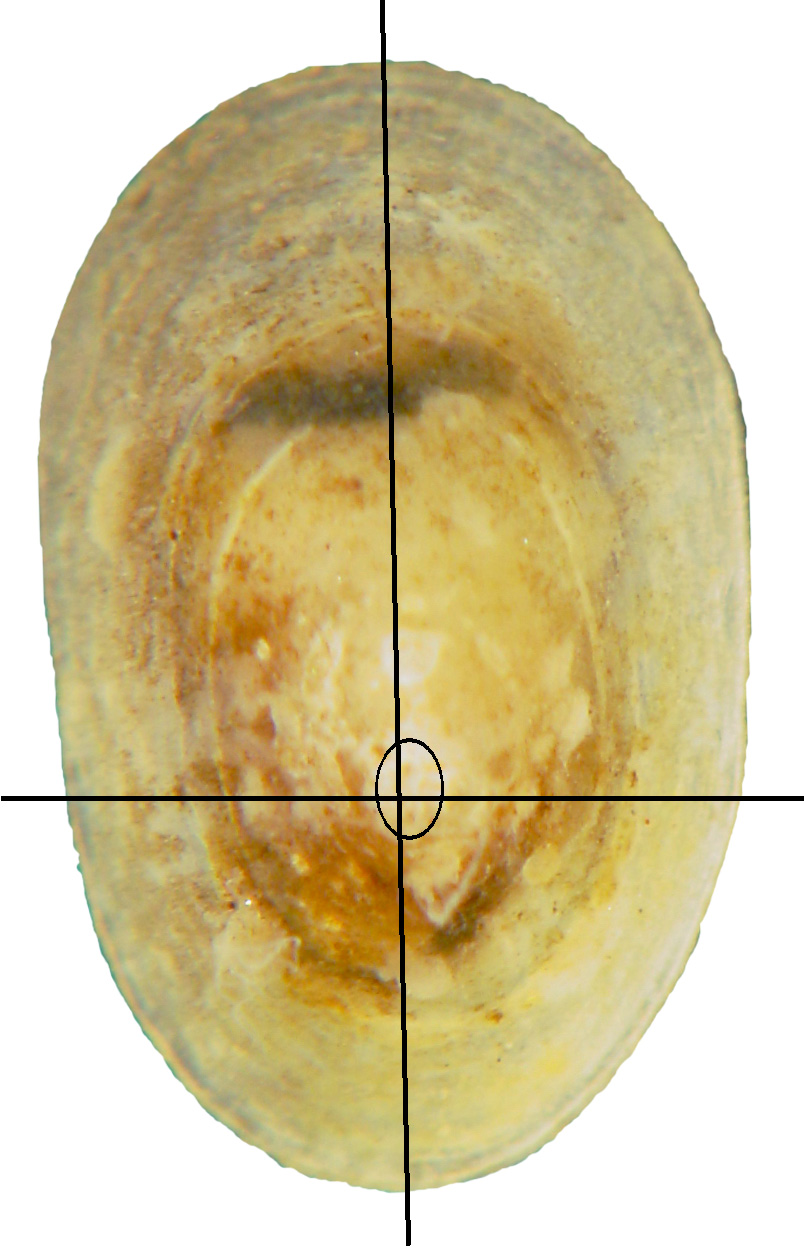
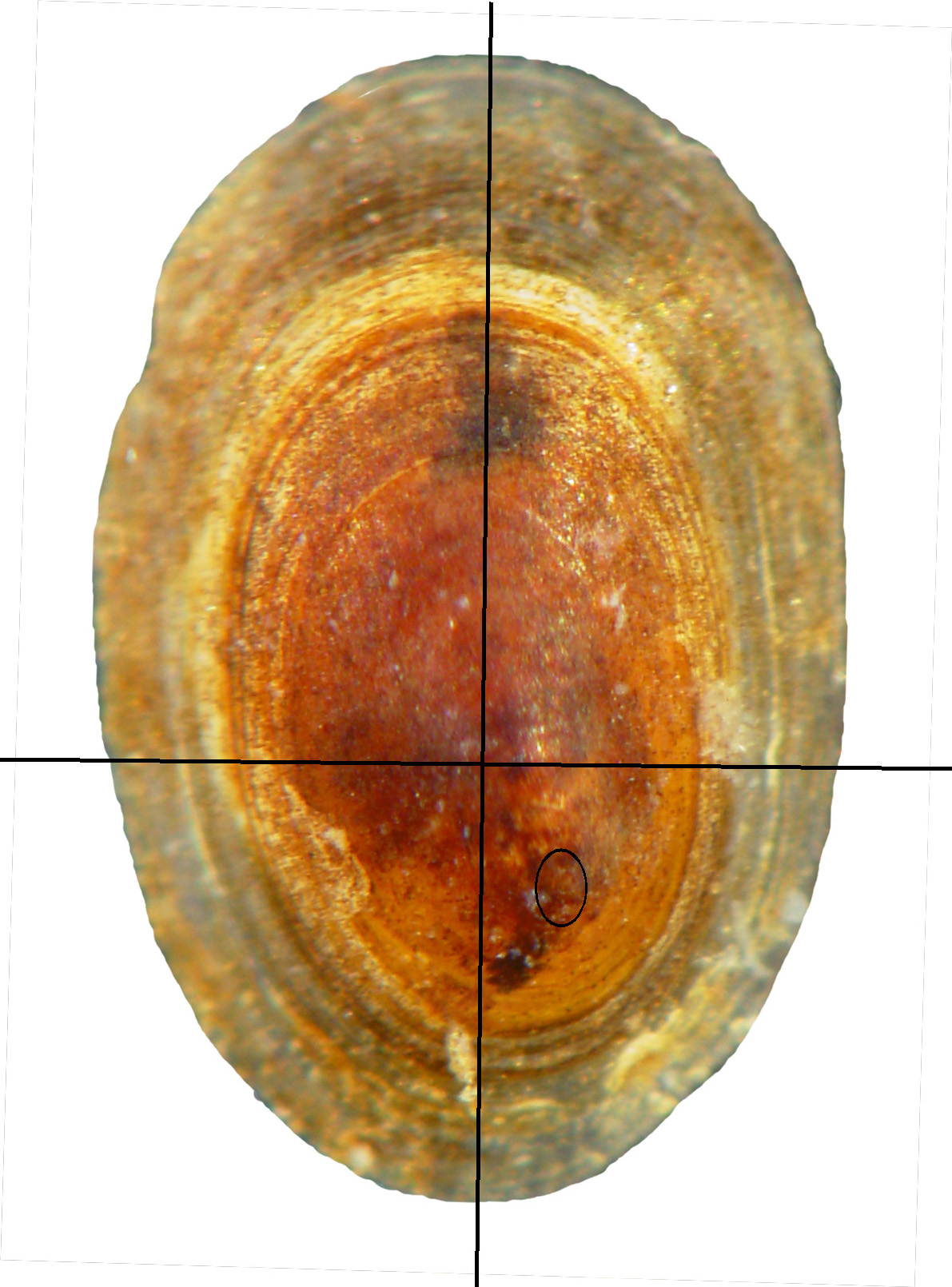
I am now pleased to report that Andrea Walther, together with her colleagues Jack Burch and Diarmaid O’Foighil, has cast additional light on this situation (4). Writing in the issue of Malacologia currently on the newsstands, the team from Ann Arbor has been able to correlate apparently reliable features of the Ferrissia shell apex with their DNA sequence data, pulling fragilis back out from synonymy under rivularis.

Populations of F. rivularis, in our newly clarified understanding of that taxon, bear shells in which the apex is unambiguous – the cap of the earliest (juvenile) shell remains at the tip of the conical shell of the adult – generally at the midline or very near it [photo at left above - click for larger]. But in populations of F. fragilis, the juvenile shell cap is not at the apex of the adult shell, but rather is located slightly below and to the right of the midline [photo right - click for larger].

Under the older (Basch) concepts of the species (5), populations of F. rivularis were understood to inhabit rocky streams throughout the Blue Ridge ecoregion east into the upper Piedmont of all four southern Atlantic states. Ferrissia fragilis populations were restricted to vegetation and debris in calmer rivers, ditches and swamps in the lower Piedmont and Coastal Plain.

In our newly clarified understanding, however, almost all the Ferrissia populations inhabiting southern Atlantic drainages appear referable to F. fragilis alone, including those bearing quite robust shells inhabiting high-gradient streams in the Blue Ridge.

The only populations of bona fide F. rivularis in southern Atlantic drainages appear to inhabit tributaries of the Potomac River in Northern Virginia, ranging south up the Great Valley into the upper James and Roanoke drainages. This much more restricted range for F. rivularis becomes rather strikingly similar to that of Physa gyrina, another pulmonate snail more characteristic of the American interior, especially in northern latitudes.

Ancylid limpets are among the most common and familiar elements of the North American freshwater macroinvertebrate fauna. It is oddly reassuring to see our understanding of such fundamental aspects of their biology shift in just a few years; indeed, in a matter of months. Our science is an active one. For that, we should be thankful.


Notes
(1) Just One Species of Ferrissia [10June09]

(2) Basch, P.F. (1963) A review of the recent freshwater limpet snails of North America (Mollusca: Pulmonata). Bull. Mus. Comp. Zool. Harvard Univ. 129: 399–461.

(3) Dillon, R. T. and J. J. Herman (2009) Genetics, shell morphology, and life history of the freshwater pulmonate limpets Ferrissia rivularis and Ferrissia fragilis. Journal of Freshwater Ecology 24: 261-271. [PDF]

(4) Walther, A. C., J. B. Burch and D. O’Foighil (2010) Molecular phylogenetic revision of the freshwater limpet genus Ferrissia (Planorbidae:Ancylinae) in North America yields two species: Ferrissia (Ferrissia) rivularis and Ferrissia (Kincaidilla) fragilis. Malacologia 53: 25-45.

(5) To be fair, Basch did notice differences in the apex of his five Ferrissia species. For F. rivularis, his couplet specified "apex in midline or slightly to the right." He attributed "apex subacute, often far in the right posterior quadrant" to F. walkeri. Regarding the apex of F. fragilis, however, he was silent.